

- News
- Politics
- Mexico's Sheinbaum Administration Plans Criminal Charges Against US ICE Agents Over Maine Shooting Incident
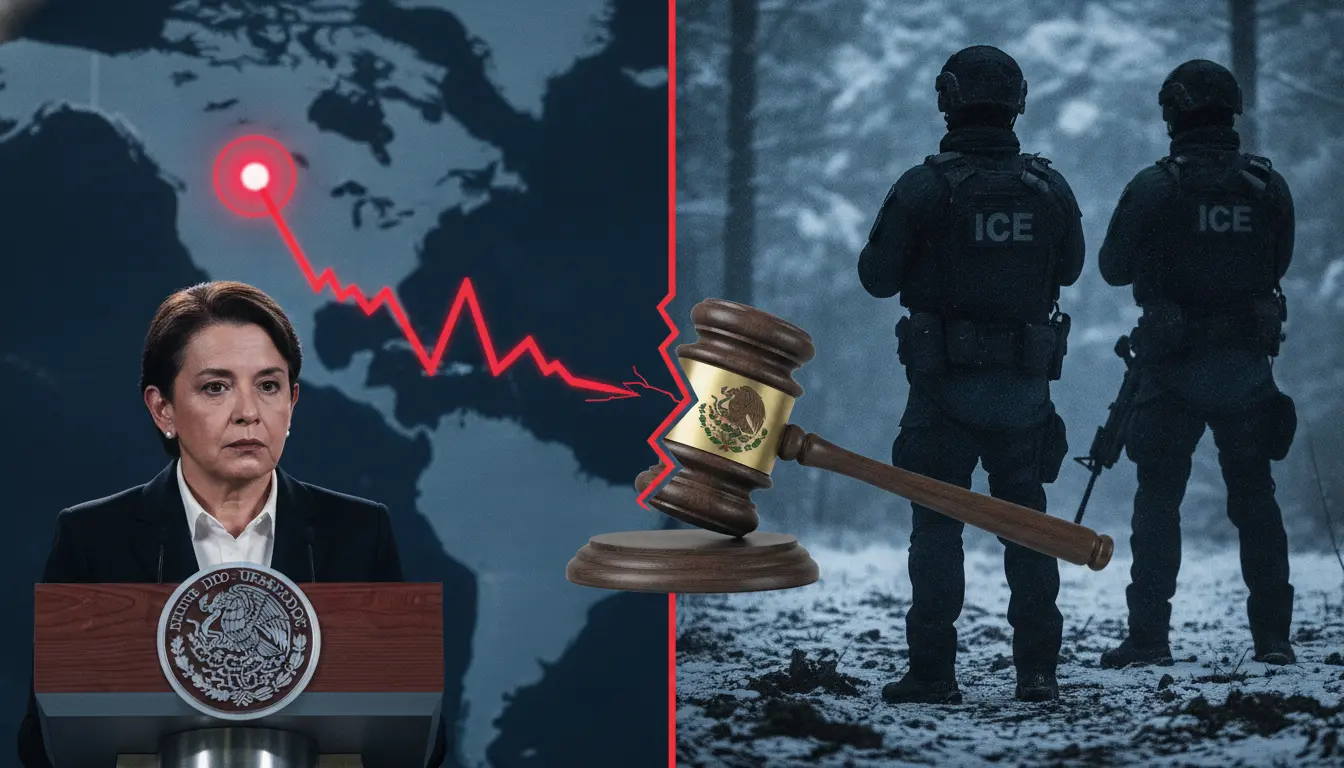
Mexico's Sheinbaum Administration Plans Criminal Charges Against US ICE Agents Over Maine Shooting Incident
In a move poised to significantly test diplomatic relations between Washington and Mexico City, Mexican President Claudia Sheinbaum has declared her administration's intent to formally file criminal charges against United States Immigration and Customs Enforcement (ICE) agents in a US court. This unprecedented legal pursuit stems from a fatal shooting incident involving an ICE agent in Maine, an event that has ignited a firestorm of controversy and intensified scrutiny on US immigration enforcement practices, especially when they involve foreign nationals.
The incident in question, while details remain somewhat scarce in initial public reports, involved the tragic death of an individual during an operation conducted by an ICE agent in Maine. Such events invariably trigger investigations by US authorities, including internal reviews within ICE and potential probes by the Department of Justice. However, Mexico's decision to pursue its own criminal complaint represents a profound assertion of its interest in the welfare and judicial protection of its citizens abroad, demanding accountability directly through the American legal system. This strategic step by President Sheinbaum underscores a broader commitment to defending Mexican nationals, wherever they may be, and could establish a significant precedent in international legal and diplomatic engagements.
President Sheinbaum's announcement comes early in her tenure, signaling a potentially more assertive stance on issues affecting Mexican citizens and national sovereignty. For Mexico, the case transcends a singular shooting; it touches upon long-standing concerns regarding the treatment of its citizens within the US, particularly in the context of immigration enforcement. The Mexican government's rationale is rooted in the belief that the actions of the ICE agent warrant criminal prosecution, implying that the existing US legal and investigative frameworks might not adequately address Mexico's demands for justice. This approach positions Mexico as an active plaintiff rather than a diplomatic observer, directly seeking redress in a foreign jurisdiction.
The legal complexities of Mexico filing criminal charges against US federal agents in an American court are substantial. While international law often deals with state-to-state disputes or human rights violations in international forums, a foreign nation directly initiating criminal proceedings against federal agents in the host country's courts is a rare and intricate undertaking. It would likely involve navigating intricate jurisdictional questions, evidentiary challenges, and diplomatic sensitivities. The US Department of Justice would be placed in a delicate position, balancing its duty to defend federal employees with the imperative to maintain constructive bilateral relations with a key neighbor and ally. Precedents for such a direct legal intervention by a foreign state against federal agents within the US are few, making this a test case for international legal cooperation and sovereignty.
The diplomatic implications of such a move are far-reaching. US-Mexico relations are multifaceted, encompassing critical areas like trade, border security, migration management, and anti-narcotics efforts. A direct legal challenge of this nature could strain these vital partnerships, potentially complicating ongoing negotiations and collaborative initiatives. The United States might perceive this action as an infringement on its sovereign right to manage internal law enforcement, while Mexico views it as an essential assertion of its right to protect its citizens. Both nations will have to carefully weigh the pursuit of legal justice against the broader strategic interests that bind them.
As the Sheinbaum administration prepares to formalize its complaint, the process ahead promises to be protracted and fraught with challenges. Mexico will need to gather and present compelling evidence admissible in a US court, and its legal team will have to contend with the formidable resources of the US government. The outcome of these potential legal proceedings, irrespective of the verdict, will undoubtedly have profound consequences for the individuals involved, the bilateral relationship, and the broader landscape of international law and human rights. It signals a potential recalibration in how nations interact when their citizens are impacted by the law enforcement actions of another, setting a new bar for accountability and diplomatic engagement. All eyes will be on how this unprecedented legal maneuver unfolds, with significant implications for the future of US-Mexico relations and the global dialogue on sovereignty and justice.
Stay Informed. Act Smarter.
Get weekly highlights, major headlines, and expert insights — then put your knowledge to work in our live prediction markets.
Related News

Bundesliga Powerhouses Set for Intense 2026/27 Title Showdown

Investor Focus Intensifies on Amazon International Stores' Path to Profitability Ahead of Q2 2026 Report

Caesars Entertainment Shareholders Set to Vote on Fertitta Gaming's $17.6 Billion Privatization Offer

Cyclassics Hamburg 2026: Elite Field Prepares for Germany's Premier One-Day Race

Ethereum Foundation loses another key leader as co-executive director Hsiao-Wei Wang resigns