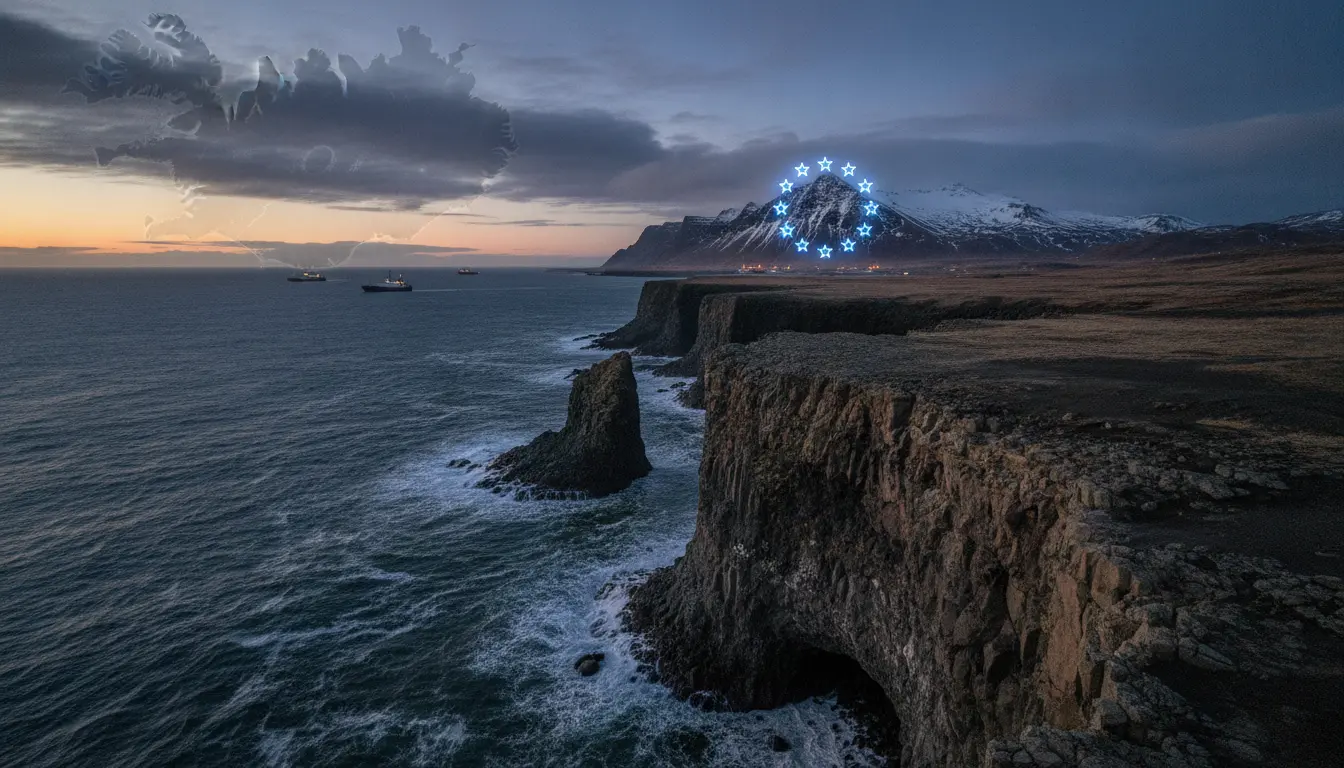
Iceland Ponders Restarting EU Membership Bid as Arctic Strategic Importance Grows
Iceland is once again at a critical juncture regarding its future international alignment, with a national discourse intensifying around the possibility of restarting negotiations to join the European Union. This renewed deliberation comes against a backdrop of rapidly evolving geopolitical dynamics in the Arctic region, transforming what was once a largely domestic debate into a matter of strategic international significance. The potential move reflects a complex interplay of economic interests, sovereignty concerns, and the growing recognition of Iceland's pivotal role in an increasingly contested northern frontier.
The Nordic island nation's relationship with the EU has a storied, albeit complex, past. Iceland formally applied for membership in 2009 in the wake of its devastating financial crisis, an event that severely shook public confidence in its traditional economic pillars. Negotiations progressed for several years, covering 27 of 33 chapters, before grinding to a halt in 2013 under a new eurosceptic government. The primary sticking points were, and largely remain, concerns over Iceland's control of its rich fishing grounds and its agricultural policy, vital industries that many Icelanders feared would be compromised by adherence to the EU’s Common Fisheries Policy and Common Agricultural Policy. The application was officially withdrawn in 2015, leaving the door seemingly shut on the prospect.
However, the global landscape has shifted dramatically since then, particularly in the Arctic. The melting ice caps are opening new shipping routes and exposing vast untapped natural resources, turning the High North into a strategic arena for global powers. Interest in the region has surged, exemplified by former U.S. President Donald Trump's surprising, albeit brief, inquiry into purchasing Greenland. This incident, while perhaps unconventional, underscored the burgeoning geopolitical competition among nations like the United States, Russia, and China for influence and access in the Arctic. Iceland, situated squarely between North America and Europe, and possessing significant control over portions of the Arctic's maritime domain, finds itself increasingly central to these unfolding power plays. Aligning more closely with the EU could be perceived by some as a bulwark against external pressures and a way to anchor its position within a larger democratic bloc.
Domestically, the debate over EU membership is multifaceted. Proponents often highlight the potential economic benefits of joining the EU's single market, which would provide Icelandic businesses with greater access to a massive consumer base and potentially foster greater foreign investment. They also point to the benefits of deeper political integration and shared security interests within the bloc. Conversely, opponents fiercely guard the nation's sovereignty, particularly over its lucrative fishing industry, which employs a significant portion of the population and is a cornerstone of the national identity. Many fear that ceding control of these resources to Brussels would undermine Iceland's independence and economic autonomy. The nation’s current government, a coalition, has historically been cautious about re-engaging with the EU, but public sentiment can be volatile and responsive to external stimuli.
For the European Union, the prospect of Iceland re-engaging would be met with interest. While Iceland's population of under 400,000 is small, its strategic location and democratic stability would be an asset. However, the EU would likely reiterate its stance on the acquis communautaire – the accumulated body of EU law – meaning no special exceptions for Iceland’s fisheries. Any new negotiations would therefore require significant flexibility and political will from both sides to bridge these long-standing differences. The process would be protracted, involving extensive public debate and likely another national vote to ratify any final agreement.
The decision facing Iceland is thus far more profound than a simple question of economic partnership; it is about defining its long-term strategic posture in a world where small nations increasingly navigate complex global power dynamics. Whether Iceland ultimately chooses to formalize its European ties or maintain its current independent path will have significant implications not only for its own future but also for the delicate balance of power and cooperation in the strategically vital Arctic region.
Stay Informed. Act Smarter.
Get weekly highlights, major headlines, and expert insights — then put your knowledge to work in our live prediction markets.