

- News
- Finance
- US Manufacturing Sector Faces Scrutiny as August 2026 PMI Nears Critical Contraction Threshold
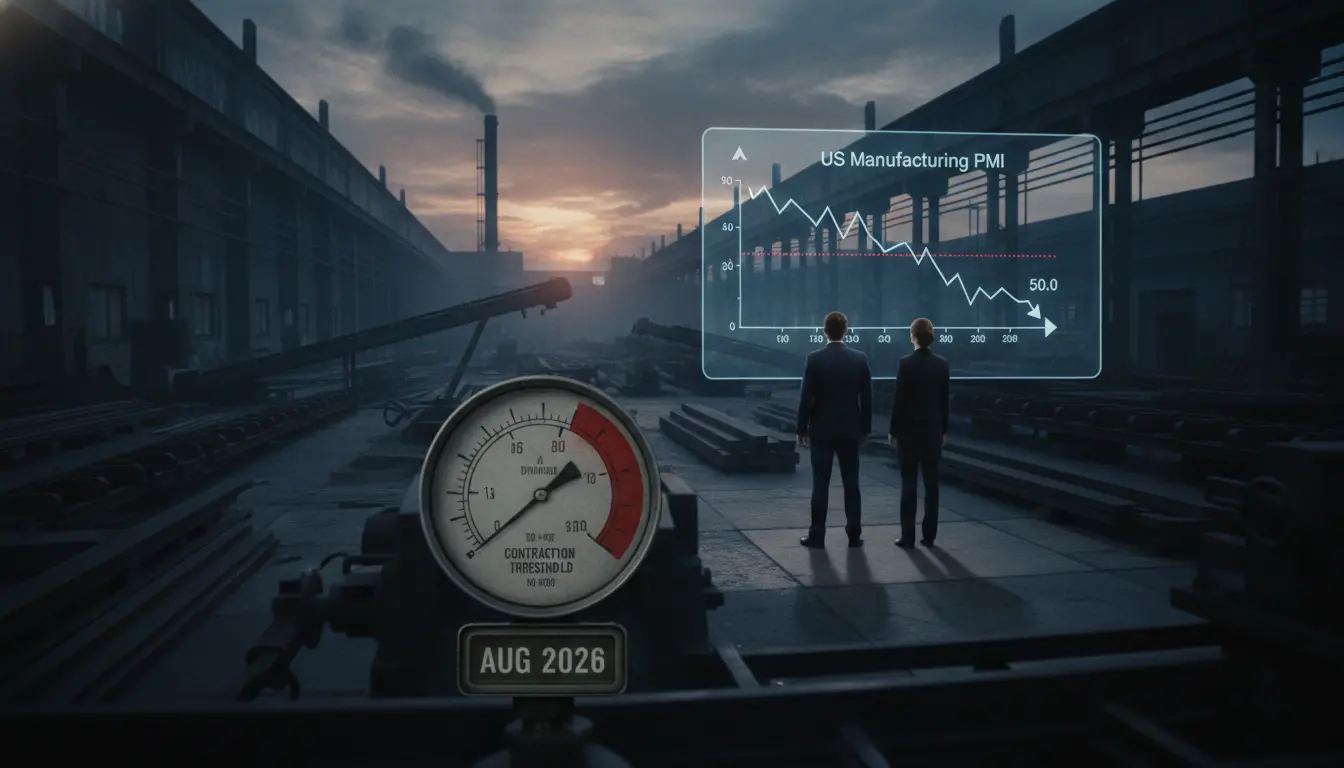
US Manufacturing Sector Faces Scrutiny as August 2026 PMI Nears Critical Contraction Threshold
As the calendar inches closer to August 22, 2026, economic analysts, policymakers, and business leaders are keenly awaiting the release of the S&P Global Flash US Manufacturing Purchasing Managers' Index (PMI) for August. This preliminary data point is more than just a statistic; it serves as a crucial bellwether for the health of the American industrial sector and a potential early warning signal for broader economic shifts. The market is particularly focused on whether the index will fall below the pivotal 50.0 mark, a level universally understood to denote contraction in manufacturing activity—a scenario that could ripple through the economy with significant implications.
The S&P Global PMI is a composite index derived from surveys of purchasing managers in manufacturing companies, covering new orders, output, employment, suppliers’ delivery times, and stocks of purchases. As a forward-looking indicator, it offers a timely snapshot of prevailing business conditions and sentiment, often preceding official government statistics like industrial production. A reading above 50.0 indicates expansion in the sector, while anything below suggests a downturn. The “Flash” designation means it’s an early estimate, based on approximately 85-90% of survey responses, providing a valuable first look before the final figures are published.
The context surrounding this upcoming release is shaped by a complex interplay of post-pandemic recovery dynamics, evolving global supply chain pressures, and the lingering effects of inflation and interest rate adjustments implemented by the Federal Reserve. Over the preceding years, the manufacturing sector has grappled with volatile demand patterns, persistent labor shortages, and elevated input costs. While some segments experienced robust growth driven by pent-up demand and reshoring initiatives, others faced headwinds from weakened global trade and tightened credit conditions. The performance of the PMI in the months leading up to August 2026 will undoubtedly reflect these varying pressures, setting the stage for what a sub-50.0 reading could signify.
Should the August 2026 Flash US Manufacturing PMI indeed drop below 50.0, it would signal a material deterioration in the sector, indicating that fewer companies are seeing increases in output, new orders, or employment. Such a contraction often precedes a broader economic slowdown or even recessionary conditions. Businesses might respond by scaling back investment, reducing inventories, and potentially implementing hiring freezes or layoffs. This, in turn, could dampen consumer confidence and spending, creating a negative feedback loop across other sectors of the economy.
The implications for monetary policy would be profound. A clear signal of manufacturing contraction could pressure the Federal Reserve to reconsider its stance on interest rates, potentially leading to a more dovish outlook or even rate cuts to stimulate economic activity. Conversely, if inflation remains stubbornly high despite a manufacturing slowdown, the Fed could find itself in a difficult position, balancing the twin mandates of price stability and maximum employment. Financial markets, always sensitive to economic data, would likely react swiftly, with potential volatility in equities, bonds, and currency markets as investors digest the implications for corporate earnings and economic growth.
Beyond the headline number, analysts will scrutinize the sub-indices of the PMI report, such as new orders, employment, and input prices, to gain a more granular understanding of the sector's health. For instance, a sharp decline in new orders would point to weakening demand, while a significant drop in employment could foreshadow broader labor market challenges. The global economic landscape, including the performance of key trading partners and commodity prices, will also play a crucial role in shaping the trajectory of US manufacturing. As the August 22 release date approaches, the S&P Global Flash US Manufacturing PMI stands ready to offer a critical barometer for the nation’s economic resilience and its path forward.
Stay Informed. Act Smarter.
Get weekly highlights, major headlines, and expert insights — then put your knowledge to work in our live prediction markets.
Related News

US Consumer Sentiment Index Poised for Release Amid Persistent Economic Pressures

US Unemployment Rate Poised for Scrutiny Ahead of Mid-2026 Data Release

US Consumer Spending Under Spotlight Ahead of June 2026 Retail Sales Release

US Economy Navigates Heightened Recession Risks Amidst Shifting Monetary Policy and Global Headwinds

Federal Reserve's Long-Term Inflation Battle Intensifies Ahead of July 2026 Core PCE Report

Eurozone Awaits Crucial August 2026 CPI Flash Estimate Amid Persistent Inflation Concerns

Economists Intensify Debate on US Recession Risk Through 2026 Amid Fed's Inflation Fight

Federal Reserve Prepares for Critical July 2026 Rate Decision Amid Evolving Economic Landscape

Economists Intensify Debate on US Recession Timeline Amid Evolving Economic Landscape
US Economic Outlook for 2026 Hinges on Inflation Control and Productivity Revival