AIchips & hardwareAI Data Centers
Shanghai Announces $10 Billion Tech Investment in Key Industries
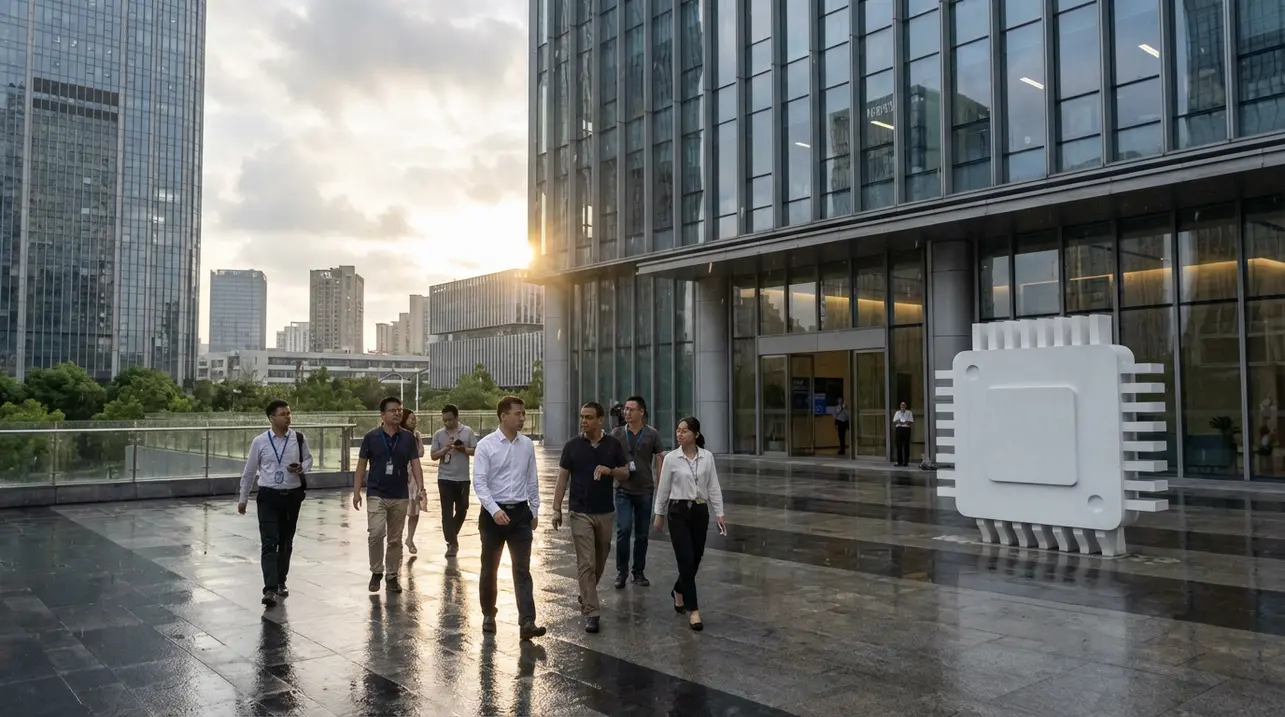
In a move that underscores the strategic depth of the ongoing technological cold war, Shanghai has strategically deployed a massive 70 billion yuan (approximately $10 billion) investment package, squarely targeting the foundational pillars of next-generation industry: semiconductors, artificial intelligence, and biopharmaceuticals. This isn't merely a municipal budget announcement; it's a calculated gambit in the high-stakes game of technological sovereignty, where control over the silicon chip and the algorithms that run on it is increasingly synonymous with geopolitical power.The focus on Pudong, China's financial and innovation crown jewel, is particularly telling. This district, long a laboratory for economic policy, is now being weaponized as a beachhead in a broader national campaign to circumvent Western—primarily American—strangleholds on critical technologies.The context here is impossible to ignore: from the sweeping export controls enacted by the Biden administration on advanced chipmaking equipment to the relentless scrutiny of companies like Huawei and SMIC, China's tech ambitions have faced a concerted containment strategy. Shanghai's response, therefore, is both defensive and offensive.It's a defensive bulwark against supply chain fragility, aiming to foster a self-sufficient ecosystem from chip design to fabrication. Yet, it's also an offensive maneuver to achieve parity, and perhaps eventual leadership, in fields like AI, where algorithmic innovation could redefine everything from military logistics to financial markets.Historically, this mirrors the state-directed industrial pushes of the past, but with a 21st-century digital twist. Where five-year plans once focused on steel output, today's benchmarks are measured in nanometers of transistor size and parameters of large language models.Expert commentary within China's tech circles suggests this investment is less about immediate commercial returns and more about creating a dense, interconnected innovation cluster. The goal is to replicate the synergistic environment of a Silicon Valley or TSMC's Hsinchu Science Park, where engineers, venture capital, and academic research collide to accelerate breakthroughs.However, significant hurdles remain. The global semiconductor supply chain is a monument to decades of specialized development; simply throwing capital at the problem cannot instantly replicate the deep, tacit knowledge held by firms like ASML, Applied Materials, or Intel.Furthermore, the AI race is as much about data and talent as it is about raw computing power, areas where Chinese firms benefit from scale but face increasing international barriers to collaboration. The potential consequences are multifaceted.
#Shanghai
#investment
#microchips
#AI
#biopharmaceuticals
#US-China tech race
#featured