AIenterprise aiAI in Manufacturing
Ford is getting ready to put AI assistants in its cars
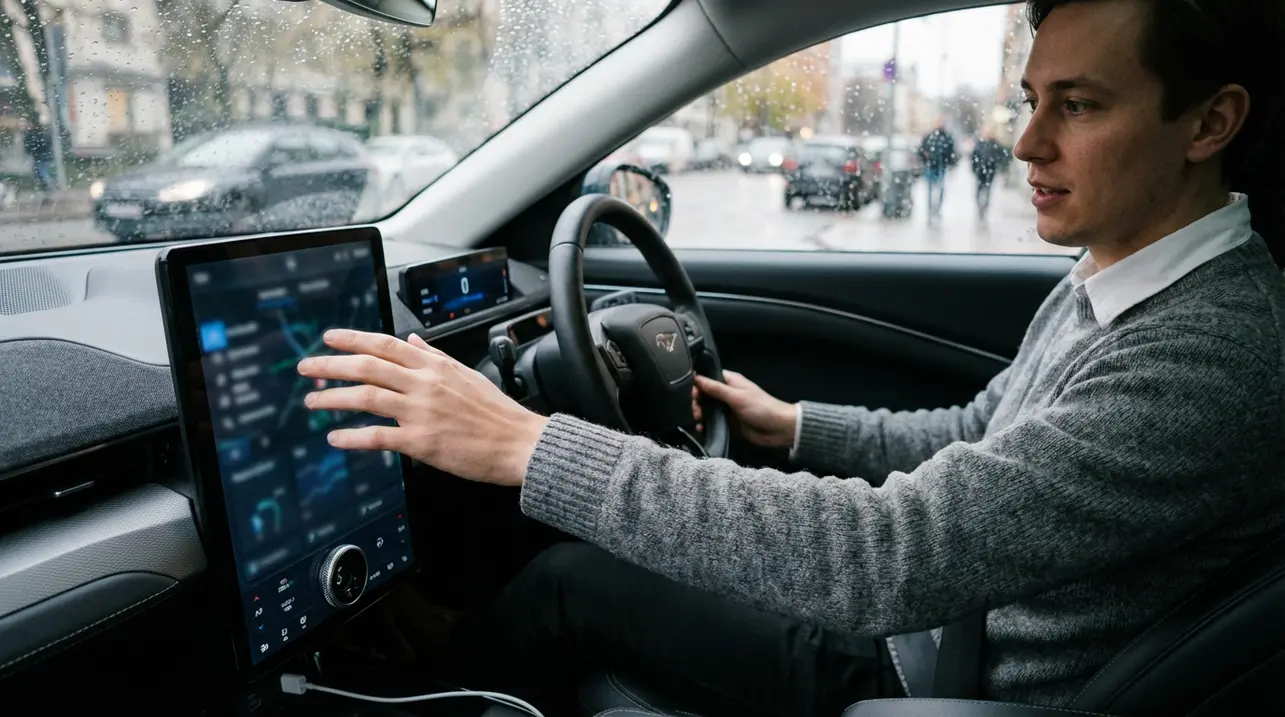
Ford is getting ready to put AI assistants in its cars, a move that signals the automotive industry’s accelerating pivot from hardware-centric engineering to software-defined experiences. This isn't just about adding another voice command for the radio; it's a foundational shift in how we interact with our vehicles, embedding large language models directly into the vehicle's architecture to create a conversational, context-aware co-pilot.The Blue Oval is also working on new hands-free driver assists, a parallel development that reveals a dual-track strategy: enhancing both passive safety through advanced driver-assistance systems (ADAS) and active engagement through generative AI. For decades, car innovation was measured in horsepower and torque; today, the battleground is teraflops and tokens per second.Ford's initiative places it in direct competition with tech giants like Tesla, which has long championed an in-car AI ecosystem, and newcomers like Xiaomi, whose recent EV launch emphasized smart cabin features. The technical hurdles are immense—running sophisticated AI locally on embedded systems requires significant advances in edge computing and power efficiency, likely leveraging specialized neural processing units (NPUs) from partners like Qualcomm or NVIDIA.Beyond convenience, the implications are profound for data privacy, user trust, and even liability. If an AI assistant misinterprets a command during a critical driving moment, who is responsible? The regulatory landscape, particularly in the European Union with its stringent AI Act and in the United States where the NHTSA is cautiously evaluating autonomous features, will shape the rollout speed and capabilities.Historically, we can look to the integration of smartphones via Apple CarPlay and Android Auto as a precursor; this next phase seeks to make the native vehicle system so compelling that tethering to a phone becomes redundant. Expert commentary from AI researchers suggests the real breakthrough will come when these assistants move beyond reactive queries to proactive support—anticipating a driver's need for a charging station based on battery level and traffic, or summarizing the key points of a missed meeting during the commute home.The potential consequences extend to the very business model of automakers, opening new revenue streams through subscription services for premium AI features, much like software-as-a-service (SaaS) transformed the tech industry. However, this also risks creating a digital divide on wheels, where basic transportation is accessible, but the intelligent, safer, more efficient driving experience becomes a luxury add-on.As Ford and its rivals navigate this complex terrain, the ultimate test won't be in demo reels at CES, but in the daily, mundane interactions of millions of drivers whose patience for buggy beta software is notoriously thin. The race isn't just to put an AI in the car; it's to create an assistant that feels less like a tool and more like a trusted, seamless extension of the driver's own intuition.
#Ford
#AI assistants
#hands-free driving
#automotive technology
#autonomous vehicles
#featured