Othertransport & aviationAirlines and Airports
Hong Kong Plans First Aircraft Dismantling Facility on Lantau
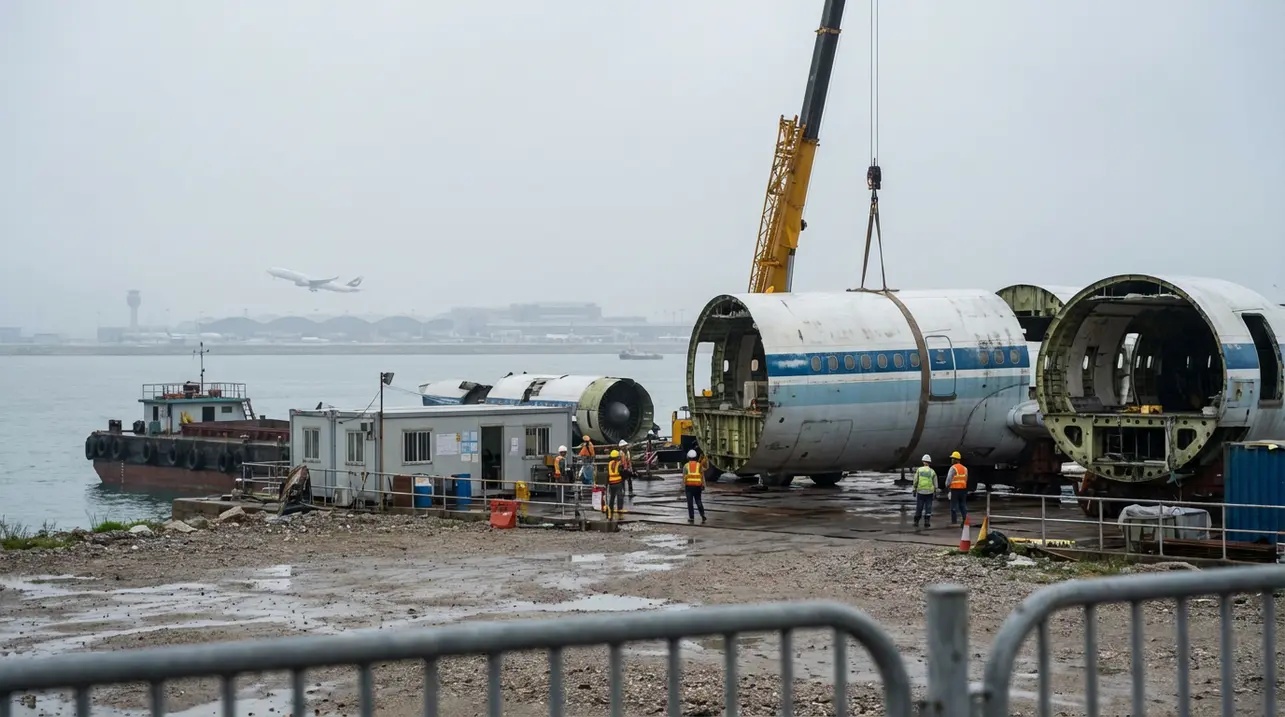
Hong Kong’s strategic pivot towards establishing its first dedicated aircraft dismantling facility, with a site on northwest Lantau Island’s To Kau Wan emerging as the likely frontrunner, represents a calculated move into a high-stakes, niche sector of the global aviation ecosystem. This initiative, spearheaded by a French aeronautical services firm, is far more than a simple industrial development; it is a direct response to a looming tidal wave of retired aircraft and a shrewd positioning play within Asia’s complex geopolitical and economic landscape.The choice of To Kau Wan is a masterclass in logistical pragmatism—its proximity to Hong Kong International Airport (HKIA) minimizes costly ferry or road transfers for end-of-life aircraft, while existing road networks and a barge-capable pier offer flexible pathways for the outflow of harvested components and bulk materials. This infrastructure adjacency is critical, as the economics of aircraft recycling are brutally sensitive to transport costs; a few extra miles can erase profit margins on a multi-million-dollar airframe.The global context here is urgent. According to industry forecasts from firms like Cirium, over 15,000 commercial aircraft are slated for retirement over the next two decades, a surge driven by fleet modernization for fuel efficiency and post-pandemic restructuring.Currently, the market is dominated by facilities in the deserts of the southwestern United States, like those in Mojave and Roswell, where dry climates aid preservation, and in specialized European hubs. Asia, despite being the world’s fastest-growing aviation market, has lacked commensurate recycling capacity, often forcing carriers to incur significant expense and carbon footprint to send old planes on one final, fuel-guzzling flight across oceans.Hong Kong’s entry, therefore, is a bid to capture a substantial share of this regional demand, offering a local solution for carriers from Cathay Pacific to dozens of mainland Chinese and Southeast Asian airlines. However, the venture is fraught with layered risks that extend beyond mere business plans.The technical challenges are immense: modern composite materials, like carbon-fiber-reinforced polymers used in Boeing 787s and Airbus A350s, are far more difficult to separate and recycle economically than traditional aluminum. Toxic fluids, from hydraulic oils to residual fuel, require meticulous handling to prevent environmental contamination—a paramount concern for a facility situated near ecologically sensitive waters.The political and regulatory landscape adds another dimension. While Hong Kong’s common law framework and international connectivity are assets, the project will inevitably navigate the intricate relationship between the Special Administrative Region and Beijing, where national strategies for aerospace and environmental technology hold sway.
#aircraft dismantling
#Hong Kong
#Lantau Island
#aviation industry
#infrastructure
#featured