Entertainmenttheatre & artsArt Exhibitions
Uncovering Hidden Details in Whistler's Mother Painting
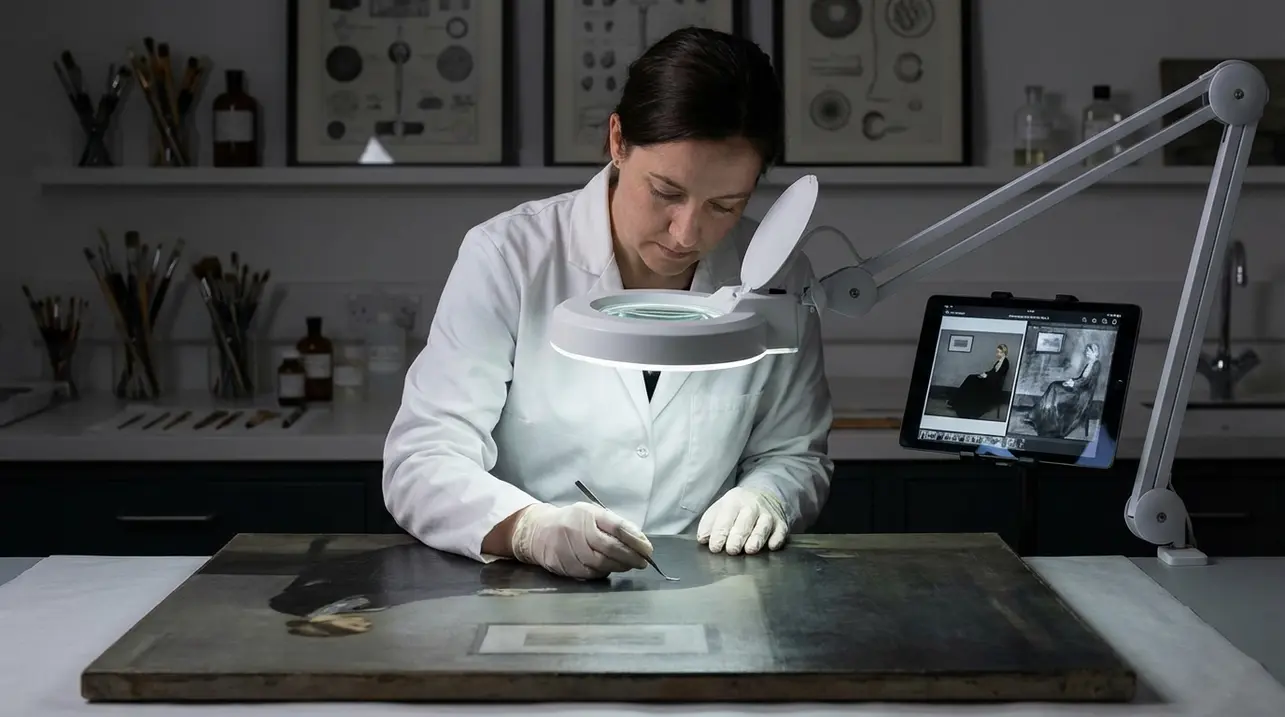
The severe, seated figure in James Abbott McNeill Whistler’s ‘Arrangement in Grey and Black No. 1’—universally known as ‘Whistler’s Mother’—is an icon of quietude, yet the painting’s journey to masterpiece status is a drama worthy of a Cannes contender, packed with rejection, artistic rebellion, and a profound, slow-burn revelation of meaning.To understand the portrait, we must first meet Anna McNeill Whistler, not as a dour archetype but as a formidable presence in her own right, a woman who endured the death of her husband and multiple children, who crossed the Atlantic to support her son’s bohemian pursuits in London, and who sat for the painting largely because the intended model failed to show. Whistler’s composition was a radical departure, less a sentimental maternal tribute than a formal exercise in harmony and restraint, an ‘arrangement’ where his mother’s black dress, the grey wall, and the delicate curtain create a symphony of tones.The hidden details are the filmic close-ups that unlock this narrative: the carefully placed footstool that elevates her, suggesting dignity rather than comfort; the small, pinned reproduction of Whistler’s own work on the wall, a subtle signature of the artist’s ego amidst the domestic scene; and the stark, empty floor space that isolates her, amplifying a palpable sense of Victorian-era loneliness and endurance. Critics at its 1872 debut were baffled, some deriding its ‘unfinished’ quality and somber palette, but its acceptance by the Musée du Luxembourg in 1891, after Whistler’s relentless campaigning, marked a turning point, transforming it from an oddity into a symbol of austere beauty and maternal sacrifice, particularly for a public navigating the Industrial Revolution’s upheavals.The painting’s subsequent canonization, culminating in its 1934 tour of the United States during the Great Depression where it was hailed as a ‘American Mona Lisa’ and even inspired a U. S.postage stamp, speaks to its evolving cultural script—it became less about Whistler’s avant-garde principles and more a universal screen onto which societies project their ideals of family, resilience, and nostalgia. Expert commentary adds layers to this: art historian Margaret MacDonald notes the painting’s deep connection to Whistler’s Japanese print influences in its flattened space and asymmetrical balance, while critic John Ruskin’s earlier infamous attack on Whistler’s work (leading to a libel trial) contextualizes the artist’s defiant stance, making ‘Whistler’s Mother’ a quiet manifesto for art’s right to exist for its own aesthetic sake.The consequences of this single image are vast, influencing modern portraiture’s move toward psychological depth over literal representation and cementing in popular culture the powerful, if simplified, trope of the stoic matriarch. Ultimately, to uncover the hidden details in ‘Whistler’s Mother’ is to watch a masterpiece’s meaning being edited and reshot over decades, a critical and public negotiation between the artist’s cool intention and the audience’s warm need for myth, leaving us with a portrait that remains compelling not for what it explicitly says, but for the profound silence and space it so masterfully arranges.
#featured
#Whistler's Mother
#art analysis
#hidden details
#painting meaning
#art history
#portrait
#masterpiece