SciencebiologyAnimal Behavior
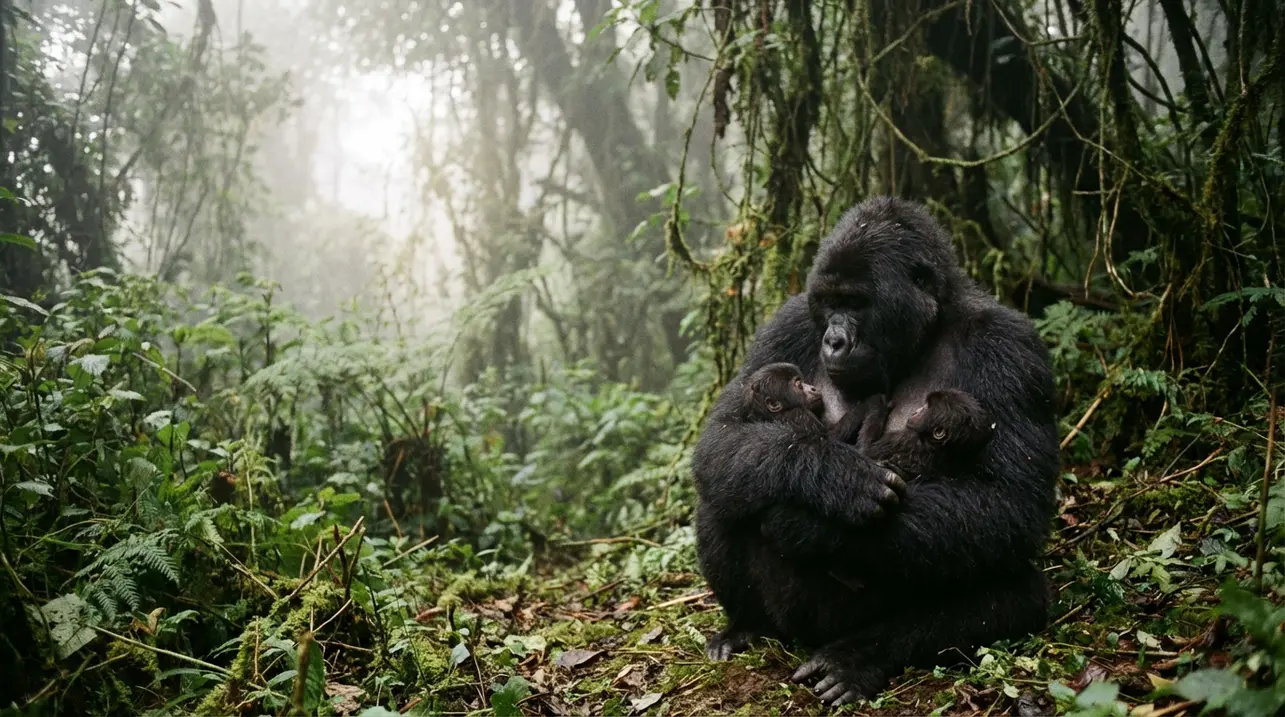
Rare mountain gorilla twins born in Virunga National Park.
RA
19 hours ago7 min read
In the mist-shrouded, volcanic highlands of the Democratic Republic of the Congo, a profound and hopeful event unfolded this past Saturday, offering a rare glimmer of light for one of the planet's most critically endangered species. Trackers in the legendary Virunga National Park, a UNESCO World Heritage site and a bastion of biodiversity under constant threat, witnessed a scene of pure, primal tenderness: a mountain gorilla mother, her powerful arms a cradle of safety, gently hugging not one, but two newborn infants.The birth of twins in the wild mountain gorilla population is an exceptionally uncommon occurrence, a statistical anomaly that sends ripples of cautious celebration through the global conservation community. To understand the gravity of this moment, one must first grasp the precarious thread from which these magnificent creatures dangle.Mountain gorillas (*Gorilla beringei beringei*) exist in only two isolated populations: one spanning the Virunga Massif—encompassing parks in the DRC, Rwanda, and Uganda—and the other in Uganda's Bwindi Impenetrable National Park. Decades of brutal poaching, habitat destruction from agricultural encroachment, and the devastating collateral damage of regional armed conflicts pushed them to the very brink of extinction by the late 20th century.The tireless, often dangerous work of park rangers—over 200 of whom have been killed protecting Virunga—coupled with intensive international conservation efforts, has slowly pulled them back. The most recent census, a monumental undertaking across dense, mountainous terrain, estimated the total population at just over 1,000 individuals.Every single birth is therefore a vital statistic, a hard-won victory. Twins, however, present a unique and challenging dynamic.In the wild, gorilla mothers typically invest immense resources into raising a single infant, which clings to her for the first several months and is dependent for years. Raising two simultaneously places an extraordinary physiological and energetic burden on the mother, often leading to one infant failing to thrive or being abandoned—a harsh but natural reality of survival in the wild.The park's monitoring teams, part of the Institut Congolais pour la Conservation de la Nature (ICCN), will now enter a period of vigilant but non-intrusive observation. Their role is not to interfere but to document, understanding that the fate of these twins will be dictated by the intricate social fabric of their gorilla group and the mother's own strength and experience.Historical precedents offer both hope and sobering perspective. In Rwanda's Volcanoes National Park, part of the same Virunga ecosystem, the famous gorilla group led by the silverback Titus saw the birth of twins in 2004.
#featured
#mountain gorillas
#twins
#Virunga National Park
#DR Congo
#wildlife conservation
#rare birth
#endangered species
Related News
3 days ago
This simple math trick could transform earthquake science

3 days ago
Understanding the Science Behind 'Your Body Keeps Score'

3 days ago
Outpoll Weekly Recap: Science (December 29, 2025 – January 4, 2026)

3 days ago
Outpoll Weekly Recap: Science (December 22 – 28, 2025)

3 days ago
Outpoll Weekly Recap: Science (December 15 – 21, 2025)
3 days ago
Outpoll Weekly Recap: Science (December 8 – 14, 2025)
3 days ago
Outpoll Weekly Recap: Science (December 1 – 7, 2025)

3 days ago
Outpoll Weekly Recap: Science (November 24 – 30, 2025)

3 days ago
Outpoll Weekly Recap: Science (November 17 – 23, 2025)

3 days ago
Outpoll Weekly Recap: Science (November 10 – 16, 2025)

Comments
Loading comments...
© 2025 Outpoll Service LTD. All rights reserved.