

OthereducationEdTech Innovations
AI could transform education if universities stop responding like medieval guilds
MI
Michael Ross
5 months ago7 min read
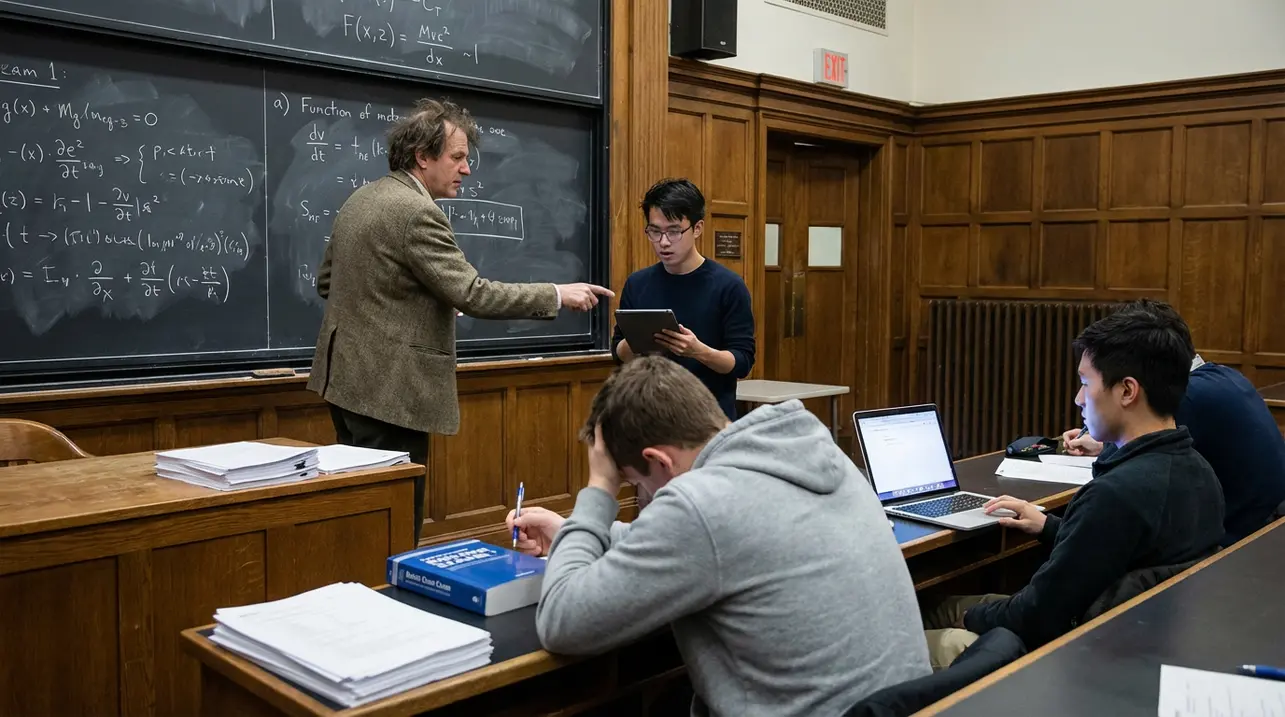
When ChatGPT first emerged, the reaction from much of the academic world was not one of measured curiosity but of something closer to institutional panic. Professors, acting more like guardians of a sacred, unchanging tradition than pioneers of knowledge, rushed to declare generative AI a form of intellectual poison, a tool that would irrevocably erode critical thinking.The immediate impulse was to ban it, to resurrect handwritten exams and oral defenses—a desperate attempt to rewind the technological clock. This response, widely documented by outlets like Inside Higher Ed, was revealing.It was never fundamentally about pedagogy or preserving the sanctity of learning; it was about a deep-seated fear of losing control, of having the mechanisms of authority and surveillance that underpin the traditional university model suddenly rendered obsolete. The integrity narrative, so fervently invoked, often masks a profound control problem.The resulting landscape has been a chaotic patchwork of contradictory policies and vague guidelines, creating an enforcement quagmire that even faculty struggle to navigate, as detailed in academic papers analyzing institutional responses. In their obsession with policing potential cheating, universities have largely sidestepped the more crucial conversations about what actually fosters learning: student motivation, autonomy, safe spaces for failure, and personalized pacing.Instead of asking how AI could fundamentally improve education, the default has been to ask how it can be monitored, controlled, and contained to preserve an existing, often rigid, system of assessment. This defensive posture stands in stark contrast to the mounting evidence.Intelligent tutoring systems, a precursor to today's more advanced AI, have long demonstrated an ability to adapt content, generate contextualized practice, and deliver immediate, formative feedback at a scale and consistency that a single professor in a lecture hall of hundreds simply cannot match. This isn't speculative futurism; it's well-established in educational research.The disconnect here is uncomfortable but necessary to confront: AI doesn't threaten the core mission of education—the pursuit of understanding and skill development. What it genuinely threatens is the vast bureaucratic apparatus built around it, a system optimized for administrative convenience and uniform output rather than genuine, individualized comprehension.Students themselves are not rejecting this technology; surveys consistently show they view proficient, ethical AI use as a critical professional skill for the future and seek guidance on its application, not punishment. The learners are moving forward, while many institutions are digging in, defending a model of uniformity that they mistake for rigor.True rigor isn't found in forcing every student through the same standardized assessment at the same time; it's in cultivating deep, personalized understanding, a goal AI can uniquely support. We see glimpses of a more progressive approach in places like IE University, which, long before ChatGPT became a household name, had cultivated a culture of experimenting with technology-enhanced learning.Their response to the generative AI explosion was not panic but a clear institutional statement framing AI as a historic shift on par with the steam engine or the internet, committing to integrate it ethically across their ecosystem. This 'all-in' philosophy, which includes partnerships with OpenAI, is grounded in a simple yet radical idea: technology should adapt to the learner, not the other way around.It aims to use AI to amplify human teaching—freeing educators from rote policing to focus on mentorship, inspiration, and complex judgment—while giving students agency over their learning pace and data. This stands in sharp relief to experiments like the U.S. -based Alpha Schools, which, while branded as AI-first, often risk reducing AI to a conveyor belt for accelerated content delivery, prioritizing speed and test performance over depth and creative exploration.This is the core conceptual risk: mistaking automation for innovation, isolation for autonomy. The real promise of AI in education isn't about replacing teachers with chatbots or compressing curricula.It's about creating resilient learning environments where students can safely experiment, where effort is visible and valued, and where feedback is constant yet constructive. The universities that will define the future of education are not those banning tools or clinging to 19th-century assessment rituals.They will be those that treat AI as essential educational infrastructure—something to be thoughtfully shaped, governed, and integrated to reduce inequality, expand access, and ultimately reclaim time for the deeply human, relational aspects of learning that technology can never replicate. The real threat is not artificial intelligence; it's institutional inertia.If traditional universities falter, it won't be because AI displaced them. It will be because, when presented with the first technology capable of enabling genuinely student-centered learning at scale, they chose to protect their rituals instead of their students.
#featured
#AI in education
#academic integrity
#generative AI
#university policy
#student-centered learning
#adaptive learning
#surveillance
#medieval guilds
Stay Informed. Act Smarter.
Get weekly highlights, major headlines, and expert insights — then put your knowledge to work in our live prediction markets.
Related News






1 month ago
Outpoll Weekly Recap: Other (April 20 – 26, 2026)

2 months ago
Outpoll Weekly Recap: Other (April 13 – 19, 2026)

2 months ago
Why ‘others have it harder’ is a form of empathy bypassing

2 months ago
Outpoll Weekly Recap: Other (March 30 – April 5, 2026)

2 months ago
Outpoll Weekly Recap: Other (March 23 – 29, 2026)

3 months ago
Outpoll Weekly Recap: Other (March 16 – 22, 2026)

3 months ago
Washington State Passes Millionaires Tax as Model for Others

3 months ago
Outpoll Weekly Recap: Other (March 9 – 15, 2026)
3 months ago
Telura Emerges with €4M Seed to De-Risk Deep Geothermal, as Europe's Subsurface Energy Race Intensifies

3 months ago
Outpoll Weekly Recap: Other (March 2 – 8, 2026)
Comments
It's quiet here...Start the conversation by leaving the first comment.