SciencemedicineMedical Technology
Niko robotic lift aids mobility without caregiver help.
LA
1 day ago7 min read
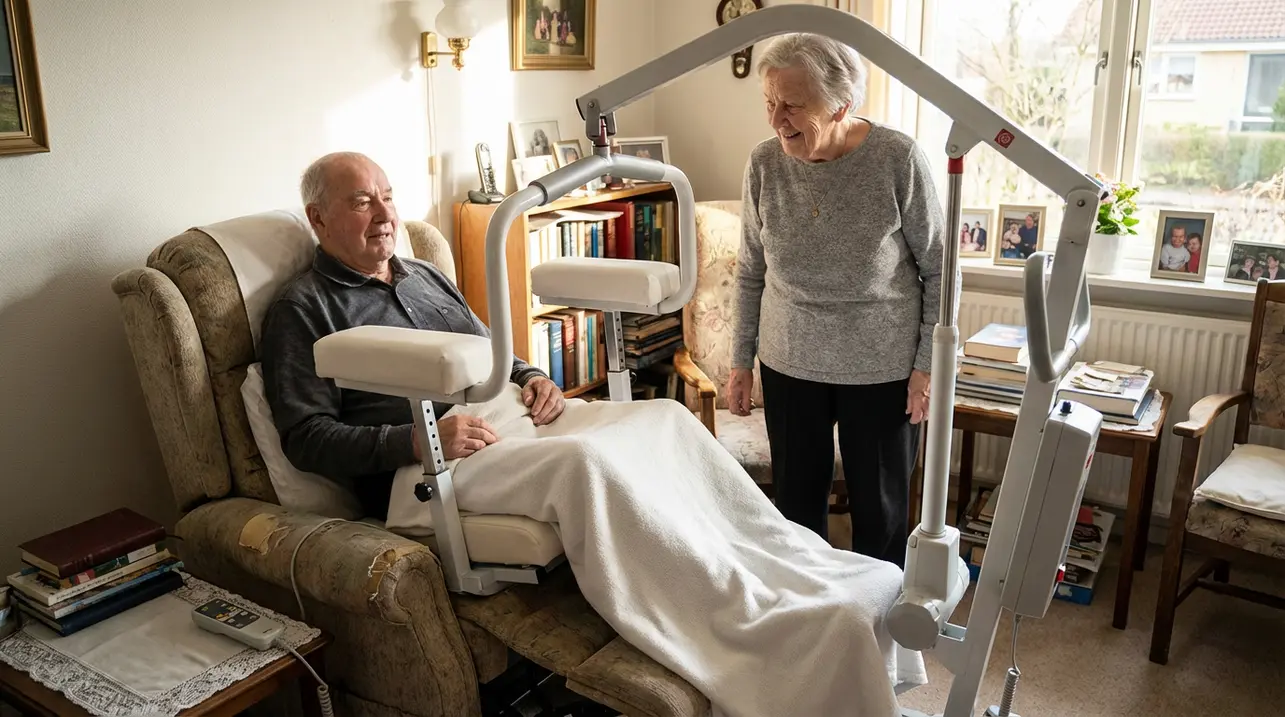
The story of Niko, a robotic lift developed by startup ReviMo, is, at its heart, a story about the quiet, daily struggles that redefine a life and a family. It’s a piece of technology born not in a sterile lab chasing abstract innovation, but in the intimate, physically demanding space of caregiving.Founder Aleksandr Malaschenko’s inspiration came from caring for his grandfather after a stroke, a experience familiar to millions where the simple act of moving from a bed to a chair becomes a monumental logistical and emotional challenge. This personal genesis is what makes Niko feel different; it’s engineered with a palpable understanding of the vulnerability involved.The system’s design—with one set of arms forming a ‘scooping seat’ to slide underneath a person and another encircling the torso as a backrest—aims to replace the clinical, often demeaning process of sling-based mechanical lifts with something more dignified and autonomous. Watching a demonstration, where Malaschenko was smoothly lifted from a chair and moved into an aisle, you see the potential not just for physical aid, but for the restoration of a sense of agency.For someone with limited mobility, the ability to initiate a transfer to a toilet or wheelchair via a remote or dashboard control, without having to ask for help, is a profound reclaiming of privacy and independence. The impact on caregivers, however, is equally transformative.The daily grind of multiple transfers, which can lead to chronic back injuries and sheer exhaustion, is lessened. Niko reconfigures the caregiver’s role from physical laborer to supervisor and companion, potentially preserving relationships strained by the relentless physical demands of care.This shift is crucial, as our aging populations and strained healthcare systems push more care into homes, often onto untrained family members. The device’s practical specs—a 250-pound capacity, with a 400-pound version in development, compact navigation for small bathrooms, disposable seat covers—are important, but they serve this deeper human goal.The $15,000 price tag is significant, placing it in the realm of major medical equipment, and ReviMo’s push for insurance coverage and rental options speaks to the real-world economics of accessibility. It reminds us that technological solutions often face their biggest hurdle not in engineering, but in the labyrinth of healthcare financing.Speaking to families who have lived this, like the writer who learned to operate a Hoyer lift for a father with ALS in middle school, the emotional weight of such a device becomes clear. It’s not about gadgetry; it’s about alleviating a specific, heart-wrenching layer of hardship.
#robotic lift
#limited mobility
#caregiver assistance
#independence
#ReviMo Niko
#CES demonstration
#featured
Related News
2 days ago
This simple math trick could transform earthquake science

2 days ago
Understanding the Science Behind 'Your Body Keeps Score'

2 days ago
Outpoll Weekly Recap: Science (December 29, 2025 – January 4, 2026)

2 days ago
Outpoll Weekly Recap: Science (December 22 – 28, 2025)

2 days ago
Outpoll Weekly Recap: Science (December 15 – 21, 2025)

2 days ago
Outpoll Weekly Recap: Science (December 8 – 14, 2025)

2 days ago
Outpoll Weekly Recap: Science (December 1 – 7, 2025)

2 days ago
Outpoll Weekly Recap: Science (November 24 – 30, 2025)

2 days ago
Outpoll Weekly Recap: Science (November 17 – 23, 2025)

2 days ago
Outpoll Weekly Recap: Science (November 10 – 16, 2025)


Comments
Loading comments...
© 2025 Outpoll Service LTD. All rights reserved.