

- News
- AI
- Major Tech Companies Accelerate Development of Advanced Multimodal AI for Long-Form Video with Synchronized Audio
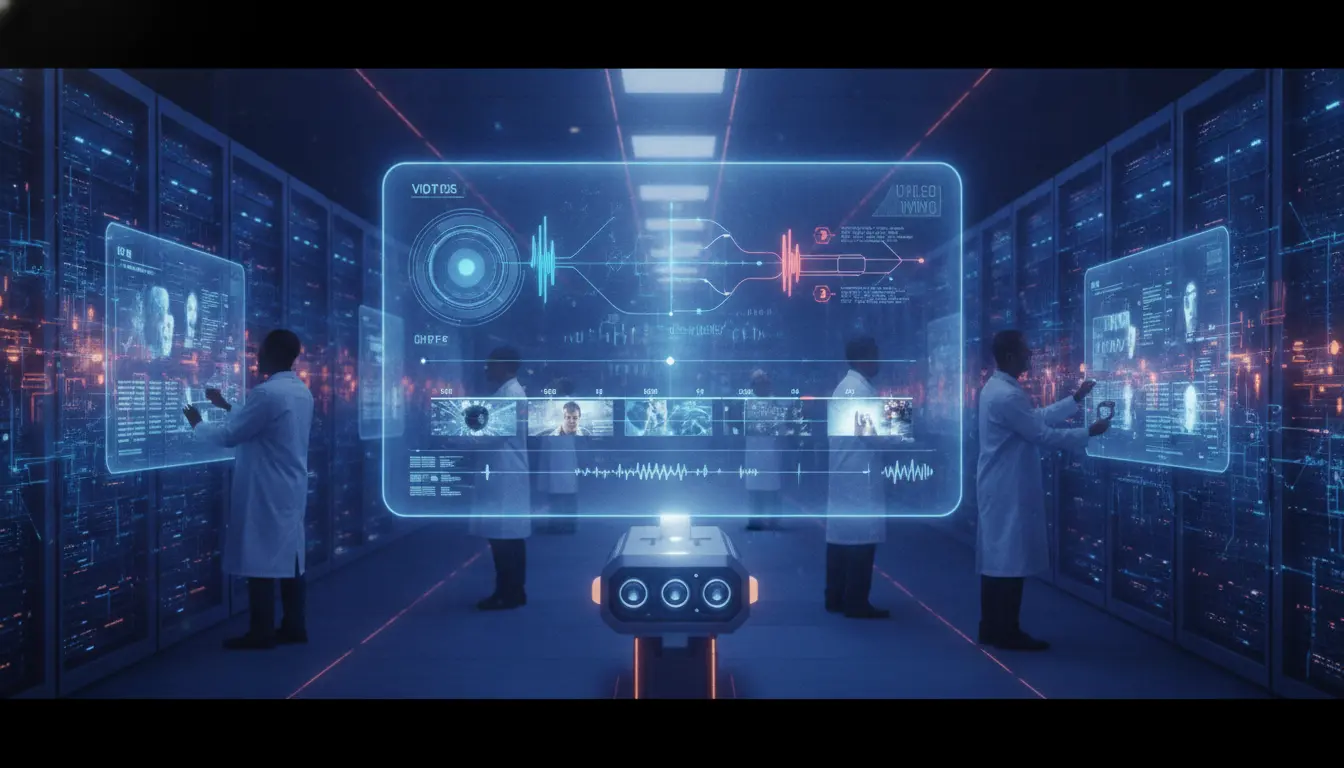
Major Tech Companies Accelerate Development of Advanced Multimodal AI for Long-Form Video with Synchronized Audio
The realm of artificial intelligence is on the cusp of another transformative leap, with major technology companies intensely focused on developing and deploying highly sophisticated multimodal AI models capable of generating coherent, minutes-long video complete with fully synchronized audio. This ambitious frontier in generative AI aims to transcend the current capabilities of short, silent, or minimally-synced video clips, promising a future where rich, narrative-driven visual and auditory content can be created with unprecedented ease and speed. Experts widely anticipate the public release of such advanced systems by leading tech firms within the next two to three years, fundamentally reshaping content creation, entertainment, and digital communication.
While AI’s ability to generate static images and short video segments has progressed dramatically in recent years, exemplified by tools like OpenAI’s Sora, Runway ML, and Pika Labs, the leap to producing extended, narratively consistent video with perfectly integrated and contextually aware audio presents a formidable set of technical challenges. Current models often struggle with maintaining character identity, scene continuity, and plausible physics over even modest durations. Adding synchronized speech, ambient soundscapes, and specific sound effects that dynamically react to on-screen actions, all while maintaining a coherent storyline for several minutes, requires a level of AI comprehension and generation that is a significant step beyond existing capabilities.
Key players like OpenAI, Google DeepMind, and Meta AI are pouring vast resources into solving these complex problems. The development involves advancements in several interconnected AI domains: improved understanding of temporal dynamics, more robust 3D scene representation, enhanced large language models for script generation and consistency, and sophisticated audio synthesis technologies. The challenge is not merely to stitch together individual frames or sound bites, but to create a unified, dynamic, and believable audiovisual experience. This includes generating realistic human speech that matches lip movements, designing sound effects that align with actions, and composing musical scores that underscore the emotional tone of the scene, all while ensuring the narrative logic holds across the entire duration of the generated video.
The potential implications of such technology are profound and far-reaching. Industries ranging from filmmaking and advertising to education and personal content creation stand to be revolutionized. Imagine filmmakers rapidly prototyping entire scenes or even short films, advertisers generating bespoke commercials for niche audiences, or educators creating interactive, narrative-driven learning modules on demand. The barrier to entry for high-quality content production could plummet, democratizing access to sophisticated storytelling tools and fostering a new wave of digital creativity. Content creators could iterate on ideas with unparalleled speed, bringing complex visions to life without the traditional constraints of production.
However, the advent of ultra-realistic, minutes-long AI-generated video with synchronized audio also raises significant ethical and societal concerns. The potential for creating highly convincing deepfakes and widespread misinformation campaigns would escalate dramatically, posing new challenges for media literacy and digital trust. Issues around intellectual property, bias in training data, and the displacement of human creative roles are also at the forefront of discussions. As these technologies mature, there will be an increased urgency for robust regulatory frameworks, transparent AI development practices, and the implementation of watermarking or provenance tools to distinguish AI-generated content from human-created works.
Despite the hurdles, the consensus among AI researchers and industry leaders is that these capabilities are not a matter of 'if,' but 'when.' The rapid pace of innovation suggests that major tech companies are aggressively pushing towards public releases of models that can meet these demanding criteria. Their competitive drive, combined with breakthroughs in neural network architectures and computational power, makes the vision of a world populated by sophisticated, AI-generated narratives with perfectly synchronized video and audio a highly probable reality by the close of 2026, marking a new era in generative media.
Stay Informed. Act Smarter.
Get weekly highlights, major headlines, and expert insights — then put your knowledge to work in our live prediction markets.
Related News
OpenAI Intensifies Development of Next-Generation Large Language Model Beyond GPT-5
OpenAI Nears Release of GPT-5, Poised to Redefine AI Capabilities
OpenAI Reportedly Poised to Unveil GPT-5.7 with Major Advances in AI Reasoning and Agentic Capabilities by Late 2026
OpenAI Prepares for Release of Next-Generation AI Model Amid Heightened Anticipation
OpenAI Readies GPT-5.6 'Sol' for Late 2026 Rollout, Free User Access a Major Focus
xAI Poised to Unveil Grok 4.6, Featuring Deeper X Integration and New Multimodal Capabilities
OpenAI Readies Astra Model for Public Debut, Anticipated to Redefine Scientific Reasoning Benchmarks
Outpoll Weekly Recap: AI (August 24 – 30, 2026)

EU AI Act Prepares for Full Implementation by 2026, Shaping Global Digital Governance
The Race for Television's Top Drama Honor Intensifies for the 2026 Emmy Awards