Politicsconflict & defenseMilitary Operations
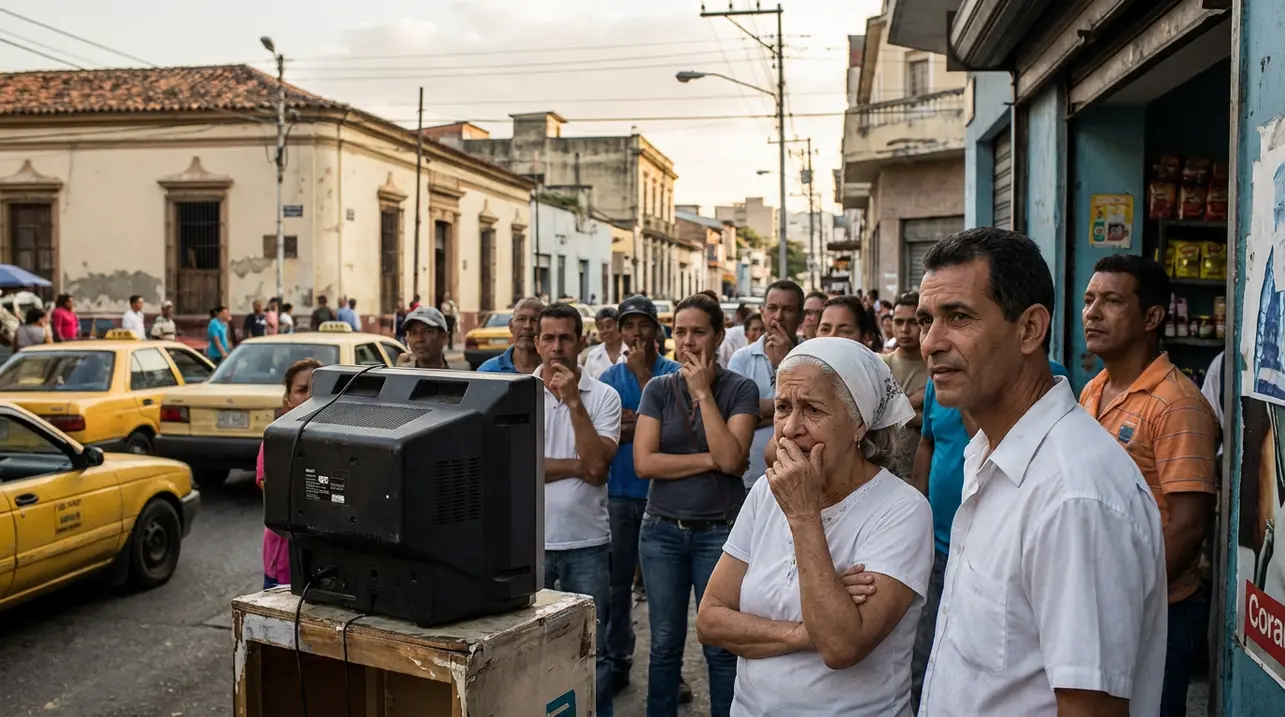
Venezuelans react with hope and worry to Maduro's arrest.
The streets of Caracas are a study in suspended animation, a city holding its breath. The news of an arrest warrant for Nicolás Maduro, issued by the United States, has landed not with a cathartic bang but with the uneasy tremor of a seismic shift whose aftershocks are impossible to predict.For the millions of Venezuelans who have endured a decade of economic collapse, political repression, and a humanitarian crisis that has scattered their families across continents, the initial flicker of hope is undeniable. It is the faintest light at the end of a very long, very dark tunnel—a tunnel carved by hyperinflation that rendered savings worthless, by medicine shortages that turned routine illnesses into death sentences, and by an exodus of over seven million people fleeing for survival.This legal action from Washington, targeting the sitting president on charges that could unravel his international standing, feels for many like the world is finally, formally, acknowledging their suffering. Yet, that hope is immediately tempered by a deep, ingrained worry, a fear born from bitter experience.What comes next? The political climate here is not just tense; it is a powder keg of competing ambitions, where the opposition remains fractured and the military's loyalty, a pillar of chavismo for 25 years, is the ultimate question mark. Venezuelans remember the chaos of past US interventions in the region, the promises of liberation that gave way to new forms of instability.They worry that removing Maduro, by force of international law or other means, could unleash a violent power vacuum or a protracted civil conflict, making a dire humanitarian situation catastrophic. There is also a profound anxiety about sovereignty; for all his failures, Maduro remains, to a segment of the population, a symbol of resistance to American hegemony.This move risks galvanizing his base and painting his opponents as foreign puppets, further polarizing a society already split down the middle. Expert commentary from regional analysts, like those at the Washington Office on Latin America, suggests this legal maneuver is less about an imminent extradition—a near impossibility given Maduro's control of state institutions—and more a strategic tool to further isolate his regime, squeeze its financial networks, and bolster the morale of the opposition ahead of critical, though currently unscheduled, elections.The possible consequences ripple far beyond Caracas. It signals a more aggressive US posture that will undoubtedly strain relations with other Latin American governments and global powers like Russia and China, who have propped up Maduro's government with loans and diplomatic cover.For the average Venezuelan, however, the calculus is painfully personal and immediate. It is the worry that sanctions, which have arguably tightened the regime's grip while punishing the populace, could intensify.
#Venezuela
#Nicolas Maduro
#US intervention
#political crisis
#Caracas
#sanctions
#lead focus news