Politicscourts & investigationsPolitical Trials
Venezuelan President Maduro's Capture Operation Detailed in Images and Maps
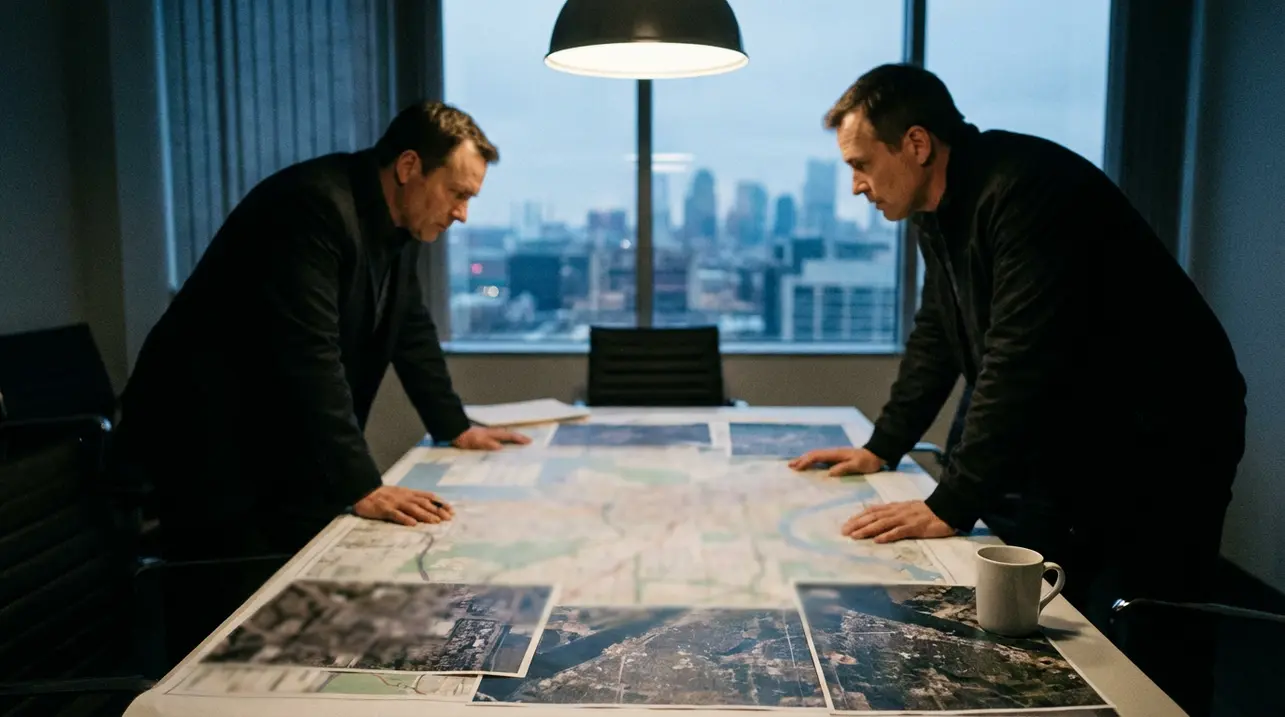
The operation to seize Venezuelan President Nicolás Maduro wasn't just a headline; it was a meticulously plotted political campaign, a high-stakes gambit playing out across satellite imagery and tactical maps that reveal a story far deeper than a simple arrest warrant. For those of us who live for the granular strategy of political warfare—the kind dissected in war rooms and debated in late-night polling sessions—the leaked details of this plan are a masterclass in modern regime-change calculus, framed not as a judicial act but as a full-spectrum offensive.Imagine the briefing rooms: maps of Caracas lit up with potential extraction routes from Miraflores Palace, satellite photos pinpointing loyalist military barracks in Maracay and Valencia, and contingency plans for securing the critical PDVSA oil facilities. This was never about a quiet surrender; it was a blueprint for shock and awe, designed to create a cascading collapse of the state apparatus within hours.The architects, presumably within opposition circles and their international backers, were betting on a precise sequence—decapitate the leadership, trigger mass defections in the armed forces, and flood the streets with a populace primed by years of economic hardship, all before pro-Maduro forces in the colectivos or elements of the Bolivarian National Guard could mobilize a coherent counter-strike. It’s the political equivalent of a quarterback sneak, relying on speed and surprise to breach the line where a frontal assault would fail.Historically, such operations hinge on one fragile variable: the loyalty of the military's mid-rank officers. We saw this playbook in the short-lived 2002 coup against Hugo Chávez, where initial success crumbled as key army units held firm, a lesson that this latest plan seemed to account for with its detailed focus on isolating command structures.The involvement of foreign actors, hinted at through intelligence-sharing channels and the very technology used for mapping, adds another layer of geopolitical brinksmanship, turning Venezuela into a proxy battlefield where Washington, Moscow, and Beijing all have vested interests in the outcome. The consequences of a failed attempt, however, are starkly clear: they grant Maduro the perfect narrative of a foreign-backed conspiracy, allowing him to further purge moderates, tighten the grip of his Cuban-advised security apparatus, and rally nationalist sentiment.For the Venezuelan people, already enduring hyperinflation and scarcity, it represents another agonizing turn in a prolonged crisis where every potential turning point carries the risk of spiraling into greater violence or deeper repression. The maps and photos, therefore, are more than operational artifacts; they are a stark testament to a nation trapped in a protracted, unresolved conflict, where the battle for control is fought as much in the realm of perception and digital coordinates as it is in the streets of Petare or the halls of power.
#featured
#Nicolas Maduro
#Venezuela
#extradition
#US court
#operation
#satellite images
#Caracas