Politicscourts & investigationsPolitical Trials
Venezuelan President Maduro's Capture Depicted in Photos and Maps
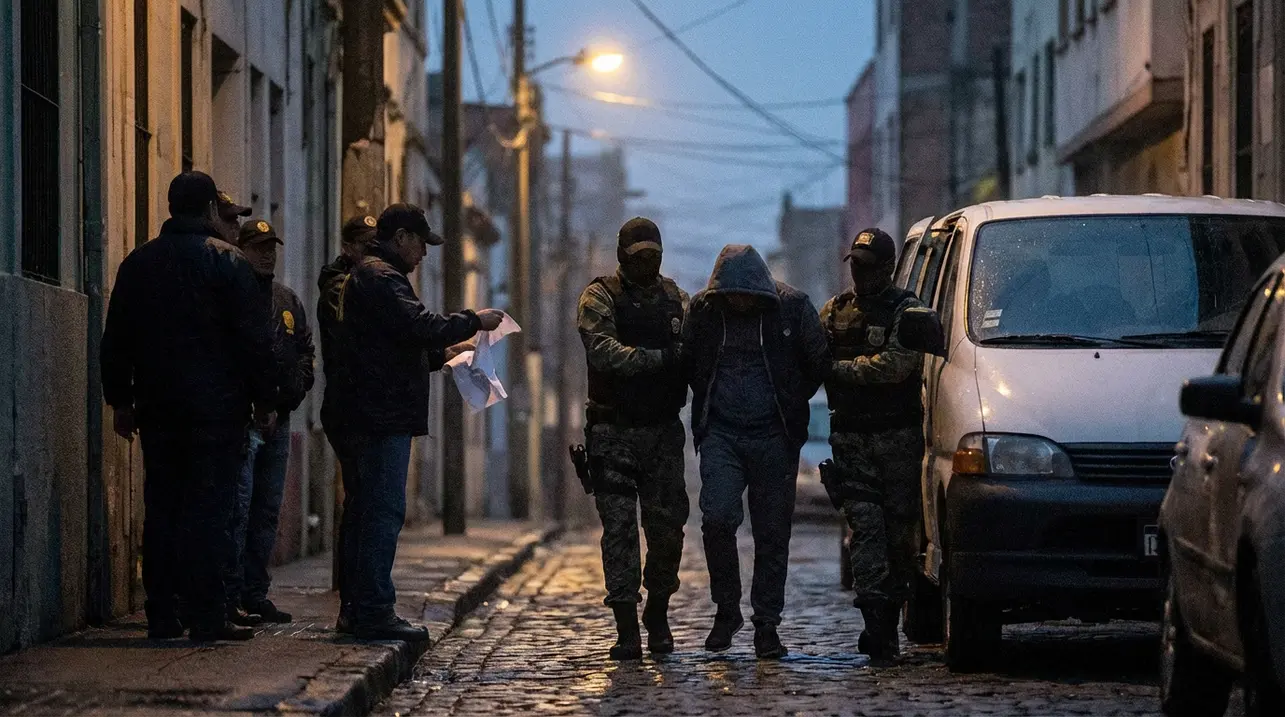
The images, when they first surfaced, were stark and disorienting: a series of photographs and annotated satellite maps depicting what appeared to be the capture of Venezuelan President Nicolás Maduro. This wasn't just a news bulletin; it was a visual dossier, a geopolitical shockwave transmitted pixel by pixel.To analyze this, one must treat it not as a confirmed event but as a high-impact information operation, a scenario that forces us to map the fault lines of regional stability and great-power confrontation. The immediate, visceral reaction is to assess veracity—are these photos from a recent clandestine operation, clever deepfakes, or repurposed imagery from a training exercise? The provenance is everything, and in the fog of information warfare, the first casualty is often context.Satellite imagery, with its cold, orbital gaze, adds a layer of chilling authenticity, plotting coordinates and movements with a precision that feels incontrovertible. Yet, this is precisely the tool of modern political risk analysts: to separate signal from noise, to understand that the release of such materials is itself an act of aggression, designed to destabilize, to test alliances, and to probe for weakness in Caracas and its international backers, primarily Russia and China.Historically, the visual depiction of a leader's downfall—from the grainy footage of Ceaușescu's execution to the iconographic statue-toppling in Baghdad—has served as a powerful psychological and political accelerant. In Venezuela's case, a nation already fractured by hyperinflation, mass migration, and a parallel government led by Juan Guaidó, the mere suggestion of Maduro's physical seizure would trigger immediate and violent contingency planning.Who benefits from this narrative? Opposition groups seeking a catalyst? External actors, like the United States or Colombia, testing a new phase of pressure? Or, conversely, could it be a false flag, orchestrated by Maduro's own circle to justify a further crackdown, a 'martyrdom-in-waiting' to rally nationalist sentiment and tighten security apparatus control? The operational details implied in the maps—extraction routes, safe houses, possible maritime or aerial egress points—speak to a level of planning that, if real, would suggest unprecedented intelligence penetration of the Miraflores Palace and the loyalist circles of the PSUV. The consequences cascade: immediate volatility in global oil markets, given Venezuela's vast though crippled reserves; a potential flashpoint for military intervention by allied states like Cuba or Russia, which has military contractors on the ground; and a severe test for international bodies like the UN, which would be forced into a recognition crisis between Maduro's government and the opposition.Expert commentary would likely be divided between intelligence veterans cautioning against rash conclusions and regional scholars highlighting the desperate plight of the Venezuelan people, for whom such imagery represents either a long-hoped-for liberation or the prelude to even greater chaos. The analytical insight here is that in the 21st century, the *depiction* of power shift can be as destabilizing as the shift itself.
#featured
#Venezuela
#Nicolas Maduro
#extradition
#New York court
#arrest operation
#satellite images
#Caracas