

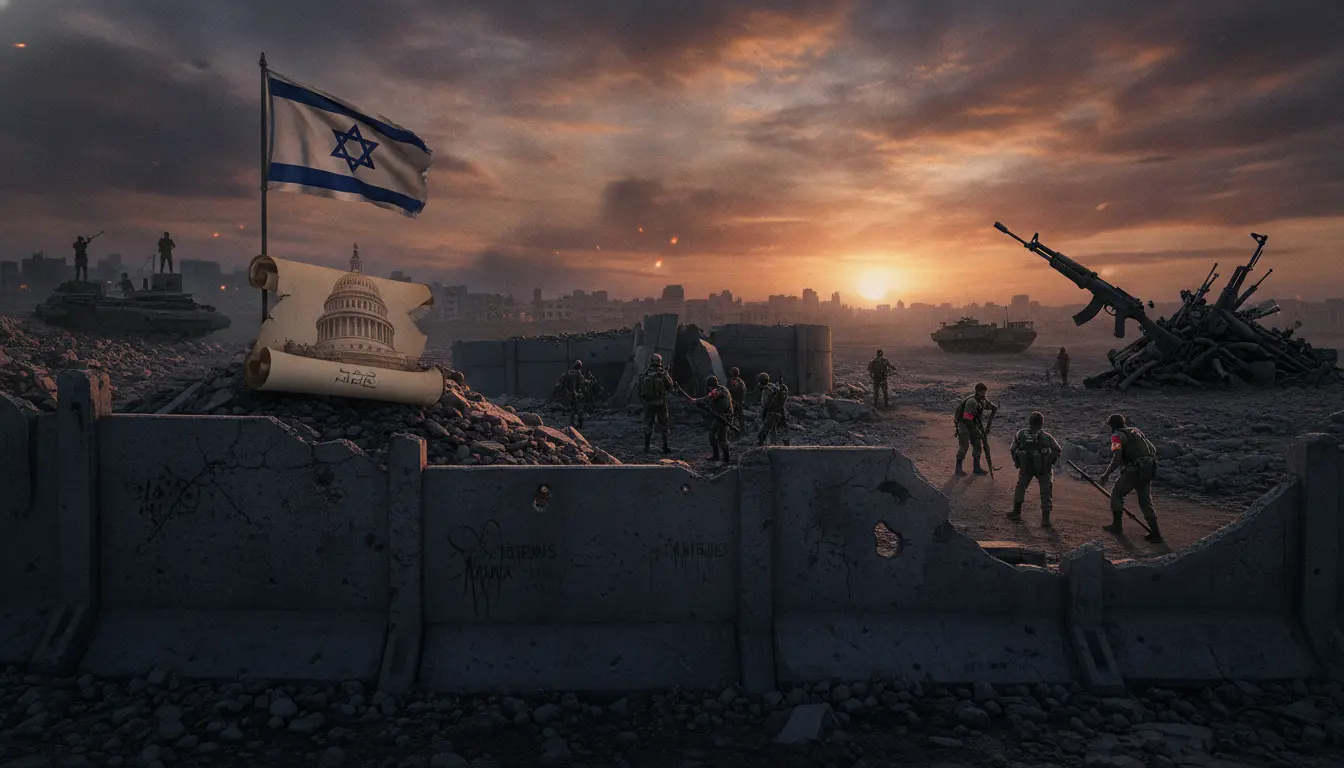
Israel Rejects US Post-Conflict Gaza Plan, Prioritizing Hamas Disarmament
Tensions are escalating between Washington and Jerusalem over the future governance and security arrangements in the Gaza Strip, following Israel’s explicit rejection of a United States-backed post-conflict plan. The Israeli government has reiterated its firm stance that any withdrawal or significant shift in the operational landscape of Gaza is contingent upon the complete disarmament of Hamas, a demand that presents a substantial hurdle to diplomatic efforts aimed at establishing a durable peace and stability in the war-torn enclave. This divergence underscores the profound challenges facing a coordinated strategy for Gaza's day-after scenario, with the humanitarian crisis deepening and international pressure mounting for a comprehensive resolution.
The U.S. plan, reportedly developed through extensive diplomatic efforts led by Secretary of State Antony Blinken and other high-ranking officials, sought to lay out a multi-stage framework for Gaza. While specific details of the American proposal remain undisclosed, it is understood to involve elements such as a phased Israeli withdrawal, the establishment of an interim Palestinian administration (possibly involving a revitalized Palestinian Authority), international oversight for reconstruction, and mechanisms for humanitarian aid delivery. The Biden administration views this type of comprehensive framework as crucial for preventing a power vacuum, ensuring long-term security for Israel, and paving the way for eventual Palestinian statehood. However, Israel's immediate priority continues to be the complete eradication of Hamas's military and governing capabilities, viewing anything less as an unacceptable security risk.
Prime Minister Benjamin Netanyahu's government has consistently articulated that Israel cannot accept a scenario where Hamas retains any military infrastructure or political influence in Gaza. This position is deeply rooted in the traumatic events of October 7th, which profoundly reshaped Israel's security doctrine and public sentiment. Israeli officials contend that merely containing Hamas is insufficient and that a complete disarmament is non-negotiable for ensuring the safety of its citizens. The concept of an international or even a reformed Palestinian Authority presence in Gaza, without a prior and verifiable dismantling of Hamas's arsenal, is seen in Jerusalem as fundamentally flawed and dangerous, potentially allowing the militant group to rearm and resurface.
The current impasse highlights the delicate balance of interests and profound mistrust that characterizes the Israeli-Palestinian conflict. The United States, while a staunch ally of Israel, is also navigating complex regional dynamics, including the need to maintain credibility with Arab partners and address the severe humanitarian situation in Gaza. Washington fears that without a credible political horizon and a clear post-conflict plan, the cycle of violence will perpetuate, further destabilizing the Middle East and undermining prospects for broader normalization agreements. The U.S. has repeatedly emphasized the importance of a diplomatic solution that addresses both Israeli security needs and Palestinian aspirations.
Bridging this gap will require immense diplomatic dexterity and potentially significant concessions from all parties involved. The Israeli government faces internal political pressures, with its hardline coalition partners insisting on uncompromising security measures and a prolonged military presence. Simultaneously, the international community continues to push for a rapid increase in humanitarian aid and a political process that can lead to a two-state solution. The long-term vision for Gaza, including its reconstruction, economic revitalization, and future governance, remains largely undefined, with the lack of a shared understanding between key allies threatening to prolong instability.
The coming months are expected to see intensified diplomatic efforts to reconcile these diverging visions. The prospect of a new agreement would indeed mark a significant turning point, not only for Gaza but for regional stability and the future of U.S.-Israeli relations. Yet, the current rejection of the U.S.-backed framework underscores the formidable obstacles ahead, with the core issue of Hamas's future remaining the primary contention point and a crucial determinant of any viable path forward for the devastated territory.
The global community watches with trepidation, recognizing that a protracted period of uncertainty in Gaza risks further radicalization, regional spillover, and continued human suffering. The quest for a consensus on the 'day after' is not merely a political exercise but a critical determinant for millions living under the shadow of conflict, with the clock ticking towards an elusive resolution.
Stay Informed. Act Smarter.
Get weekly highlights, major headlines, and expert insights — then put your knowledge to work in our live prediction markets.
Related News

Trump-Backed 'Board of Peace' Initiative Envisions Hamas Disarmament Amidst Deep-Seated Regional Challenges

Israel and Lebanon Ink US-Brokered Framework for Peace Talks Amid Ongoing Hostilities
Cross-Border Hostilities Intensify Between Israel and Hezbollah, Raising Regional War Fears

EU Faces Deepening Rift Over Potential Ban on Israeli Settlement Imports
US Congressman Ro Khanna's West Bank Detention Sparks Demands for Settler Accountability
Renewed US Airstrikes on Iran-Backed Militias Signal Persistent Threat of Escalation in Middle East

Iran war live: US-Tehran agree roadmap to reach a final deal in 60 days

Israel Warns US of Alleged Iranian Assassination Plot Against Donald Trump

Iranian Hardline Newspaper Publishes 'Revenge Target' List of Global Leaders Amid Heightened Regional Tensions
US-Kenya Health Partnership Jolted as Court Blocks Construction of High-Containment Lab