

- News
- Politics
- Cross-Border Hostilities Intensify Between Israel and Hezbollah, Raising Regional War Fears
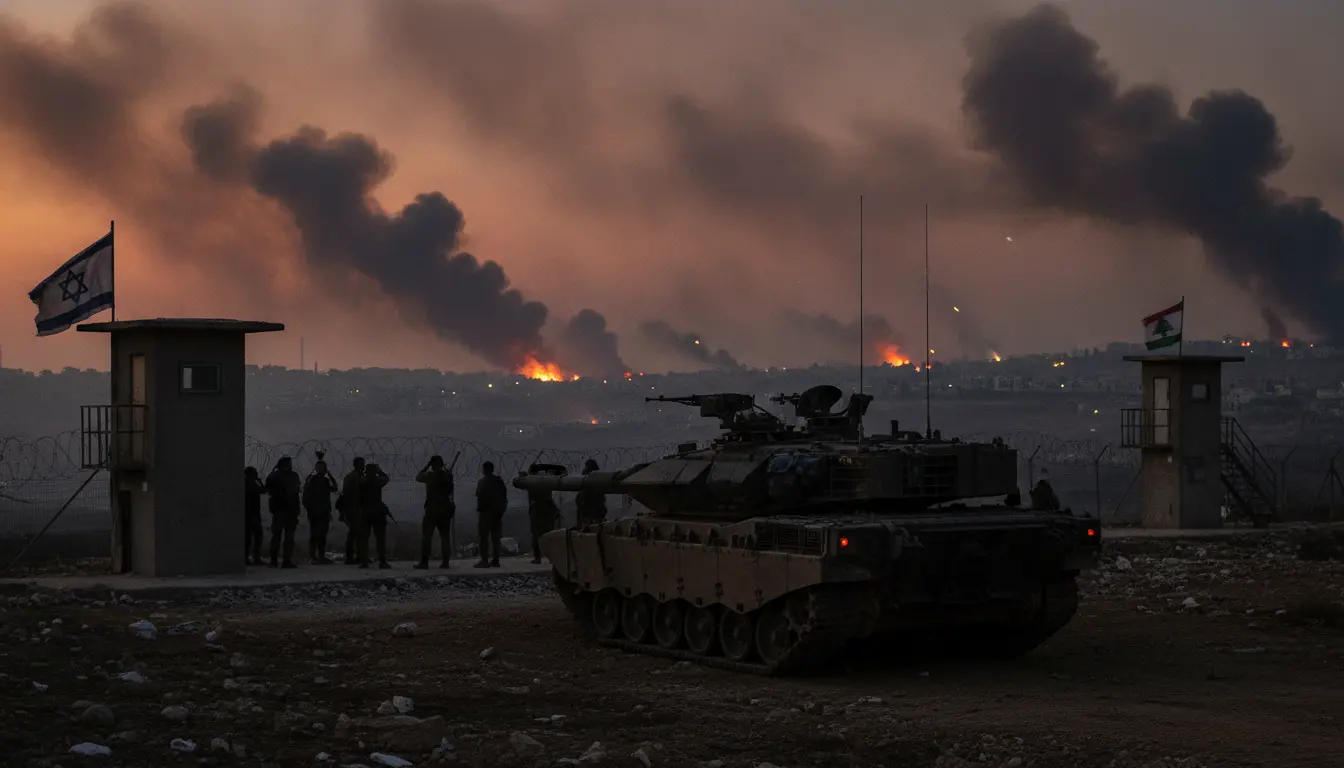
Cross-Border Hostilities Intensify Between Israel and Hezbollah, Raising Regional War Fears
Tensions along the Israel-Lebanon border have reached a critical juncture, with daily exchanges of fire and escalating rhetoric threatening to ignite a full-scale regional conflict. Since the outbreak of hostilities in Gaza in October 2023, the frontier has become a flashpoint, seeing a consistent uptick in clashes between the Israeli military and Hezbollah, a powerful Lebanese Shiite militant group and political party. Despite frantic diplomatic efforts by international mediators, most notably the United States, a lasting de-escalation remains elusive, leaving both sides on high alert and the wider Middle East bracing for potential catastrophe. The current standoff is characterized by a dangerous cycle of provocation and retaliation, drawing increasing concern from global capitals over the implications of a broader war.
At the heart of the current crisis is the deeply entrenched animosity between Israel and Hezbollah, a history punctuated by devastating conflicts like the 2006 Lebanon War. Hezbollah, backed by Iran, has amassed a formidable arsenal of rockets, missiles, and drones, positioning itself as a key actor in the so-called “Axis of Resistance.” Its declared solidarity with Hamas following the Gaza conflict has seen it launch numerous attacks on northern Israel, targeting military sites and civilian communities. For Israel, these actions represent an intolerable security threat, particularly after the widespread displacement of tens of thousands of its citizens from border towns. The Israeli government has repeatedly stated its determination to ensure the safe return of its residents, implying a willingness to use significant military force to push Hezbollah forces away from the border, even if it means a prolonged campaign.
Diplomatic initiatives, spearheaded by U.S. envoy Amos Hochstein, have sought to broker a “framework deal” aimed at delineating the contested border and securing Hezbollah's withdrawal from key positions, including those in the disputed Shebaa Farms area. However, these efforts have consistently faltered. Hezbollah has explicitly linked any significant de-escalation or adherence to such a deal to a comprehensive ceasefire in Gaza, a condition Israel has largely resisted, at least in the comprehensive manner demanded by the group. This intransigence on both sides has effectively paralyzed mediation attempts, leaving a dangerous vacuum where military actions continue to define the engagement.
Recent weeks have witnessed a significant intensification of Israeli operations, including targeted drone strikes deep into Lebanese territory, eliminating key Hezbollah commanders and infrastructure. Concurrently, Israeli officials have openly discussed preparations for an “extended stay” in Lebanon should a full-scale confrontation become unavoidable, signaling a readiness for a prolonged ground or air campaign beyond retaliatory strikes. Hezbollah, in turn, has responded with increasingly sophisticated and long-range rocket attacks, demonstrating its capacity to strike deeper into Israel. The rhetoric from both sides has grown increasingly bellicose, with mutual threats of devastating consequences should the conflict further expand, raising fears of miscalculation that could rapidly spiral out of control.
The stakes are exceptionally high, not just for Israel and Lebanon, but for the stability of the entire region. A full-blown war would undoubtedly lead to widespread destruction, significant civilian casualties on both sides, and potentially draw in other regional actors, including Iran and its proxies across the Middle East. It would also further exacerbate the humanitarian crisis in Lebanon, a country already grappling with severe economic and political instability. The international community views the situation with growing alarm, urging restraint and renewed diplomatic engagement, but concrete pathways to de-escalation remain obscured by the deeply entrenched positions of the primary belligerents and the interconnected nature of regional conflicts.
As summer progresses, the prospect of a major escalation looms large, fueled by unresolved grievances, unyielding security imperatives, and the absence of a viable political solution. The window for diplomacy appears to be narrowing, placing immense pressure on international mediators to find a breakthrough before the volatile border transforms into the front line of a far wider, and potentially catastrophic, regional war.
Stay Informed. Act Smarter.
Get weekly highlights, major headlines, and expert insights — then put your knowledge to work in our live prediction markets.
Related News

Israel and Lebanon Ink US-Brokered Framework for Peace Talks Amid Ongoing Hostilities
Renewed US Airstrikes on Iran-Backed Militias Signal Persistent Threat of Escalation in Middle East
Israel Rejects US Post-Conflict Gaza Plan, Prioritizing Hamas Disarmament

Iran war live: US-Tehran agree roadmap to reach a final deal in 60 days

Iranian Hardline Newspaper Publishes 'Revenge Target' List of Global Leaders Amid Heightened Regional Tensions

Trump-Backed 'Board of Peace' Initiative Envisions Hamas Disarmament Amidst Deep-Seated Regional Challenges
US Congressman Ro Khanna's West Bank Detention Sparks Demands for Settler Accountability

Israel Warns US of Alleged Iranian Assassination Plot Against Donald Trump

EU Faces Deepening Rift Over Potential Ban on Israeli Settlement Imports

Bipartisan War Powers Resolution on Iran Sets Stage for Contentious Presidential Veto Showdown