

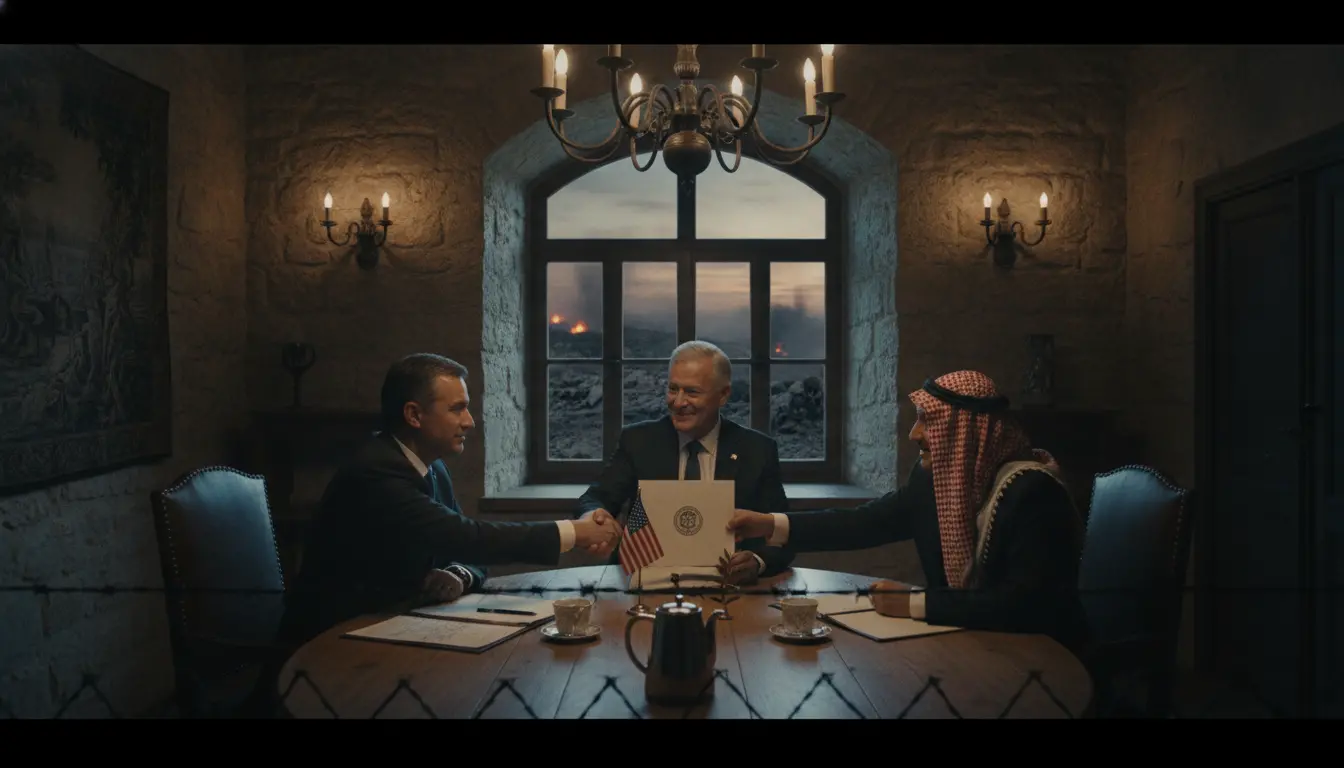
Israel and Lebanon Ink US-Brokered Framework for Peace Talks Amid Ongoing Hostilities
In a significant diplomatic maneuver against a backdrop of simmering conflict, Israel and Lebanon have signed a U.S.-brokered framework agreement to launch negotiations aimed at achieving a formal, comprehensive peace. The agreement, the result of months of quiet, intensive diplomacy led by American envoys, represents the most substantial step toward normalizing relations between the two neighboring states, which have technically remained at war for over seven decades. This development comes even as daily cross-border fire between the Israel Defense Forces (IDF) and the Iran-backed militant group Hezbollah continues to threaten a wider regional escalation, making the pursuit of a diplomatic track both urgent and exceedingly fragile.
The framework agreement lays out a structured process for talks, though officials on all sides caution that it is merely the beginning of a long and arduous journey. The historical context is laden with conflict and deep-seated mistrust. Since the 1948 Arab-Israeli War, the two nations have never had formal diplomatic relations. Their shared border has been a flashpoint for decades, most notably during Israel's lengthy occupation of southern Lebanon and the devastating 34-day war in 2006. That conflict ended with a UN-brokered ceasefire, but it failed to resolve the underlying issues, leaving a volatile status quo policed by UN peacekeepers and dominated by the ever-present threat of another, more destructive war.
The primary and most formidable obstacle to any lasting peace is the role of Hezbollah. The Shiite political party and militant organization, which wields immense power within Lebanon, does not recognize Israel's right to exist and is a key component of Iran's regional "axis of resistance." The Lebanese government's ability to enforce any potential treaty without at least the tacit approval of Hezbollah is highly questionable. Any agreement would almost certainly require major security concessions, such as the withdrawal of Hezbollah's elite Radwan forces from the border area, a demand the group has publicly rejected. Analysts believe that Hezbollah's decision-making will be heavily influenced by its patron, Iran, tying the fate of this bilateral negotiation to the broader geopolitical chess match between Tehran and the West.
This breakthrough is a testament to the persistent, often behind-the-scenes, efforts of the United States. American officials, including senior advisor Amos Hochstein, have been instrumental in mediating between the two sides. The diplomatic strategy appears to build upon the precedent set by the successful 2022 maritime border agreement. That deal, also brokered by Hochstein, resolved a long-standing dispute over offshore natural gas fields, demonstrating that pragmatic, interest-based agreements were possible even in the absence of formal relations. Washington hopes to replicate that success on the far more complex and dangerous land border, framing the potential for economic recovery and stability as a powerful incentive for a war-weary Lebanon.
For both Israel and Lebanon, the stakes could not be higher. For Israel, a peace treaty would secure its northern frontier, neutralizing one of its most potent adversaries and allowing tens of thousands of evacuated residents to return to their homes. For Lebanon, which is mired in a catastrophic economic crisis, a durable peace could unlock desperately needed international investment, stabilize its fractured political system, and prevent a war that would inflict unimaginable destruction. However, the path from this initial framework to a signed treaty is fraught with potential spoilers, from hardliners in both countries to external actors who benefit from the continued instability.
The signing of the framework is being hailed in diplomatic circles as a crucial de-escalation mechanism, creating a political off-ramp from the current cycle of violence. Yet, the deep chasm of distrust and the military realities on the ground remain. The success of these future negotiations will depend on the political courage of leaders in Beirut and Jerusalem, the sustained and skillful engagement of American mediators, and, critically, a strategic calculation by Hezbollah and Iran that a negotiated settlement is preferable to the alternative of a full-scale, devastating regional war. While a final peace accord remains a distant prospect, this agreement opens a door that has been firmly shut for generations.
Stay Informed. Act Smarter.
Get weekly highlights, major headlines, and expert insights — then put your knowledge to work in our live prediction markets.
Related News
Cross-Border Hostilities Intensify Between Israel and Hezbollah, Raising Regional War Fears

Iran war live: US-Tehran agree roadmap to reach a final deal in 60 days
Israel Rejects US Post-Conflict Gaza Plan, Prioritizing Hamas Disarmament
Trump-Backed 'Board of Peace' Initiative Envisions Hamas Disarmament Amidst Deep-Seated Regional Challenges
Renewed US Airstrikes on Iran-Backed Militias Signal Persistent Threat of Escalation in Middle East
US Congressman Ro Khanna's West Bank Detention Sparks Demands for Settler Accountability

Iranian Hardline Newspaper Publishes 'Revenge Target' List of Global Leaders Amid Heightened Regional Tensions

EU Faces Deepening Rift Over Potential Ban on Israeli Settlement Imports

Israel Warns US of Alleged Iranian Assassination Plot Against Donald Trump

Bipartisan War Powers Resolution on Iran Sets Stage for Contentious Presidential Veto Showdown