

- News
- Politics
- Trump-Backed 'Board of Peace' Initiative Envisions Hamas Disarmament Amidst Deep-Seated Regional Challenges
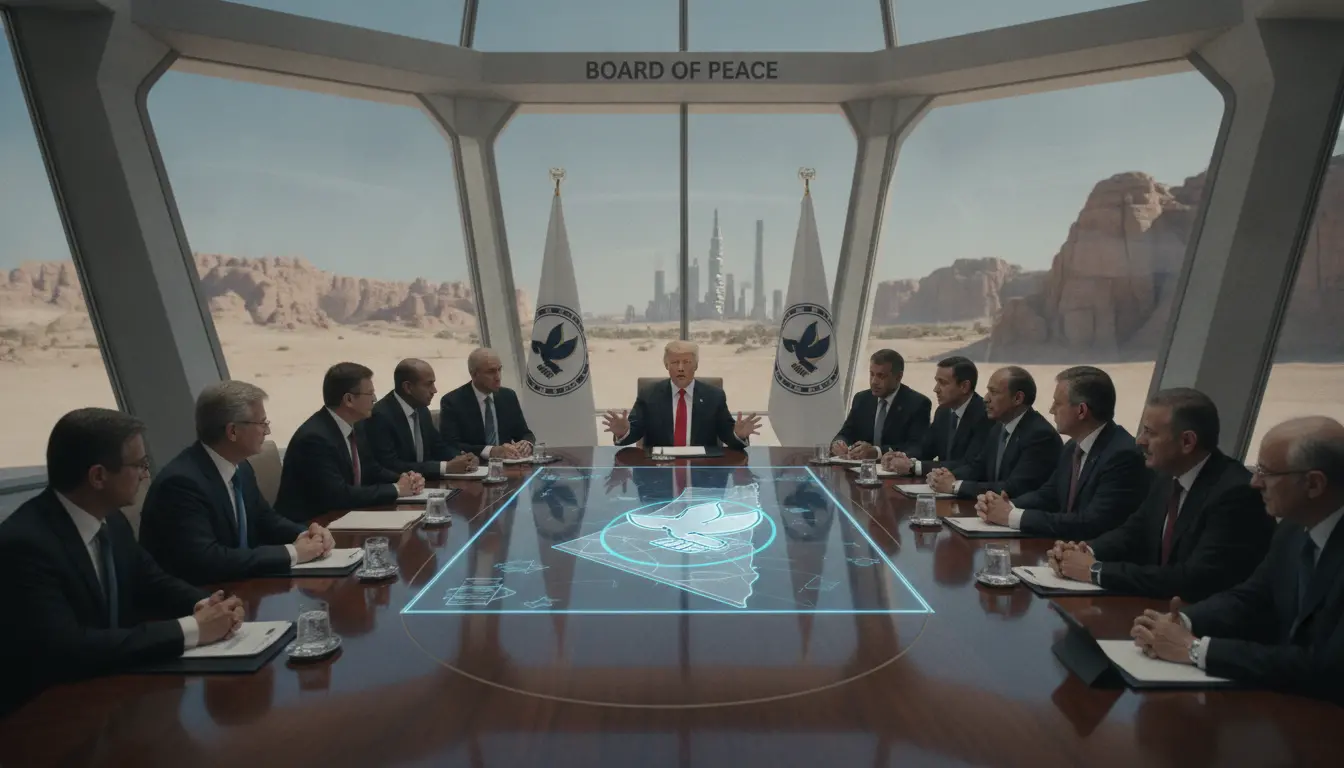
Trump-Backed 'Board of Peace' Initiative Envisions Hamas Disarmament Amidst Deep-Seated Regional Challenges
A new diplomatic concept, a "Board of Peace," reportedly championed by former President Donald Trump, is emerging as a potential framework for addressing the long-standing Israeli-Palestinian conflict, with a central tenet being the disarmament of Hamas. This ambitious proposal, aiming for implementation by September 2026, surfaces at a time of unprecedented regional volatility following the October 7 attacks and the subsequent war in Gaza. While the specifics of the "Board of Peace" remain largely unarticulated publicly, the very mention of disarming Hamas signals a bold, albeit formidable, diplomatic undertaking that would require a seismic shift in the geopolitical landscape of the Middle East and a profound commitment from all parties involved.
The context for such a far-reaching proposal is rooted in decades of unresolved conflict and, more immediately, the catastrophic events since last autumn. Hamas, the Islamist militant group that governs Gaza, has been designated a terrorist organization by numerous countries, including the United States and Israel. Its extensive military capabilities, demonstrated on October 7, and its ideological commitment to armed resistance against Israel, are perceived by many as fundamental obstacles to any lasting peace. Previous attempts at peace-making have often sidestepped or failed to adequately address the future of armed Palestinian factions, leading to cycles of violence and renewed conflict. The current war in Gaza has brought the issue of Hamas's governance and military strength to the forefront, with Israel stating its primary objective is to dismantle the group's capabilities entirely.
While details are scarce, the "Board of Peace" plan, as suggested by its proponents, appears to aim for a comprehensive, internationally backed mechanism to oversee a transition away from armed conflict. Such a board would likely involve a multi-national consortium tasked with negotiating, monitoring, and enforcing a disarmament agreement. Historically, similar initiatives have struggled with verification, trust-building, and the absence of a unified Palestinian political authority. A disarmament process for a deeply entrenched organization like Hamas would necessitate guarantees for its members, an alternative political path, and substantial security assurances for both Israelis and Palestinians, alongside a credible plan for the governance and reconstruction of Gaza.
The success of any such initiative hinges on the alignment of numerous key players, whose interests and objectives often diverge sharply. Israel's security establishment views the complete incapacitation of Hamas as non-negotiable, a stance hardened by the October 7 atrocities. The Palestinian Authority, which currently holds limited sway in the West Bank and no authority in Gaza, would need to be revitalized and empowered to assume control, a prospect fraught with internal divisions and external skepticism. Regional Arab states, while wary of Hamas's influence, also face domestic pressures regarding the Palestinian cause. Meanwhile, the United States, irrespective of who occupies the White House, remains a critical broker, but its capacity to unilaterally impose a solution is limited, and past efforts have often floundered due to a lack of sustained political will or misaligned priorities among the parties.
The hurdles to achieving a Hamas disarmament agreement by the ambitious 2026 timeline are immense, perhaps unprecedented. Firstly, Hamas's very existence as an armed entity is intertwined with its ideological identity and perceived role as a defender of Palestinian rights. Convincing its leadership and cadres to voluntarily disarm and transition into a purely political entity would require a profound shift in its strategic outlook, likely facilitated only by an overwhelmingly compelling alternative vision for the Palestinian future. Secondly, the verification and implementation of disarmament would present monumental logistical and security challenges in a densely populated and devastated Gaza Strip, where weaponry and tunnels are deeply embedded. The trust deficit between Israelis and Palestinians is at an all-time low, making mutual concessions and cooperation extraordinarily difficult.
Furthermore, the political landscapes in both Israel and the Palestinian territories, characterized by deep divisions and a lack of clear leadership succession, complicate any long-term planning. The potential return of Donald Trump to the U.S. presidency would undoubtedly inject a new dynamic into Middle East diplomacy, possibly leveraging his unique negotiating style and relationships from the Abraham Accords era. However, even with significant international backing and sustained pressure, the path to disarming a powerful, ideologically driven non-state actor like Hamas, and integrating its remnants into a viable political framework, is laden with peril. While the stated goal of disarmament offers a theoretical route to greater stability, the pragmatic challenges suggest an uphill battle that would demand unprecedented diplomatic ingenuity, patience, and a fundamental recalculation of strategic interests by all parties involved.
Ultimately, the "Board of Peace" concept, while offering a glimpse into a potential future diplomatic push, highlights the monumental task of securing a lasting resolution in one of the world's most intractable conflicts. The prospect of disarming Hamas by a specific date, even years away, underscores the aspiration for a transformative change, yet it equally illuminates the deep-seated political, ideological, and security obstacles that have long defied resolution.
Stay Informed. Act Smarter.
Get weekly highlights, major headlines, and expert insights — then put your knowledge to work in our live prediction markets.
Related News
Israel Rejects US Post-Conflict Gaza Plan, Prioritizing Hamas Disarmament

Israel and Lebanon Ink US-Brokered Framework for Peace Talks Amid Ongoing Hostilities

Israel Warns US of Alleged Iranian Assassination Plot Against Donald Trump
Cross-Border Hostilities Intensify Between Israel and Hezbollah, Raising Regional War Fears

Iran war live: US-Tehran agree roadmap to reach a final deal in 60 days

EU Faces Deepening Rift Over Potential Ban on Israeli Settlement Imports
Speculation Intensifies Over Donald Trump's 2028 Presidential Bid Ahead of Key 2026 Political Crossroads
Trump Requests $87.6 Billion for Iran Operations Amidst Growing Congressional Scrutiny Over War Powers
US Congressman Ro Khanna's West Bank Detention Sparks Demands for Settler Accountability

Ukraine Eyes Domestic Patriot Missile Production by 2026 with US Endorsement