PoliticsdiplomacyInternational Organizations
Hong Kong to host first Interpol annual meeting, boosting ASEAN ties.
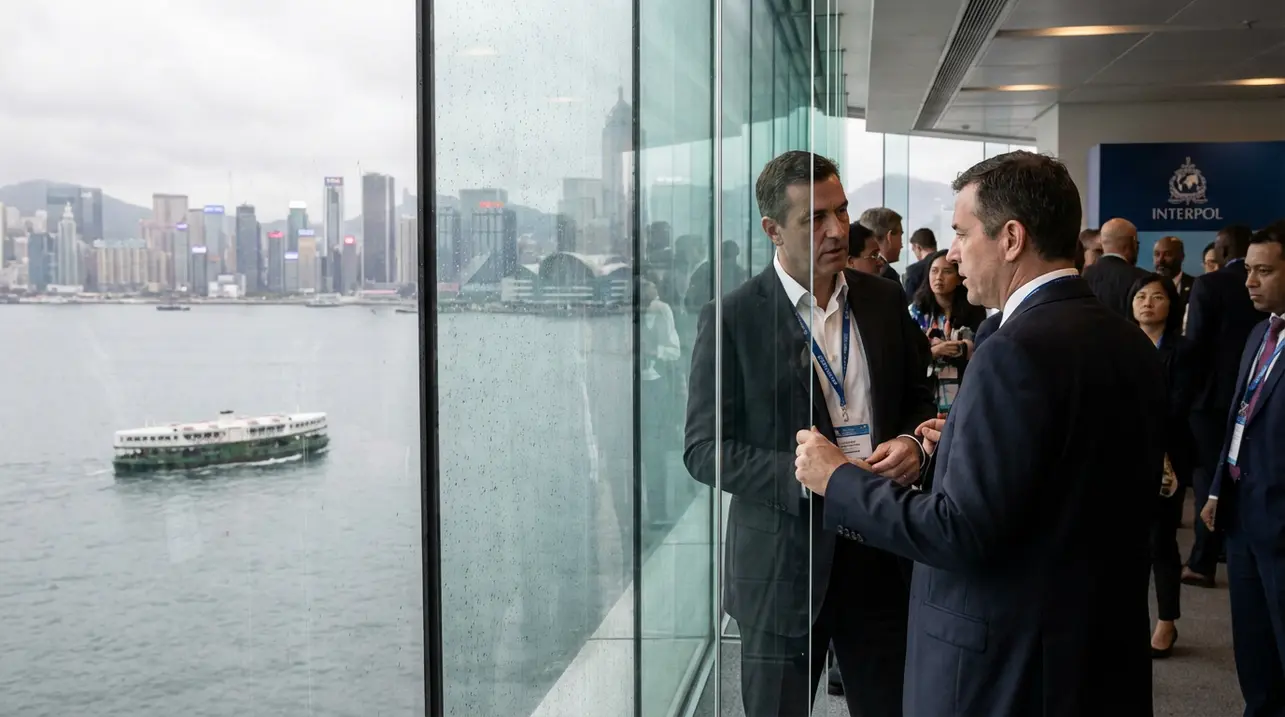
Hong Kong’s selection as the host for Interpol’s forthcoming annual general assembly this November marks a significant, and deeply symbolic, pivot in the geopolitical landscape of international law enforcement. For the first time, the city will welcome the global policing body’s top-tier meeting, a move championed by Police Commissioner Joe Chow Yat-ming as a critical step to amplify Hong Kong’s role as a ‘superconnector’—a term laden with strategic ambition—particularly with ASEAN nations.Commissioner Chow, whose credentials include a stint as a criminal intelligence officer at Interpol’s Lyon headquarters from 2012 to 2013, argues that Hong Kong’s ‘high international standing’ remains an unaltered asset in fostering these ties. This development cannot be viewed in a vacuum; it arrives amidst a complex backdrop where Hong Kong’s legal and political autonomy is intensely scrutinized following the sweeping National Security Law imposed by Beijing in 2020.Critics in Western capitals may view this hosting privilege as a reward for alignment, a soft-power victory for China that integrates its special administrative region deeper into the architecture of global security governance, thereby subtly normalizing its post-2019 legal framework on the world stage. Historically, Interpol, despite its mandate of neutrality, has navigated a minefield of political pressures, with controversies surrounding red notices issued for dissidents by authoritarian regimes.Hong Kong’s ascendance as a host, therefore, is a masterstroke in narrative control, allowing Beijing to project an image of a stable, rule-of-law hub while simultaneously bolstering its influence within Southeast Asia through enhanced police collaboration. The ASEAN dimension is particularly acute; as tensions simmer in the South China Sea and transnational crime—from cyber fraud to drug trafficking—becomes more sophisticated, a coordinated regional response is paramount.Hong Kong, with its common law heritage and historical ties, positions itself as the ideal bridge between Chinese investigative rigor and ASEAN’s operational needs. However, analysts caution that this ‘superconnector’ role may increasingly funnel intelligence and policing priorities through a lens ultimately accountable to Beijing, potentially complicating extradition discussions and data-sharing protocols with democracies that have expressed deep reservations about Hong Kong’s judicial independence.The long-term consequence could be a gradual realignment of Southeast Asian law enforcement dependencies, drawing them closer into China’s orbit under the pragmatic guise of combating crime, a modern iteration of sphere-of-influence politics dressed in the uniform of international cooperation. For Commissioner Chow and the Hong Kong police, the November meeting is not merely a logistical event but a potent platform to cement a new legacy, one that seeks to assure the world of its unwavering ‘position’ even as the ground beneath it has fundamentally shifted.
#Hong Kong police
#Interpol meeting
#ASEAN collaboration
#law enforcement
#superconnector
#lead focus news