Othertransport & aviationAirlines and Airports
Greece airspace fault strands thousands across Europe.
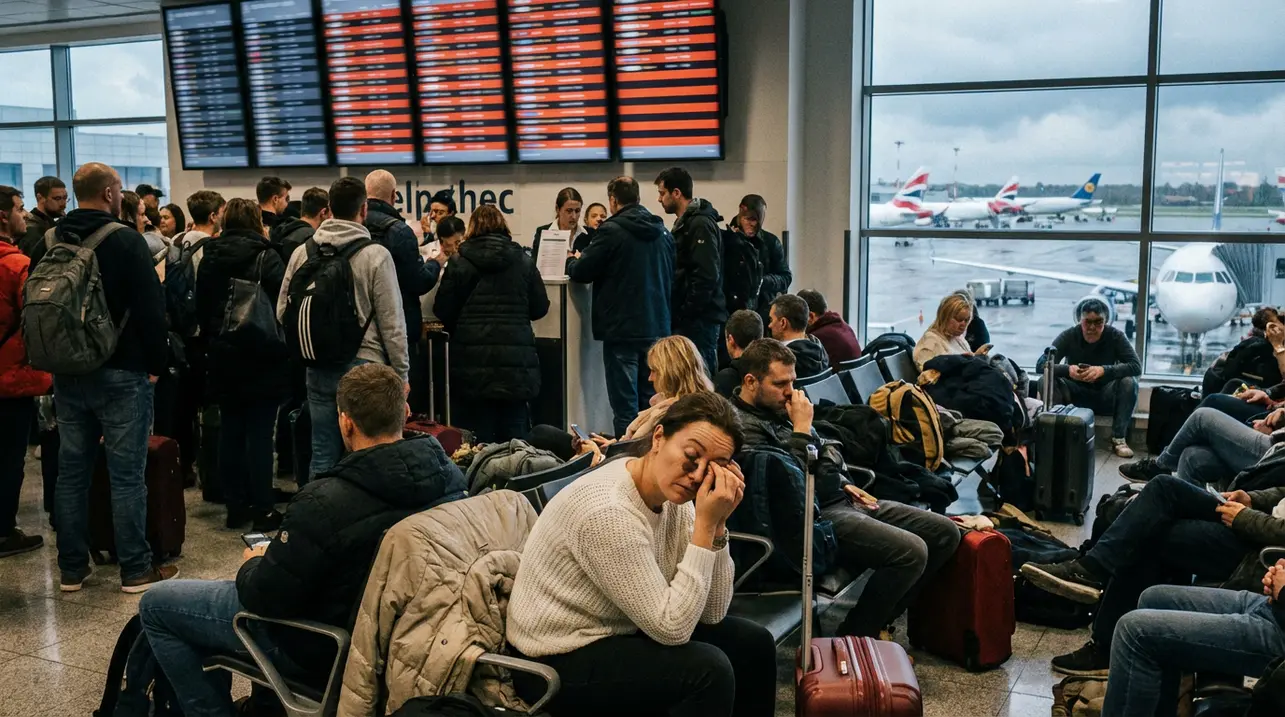
A critical failure in Greece's air traffic control radio communications system triggered a cascading crisis across European skies today, forcing the temporary but complete suspension of all arrivals and departures from the country's airspace. This wasn't a minor glitch; it was a full-scale communications blackout between controllers and pilots, the kind of scenario contingency plans are built for but hope never to see.For several tense hours, the bustling corridors over the Aegean and Ionian Seas fell silent as a precautionary ground stop was implemented, stranding thousands of passengers from London to Istanbul and snarling the meticulously synchronized web of continental travel. The immediate cause, according to preliminary reports from the Hellenic Civil Aviation Authority, was a technical fault in the primary and backup radio systems at the nation's air traffic control center, a single point of failure that exposed the fragile interdependence of modern aviation infrastructure.This incident echoes past disruptions, like the 2023 UK air traffic control meltdown caused by a rogue flight plan, reminding us that our global connectivity hinges on digital systems vulnerable to both complexity and chance. The ripple effects were instantaneous and severe: flights destined for Athens, Thessaloniki, and the vital island hubs were diverted to alternative airports in Italy, Cyprus, and Bulgaria, while outbound aircraft sat immobilized on tarmacs.The economic toll is still being calculated, but with hundreds of flights cancelled and delays propagating through networks for days, the cost will run into the tens of millions for airlines facing compensation claims and logistical nightmares. More critically, the event raises urgent questions about investment and resilience in European aviation, coming just as the sector heads into its peak summer season.Experts are already drawing parallels, noting that while safety protocols functioned as intended—preventing any airborne emergencies—the frequency of such systemic failures is alarming. Was it aging hardware, a software bug, or a cyber vulnerability? The investigation will be scrutinized by the European Union Aviation Safety Agency, as this is not merely a Greek issue but a European one, testing the limits of the Single European Sky initiative designed to prevent exactly this kind of domino effect.For the stranded traveler, the story is one of frustration and uncertainty; for the industry, it's a stark warning. As operations slowly resume, the backlog will take days to clear, and the shadow of this disruption will linger, prompting a necessary but difficult conversation about modernizing an air traffic management system that is, quite literally, showing its age under pressure.
#air travel disruption
#Greece
#air traffic control
#flight cancellations
#stranded passengers
#featured