Politicsconflict & defenseWar Reports and Casualties
Drone Strikes Cut Power in Sudan's Oil Region Amid Escalating War
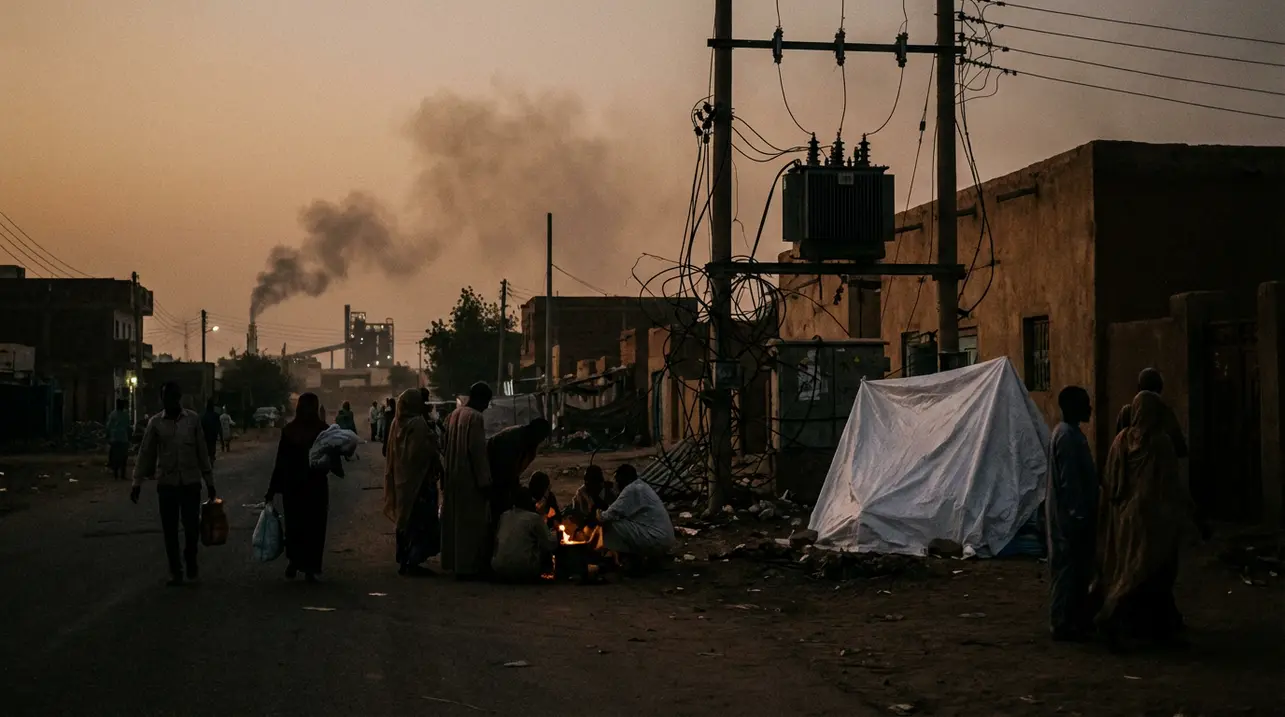
The drone strikes that severed the power supply in the Sudanese city of El-Obeid on Sunday represent more than just another tactical strike in a sprawling conflict; they mark a deliberate and dangerous escalation targeting the very infrastructure of a nation already on its knees. The attack on the El-Obeid power station, claimed by no one but bearing the hallmarks of the paramilitary Rapid Support Forces (RSF) as they push to seize the oil-rich and strategic Kordofan region, plunges the capital of North Kordofan into darkness and signals a brutal new phase in a war that has already displaced millions and pushed the country to the brink of famine.For over two years, Sudan has been gripped by a vicious power struggle between the Sudanese Armed Forces (SAF), led by General Abdel Fattah al-Burhan, and the RSF, commanded by General Mohamed Hamdan Dagalo, known as Hemedti—a conflict that erupted from a failed political transition and has since devolved into a scramble for territorial and economic dominance, with Kordofan now the epicenter. This region is not just another battlefield; it is a crucial corridor linking the capital Khartoum to Darfur in the west and to the vital oil fields of the south, making control over it a potential war-winning prize that could choke the army’s supply lines and grant the RSF access to lucrative resources and international borders.The use of drones in this assault is particularly telling, highlighting the increasing sophistication and reach of the RSF’s arsenal, which has evolved from pickup trucks with mounted machine guns to a force capable of precision strikes on critical infrastructure, thereby compounding the humanitarian catastrophe by crippling hospitals, water pumps, and communication networks in a city already struggling to cope with an influx of displaced civilians. Broader context reveals this is part of a calculated RSF offensive that has seen them make significant gains across western and central Sudan, exploiting the army’s airpower advantage by engaging in grueling urban warfare and now, apparently, employing asymmetric tactics to degrade the state’s ability to function.Historical precedents are grim; similar strategies of targeting energy infrastructure were seen in the Yugoslav wars and more recently in Ukraine, where blackouts become weapons of mass suffering, eroding civilian morale and industrial capacity alike. Expert commentary suggests that the fall of El-Obeid or sustained control over Kordofan by the RSF could fundamentally alter the conflict’s trajectory, potentially leading to the de facto partition of Sudan and creating a rump state controlled by the army in the east, while the RSF consolidates a resource-rich fiefdom in the west, a scenario that would entrench the war and draw in regional actors like Egypt, the United Arab Emirates, and Chad, who are already accused of fueling the conflict with weapons and political support.
#lead focus news
#Sudan
#drone strike
#power outage
#El-Obeid
#Rapid Support Forces
#oil region
#conflict escalation