Politicsconflict & defenseMilitary Operations
Disinformation Floods Social Media After Nicolás Maduro’s Capture
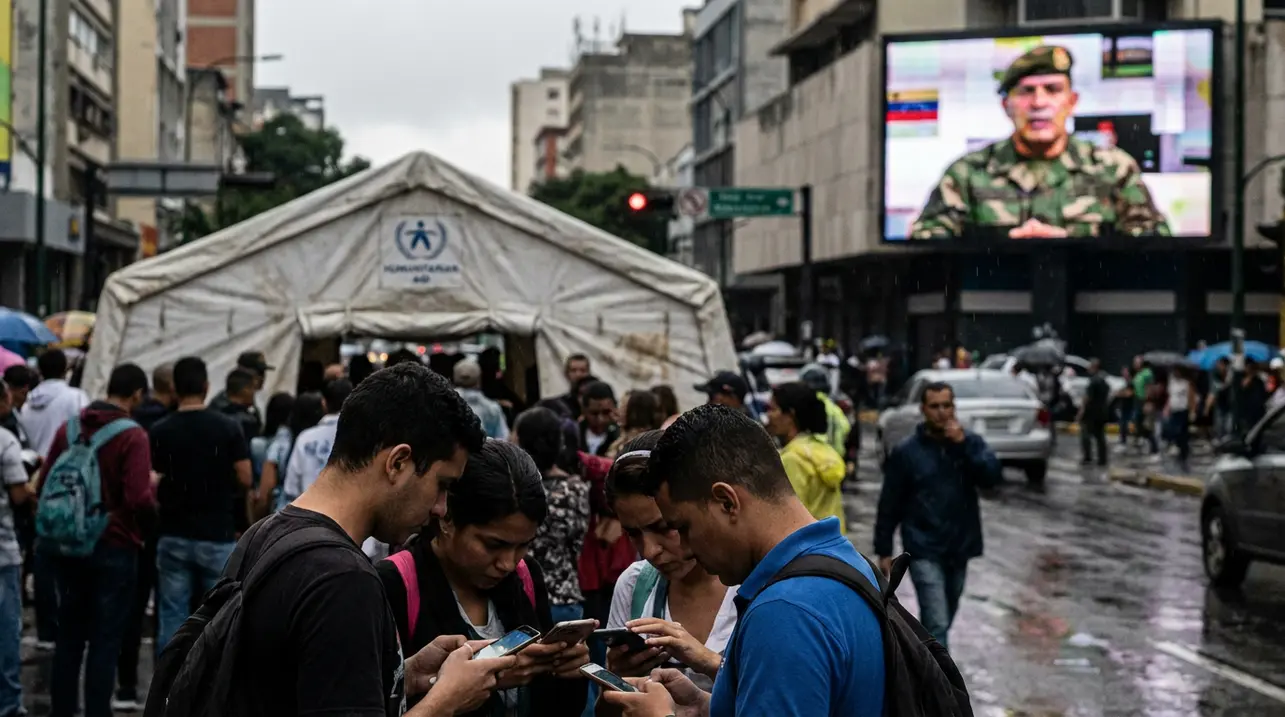
The digital battlefield erupted with a familiar, chaotic fury in the immediate aftermath of the US-led incursion into Venezuela, a meticulously planned military operation that culminated in the capture of President Nicolás Maduro. Yet, the most decisive and messy front wasn't on the streets of Caracas but across the fractured landscape of social media, where a torrent of disinformation flooded feeds faster than official statements could be drafted.Platforms like TikTok, Instagram, and X, the rebranded Twitter, became the primary theaters of this information war, and their defenses—or lack thereof—proved utterly porous against a coordinated onslaught of misleading content. The playbook was sophisticated and multifaceted: slick, AI-generated videos depicting fabricated scenes of surrender or celebration spread virally, their uncanny-valley perfection just polished enough to deceive the scrolling eye.Meanwhile, archival footage from past protests or unrelated conflicts was cynically repurposed and branded as ‘live from Caracas,’ exploiting the emotional rawness of the moment to bypass critical scrutiny. This wasn't just random noise; it was a strategic campaign, likely orchestrated by both state-aligned actors seeking to sow confusion and undermine the intervention's legitimacy, and by opportunistic bad actors capitalizing on the global attention for clicks and chaos.The platforms' response, characterized by sluggish takedowns and inconsistent labeling, felt like bringing a water pistol to a five-alarm fire, a failure of content moderation that has become a grim hallmark of modern geopolitical crises. We've seen this script before—in Ukraine, in Myanmar, in elections worldwide—where narrative dominance is contested in real-time, and truth becomes collateral damage.The consequences here are profound and immediate: such a polluted information environment risks inciting further violence on the ground, erodes public trust in any reporting, and complicates the already Herculean task of stabilizing a nation in the wake of regime change. For the US and its allies, winning the military campaign may prove simpler than winning the story, as every AI-generated phantom and resurfaced clip chips away at the operational and moral clarity they seek to project. The invasion of Venezuela may be a case study in 21st-century warfare, but the disinformation blitz that followed is a masterclass in how modern conflicts are ultimately shaped not just by soldiers and satellites, but by algorithms, engagement metrics, and the devastating speed of a lie.
#lead focus news
#disinformation
#social media
#Venezuela
#US invasion
#Nicolás Maduro
#AI-generated videos
#misinformation