Politicsconflict & defenseMilitary Operations
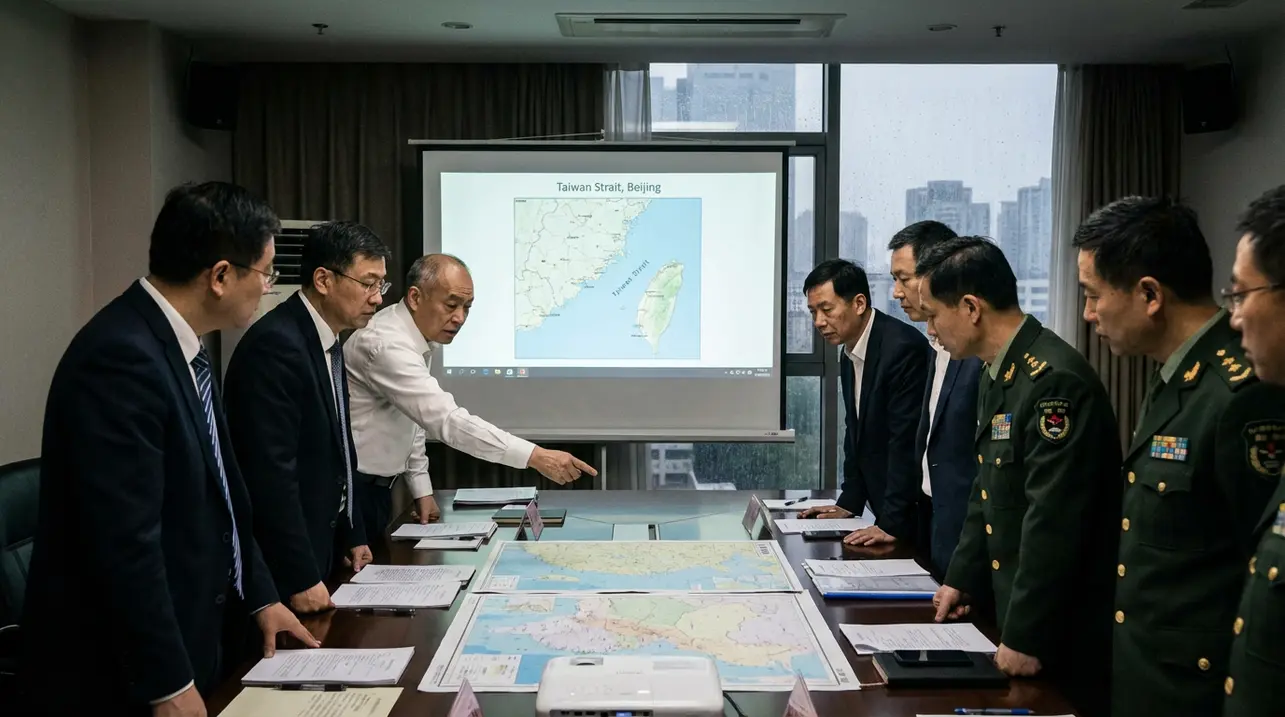
Beijing Studies US Venezuela Operation for Taiwan Implications
The US military’s capture of Venezuelan leader Nicolás Maduro in a precision Delta Force operation over the weekend wasn't just a geopolitical shockwave rippling through Latin America; it was a meticulously executed playbook that Beijing’s strategic planners in the Central Military Commission are undoubtedly dissecting line by line. For analysts monitoring the Taiwan Strait, this isn't a parallel universe scenario—it's a live-fire tutorial in decapitation strategy with direct, chilling implications for Taipei.The operation, characterized by Chinese military observers as a 'textbook' strike for its surgical precision and minimal collateral damage, arrives at a moment of heightened tension, following recent People's Liberation Army exercises that explicitly demonstrated China's capability to isolate and target Taiwan’s political and military leadership. The timing is almost too provocative to be coincidental, suggesting a deliberate display of US capability that serves as both a warning to adversaries like Venezuela and a stark, unspoken message to China regarding potential intervention scenarios.The core analytical takeaway for Beijing is not merely the tactical proficiency of Delta Force—though the planning, intelligence penetration, and rapid execution are certainly being studied—but the underlying political resolve and legal framework that authorized such a direct action against a sitting head of state. This demonstrates a willingness to escalate to the highest levels of kinetic action, a threshold that fundamentally alters risk calculations in other theaters.For Taiwan, the lesson is grimly clear: the US possesses both the technical means and, as evidenced, the doctrinal willingness to execute leadership-targeted operations. However, this very demonstration could catalyze a dangerous feedback loop.Beijing may interpret it not as a deterrent, but as a blueprint to be countered or even pre-empted, accelerating its own investments in anti-access/area denial (A2/AD) systems, cyber warfare capabilities aimed at command and control, and special forces units trained for similar asymmetric missions. Historically, one must look to operations like the 2011 Abbottabad raid that killed Osama bin Laden or the 2003 'deck of cards' targeting of Iraqi leadership; however, targeting a recognized, albeit controversial, national leader on sovereign soil represents a significant escalation in state-on-state covert action.The geopolitical fallout in the Western Hemisphere is immediate, but the secondary and tertiary effects in the Indo-Pacific could be more profound and enduring. Experts like Dr.Fu, quoted in initial reports, highlight the 'highly refined' nature of the operation, but the strategic refinement lies in its signaling. It communicates to China that the US military’s global reach and special operations mandate remain unparalleled, potentially giving Washington more diplomatic leverage in future crises.
#lead focus news
#China
#Taiwan
#PLA exercises
#US Delta Force
#Venezuela
#Maduro
#geopolitical analysis