Otherreal estateSustainable Architecture
Film portrait of Ricardo Bofill's architecture studio at La Fábrica
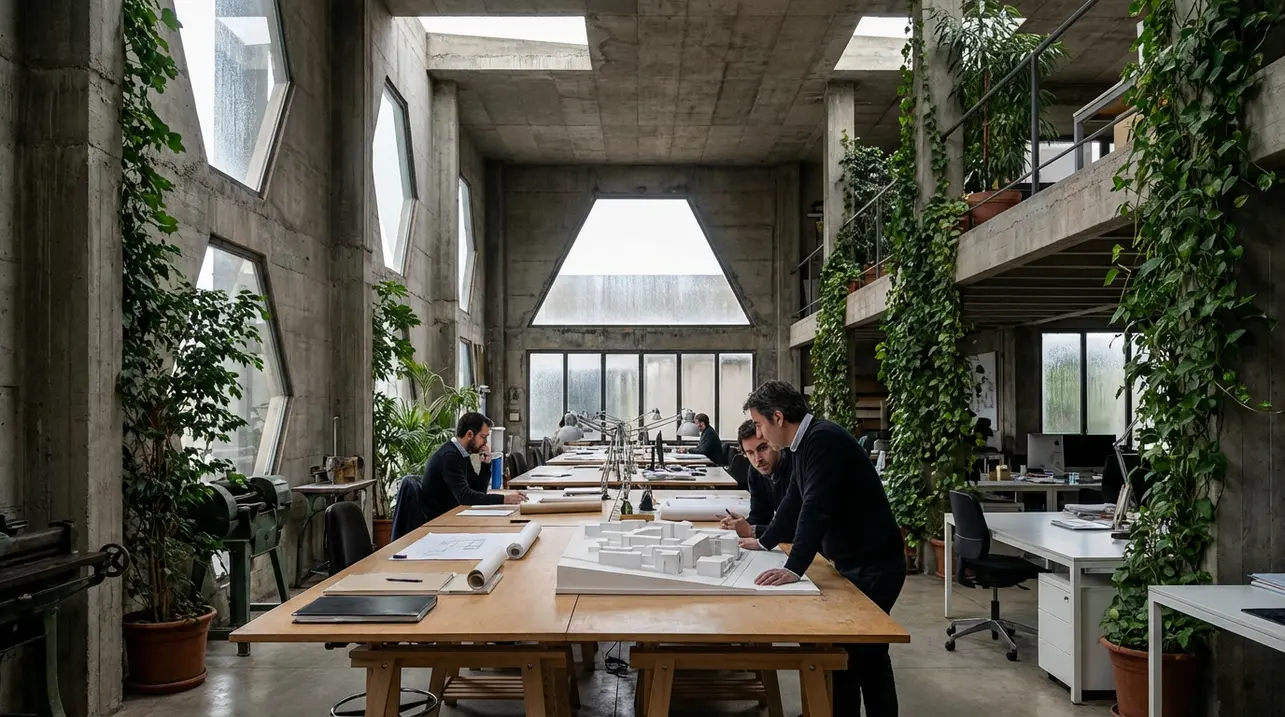
There is a particular magic to spaces that have been reborn, where the ghosts of industry are not exorcised but invited to converse with the new life moving in. This is the central, captivating tension of Albert Moya’s new film portrait of Taller de Arquitectura, the studio founded by the late, visionary Ricardo Bofill, nestled within the monumental shell of La Fábrica on the outskirts of Barcelona.The film is less a conventional documentary and more a visual tone poem, weaving together archival photographs, delicate sketches, and the vibrant, present-day pulse of a working atelier. It captures the essence of a place where, as the film suggests, conventional thought is rendered impossible by the sheer weight of imagination embedded in the walls.La Fábrica itself is the star—a colossal, otherworldly complex of silos and industrial cathedrals that Bofill discovered in 1973, a ruin choked with cement dust and machinery. His transformation of this post-industrial carcass into a hybrid of home, studio, and gardens over decades stands as one of the most radical acts of architectural alchemy of the 20th century.Moya’s lens lingers on the textures of this metamorphosis: the brutalist rawness of exposed concrete softened by cascading ivy and eucalyptus, the cavernous volumes of former factory halls now housing drafting tables bathed in ethereal light filtering through geometric cut-outs. We see not a static museum, but a living organism.The camera follows architects at work, their modern gestures framed by archaic, cyclopean forms, their digital screens glowing in rooms where raw cement still speaks of its original purpose. This juxtaposition is the film’s core narrative—the dialogue between the monumental past and a fluid, creative present.It implicitly argues that Bofill’s greatest creation here was not merely a building, but a philosophy of space. La Fábrica is a manifesto in concrete and greenery, a rejection of the sterile white cube of the modern office in favor of a environment that actively stimulates the unconventional.The archival drawings and models interspersed throughout are crucial; they show the audacity of Bofill’s early visions, his postmodern plays with scale and classicism that would later define projects like the Kafka Castle-like residential complex of Walden 7 or the whimsical Les Espaces d'Abraxas in Paris. Seeing these sketches within the context of their birthplace adds a layer of profound intimacy.We understand that the studio’s output—often grand, theatrical, and humanistic—was fermented in this unique crucible. The film also serves as a poignant, if understated, elegy.With Bofill’s passing in 2022, the portrait inevitably becomes a study of legacy. How does a studio born from one man’s singular vision evolve? The answer Moya finds is quietly optimistic.
#featured
#architecture
#Ricardo Bofill
#La Fábrica
#studio
#design
#Barcelona
#adaptive reuse