

Othertransport & aviationFlight Delays and Cancellations
Eurostar Cancels London Trains After Channel Tunnel Power Cut
OL
Oliver Scott
5 months ago7 min read
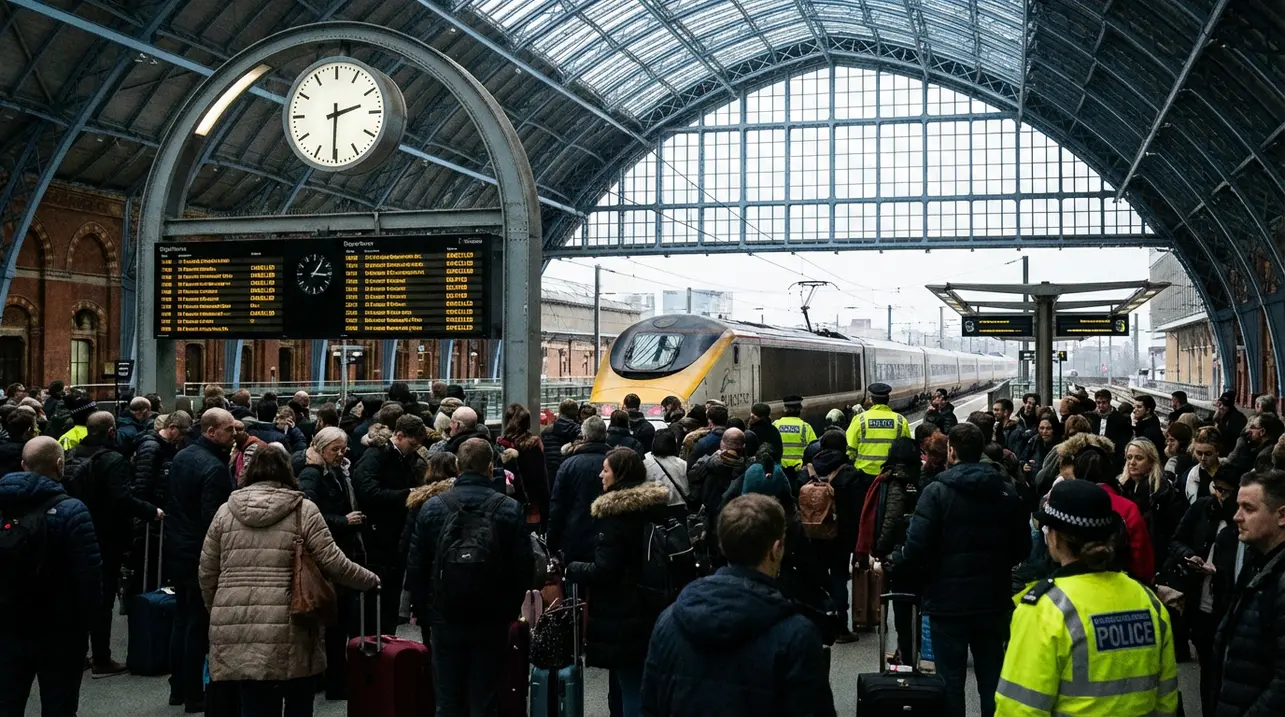
The sudden, silent failure of a power supply deep within the Channel Tunnel’s infrastructure this morning didn’t just flicker the lights; it severed one of Europe’s most critical economic and social arteries, bringing the high-speed Eurostar service from London to a complete halt and forcing Le Shuttle to suspend all car-carrying journeys between Folkestone and Calais. This isn't merely a travel disruption; it's a stark, real-time stress test of a piece of infrastructure that has become so seamlessly integrated into continental logistics and daily life that its operational invisibility is taken for granted.The immediate cause, described blandly by operators as a “power supply issue,” is a classic low-probability, high-impact event—precisely the kind of scenario risk analysts like myself model for. The Channel Tunnel, or ‘Chunnel,’ represents a triumph of engineering ambition over geographical and political friction, but its very existence creates a profound single point of failure.When it stutters, the ripple effects are immediate and multidimensional: thousands of passengers stranded in terminals, perishable freight stalled in queues, and business schedules across London, Paris, Brussels, and Amsterdam thrown into disarray. Historically, such outages have been mercifully brief, often resolved within hours, but the precedent of the 2009 fire that closed the tunnel for months looms in the background of every incident, reminding stakeholders of the system's latent fragility.Expert commentary will inevitably focus on the aging components of the power grid—some of which date back to the tunnel’s 1994 opening—and the escalating pressures of increased traffic frequency. The broader context here is one of geopolitical and economic vulnerability.This tunnel is the United Kingdom’s most tangible physical link to the European Union, and its reliability is a barometer for post-Brexit logistical cohesion. Every prolonged closure amplifies the economic costs of the new border controls, testing the resilience of just-in-time supply chains that have already been reconfigured multiple times in recent years.From a risk perspective, we must consider cascading consequences: the shift of high-value cargo to air freight, applying sudden pressure on that sector; the potential for secondary disruptions on alternative ferry routes as they absorb overflow; and the long-term reputational damage to Eurostar as a reliable operator, potentially impacting future investment and passenger loyalty. The analytical insight is clear—interconnected systems demand redundant safeguards that may not be economically palatable until after a major crisis.This incident, while likely temporary, serves as a critical drill, exposing the logistical and emergency response protocols of multiple national agencies. The true cost won’t be measured just in lost ticket revenue, but in the compounded delays across European networks and the renewed, urgent conversations in boardrooms and government ministries about investing in resilience for an asset that cannot be allowed to fail.
#weeks picks news
#Eurostar
#Channel Tunnel
#power outage
#train cancellations
#Le Shuttle
#travel disruption
Stay Informed. Act Smarter.
Get weekly highlights, major headlines, and expert insights — then put your knowledge to work in our live prediction markets.
Related News






2 months ago
Outpoll Weekly Recap: Other (April 20 – 26, 2026)

2 months ago
Outpoll Weekly Recap: Other (April 13 – 19, 2026)

2 months ago
Why ‘others have it harder’ is a form of empathy bypassing

2 months ago
Outpoll Weekly Recap: Other (March 30 – April 5, 2026)

2 months ago
Outpoll Weekly Recap: Other (March 23 – 29, 2026)

3 months ago
Outpoll Weekly Recap: Other (March 16 – 22, 2026)

3 months ago
Washington State Passes Millionaires Tax as Model for Others

3 months ago
Outpoll Weekly Recap: Other (March 9 – 15, 2026)
3 months ago
Telura Emerges with €4M Seed to De-Risk Deep Geothermal, as Europe's Subsurface Energy Race Intensifies

3 months ago
Outpoll Weekly Recap: Other (March 2 – 8, 2026)
Comments
It's quiet here...Start the conversation by leaving the first comment.