Othertransport & aviationAirlines and Airports
Airbus Secures Major Order for 145 Jets from Chinese Airlines
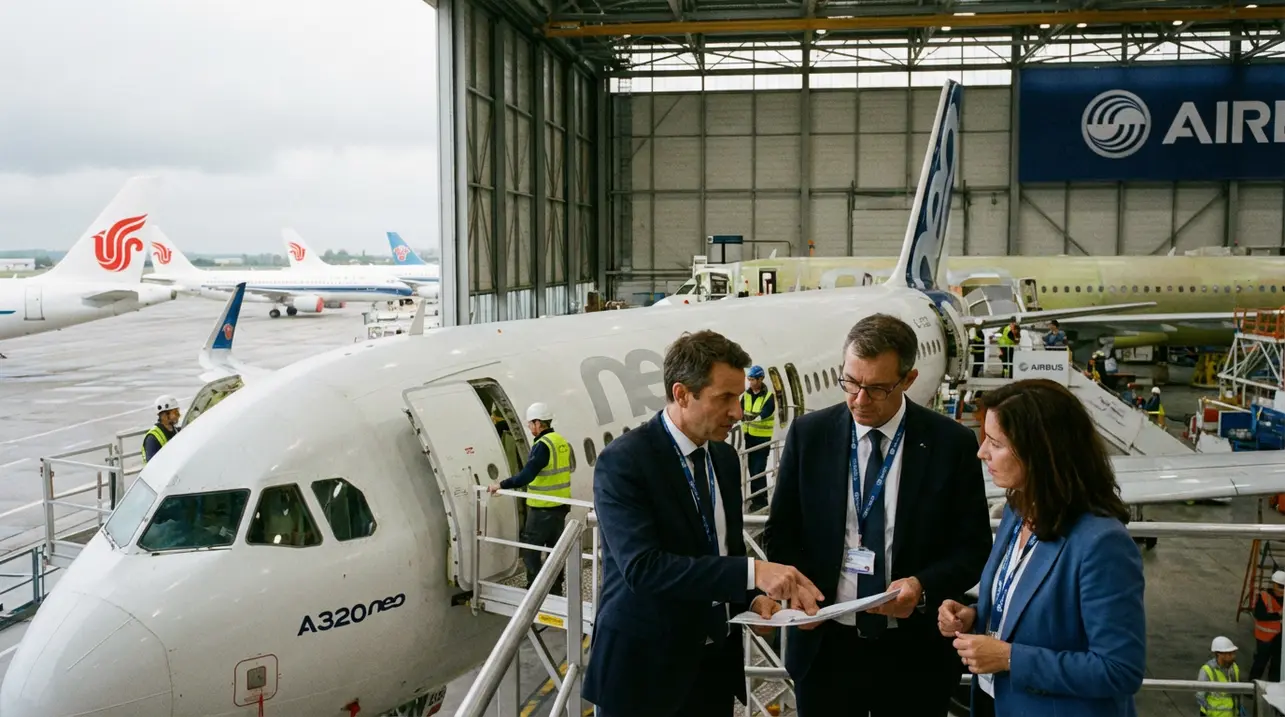
In a strategic masterstroke that reshapes the competitive landscape of the global aviation industry, European aerospace titan Airbus has clinched a monumental order for 145 A320neo family aircraft from a consortium of Chinese airlines, a deal announced in two tranches this week. This isn't merely a sales victory; it's a profound geopolitical and market signal, arriving just weeks after Airbus CEO Guillaume Faury accompanied French President Emmanuel Macron on a high-stakes state visit to Beijing.The orders, comprising 90 jets announced Tuesday from undisclosed carriers following a 55-aircraft commitment from Air China and China Eastern the day prior, represent a decisive shift in one of the world's most critical growth markets away from Airbus's arch-rival, Boeing. For risk analysts, this move is a textbook case of corporate-state synergy exploiting a competitor's vulnerability.Boeing, mired in a protracted crisis of confidence following the 737 MAX grounding and subsequent production quality scandals, has seen its historical foothold in China erode dramatically, with deliveries of its aircraft to Chinese carriers effectively frozen since 2019 due to a combination of geopolitical tensions and safety concerns. Airbus has adroitly filled this vacuum, not just with products but with political capital, leveraging the Franco-Chinese diplomatic channel to secure what amounts to a strategic blockade.The implications are multifaceted and extend far beyond quarterly earnings reports. For the global duopoly, this cements Airbus's dominance in the single-aisle segment for the foreseeable future, potentially allowing it to command pricing power and secure supply chain advantages.For China, the deal serves dual purposes: it modernizes its domestic fleet with fuel-efficient technology crucial for meeting environmental targets, while also wielding substantial economic leverage as a counter in ongoing trade and diplomatic negotiations with the West, particularly the United States. The risk scenario for Boeing now escalates from concerning to critical; a prolonged exclusion from the Chinese market, which is projected to require over 8,500 new planes in the next two decades, could permanently alter its competitive stature, impacting its ability to fund next-generation aircraft development.Conversely, Airbus must now manage the operational risk of fulfilling such a massive order amidst persistent global supply chain fragilities, while also navigating the delicate balance of deepening ties with China without alienating its other key markets. This order is less a simple transaction and more a seismic event in the great-power competition for technological and industrial supremacy, where commercial aerospace serves as both a prize and a pawn.
#Airbus
#A320neo
#China
#aircraft orders
#Boeing
#aviation market
#featured