Sciencespace & astronomySatellites and Telescopes
The race to build a super-large ground telescope is down to two competitors.
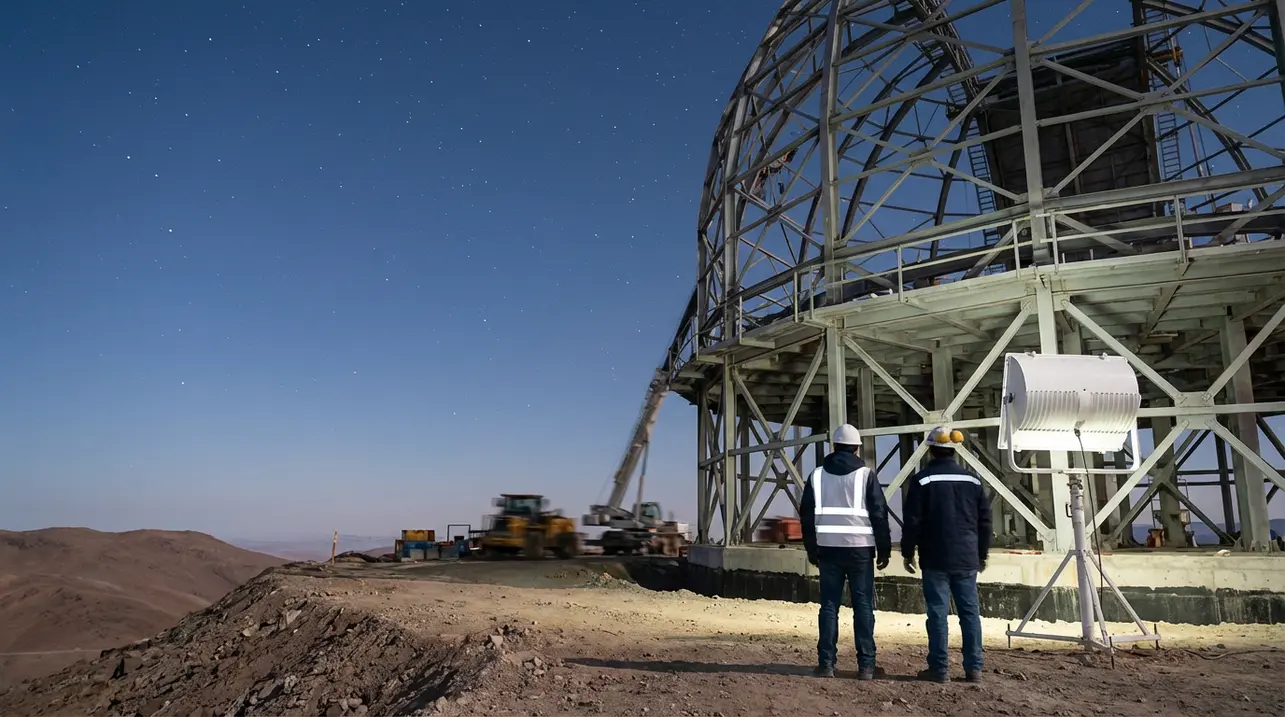
The race to build a super-large ground telescope is down to two competitors, and the stakes are nothing less than the future of our cosmic understanding. At the heart of this high-stakes contest are the Giant Magellan Telescope (GMT) and the Thirty Meter Telescope (TMT), two behemoths representing the pinnacle of optical astronomy and a colossal investment of international scientific capital.The GMT, rising in the Chilean Atacama Desert, is a marvel of engineering, its design centered on seven of the world’s largest monolithic mirrors, each 8. 4 meters across, working in concert to form a light-collecting surface equivalent to a single 25.4-meter mirror. Its rival, the TMT, planned for Mauna Kea in Hawaii, employs a different philosophy with a segmented primary mirror stretching 30 meters across, promising even greater light-gathering power and resolution.This isn't merely a technical showdown; it's a geopolitical and financial marathon that will determine which consortium—backed by nations from the United States and Japan to South Korea, India, and Australia—will first pierce the cosmic dawn, observing the formation of the universe's first galaxies and directly imaging exoplanets in search of biosignatures. The recent check-in with the new president of the Giant Magellan Telescope organization reveals a project pulsating with momentum, having secured over 85% of its funding and with its third mirror recently cast, yet facing the immense logistical and optical challenges of aligning its seven giant mirrors to act as one flawless surface.Historically, the field has been defined by such rivalries, from the Palomar telescope dominating the mid-20th century to the Hubble Space Telescope's revolution, but this current race is unique in its scale and collaborative yet competitive nature. Experts note that while the TMT holds a raw size advantage, the GMT's simpler mirror design and advantageous Chilean site at Las Campanas Observatory—renowned for its pristine, stable skies—could allow it to achieve 'first light' sooner, a critical advantage in a field where being first to a discovery secures legacy and funding.The consequences are profound: the winner will likely claim a decade of dominance in observational astronomy, dictating the pace of discoveries in dark energy, black hole physics, and the search for extraterrestrial life, while the lagging project risks diminished scientific return on investment as the even more ambitious Extremely Large Telescope in Europe looms on the horizon. This race, therefore, is less about there being a single loser and more about how the timeline of cosmic revelation will be written, with each technological hurdle overcome—from adaptive optics systems that cancel out atmospheric turbulence to the mind-bending precision required in mirror polishing—bringing humanity one step closer to answering questions we have asked since we first looked up at the stars.
#featured
#Giant Magellan Telescope
#ground telescope
#astronomy
#observatory
#competition
#construction
#lead focus news