SciencemedicineMedical Technology
The Newest Health Trend Is Tracking Your Pee
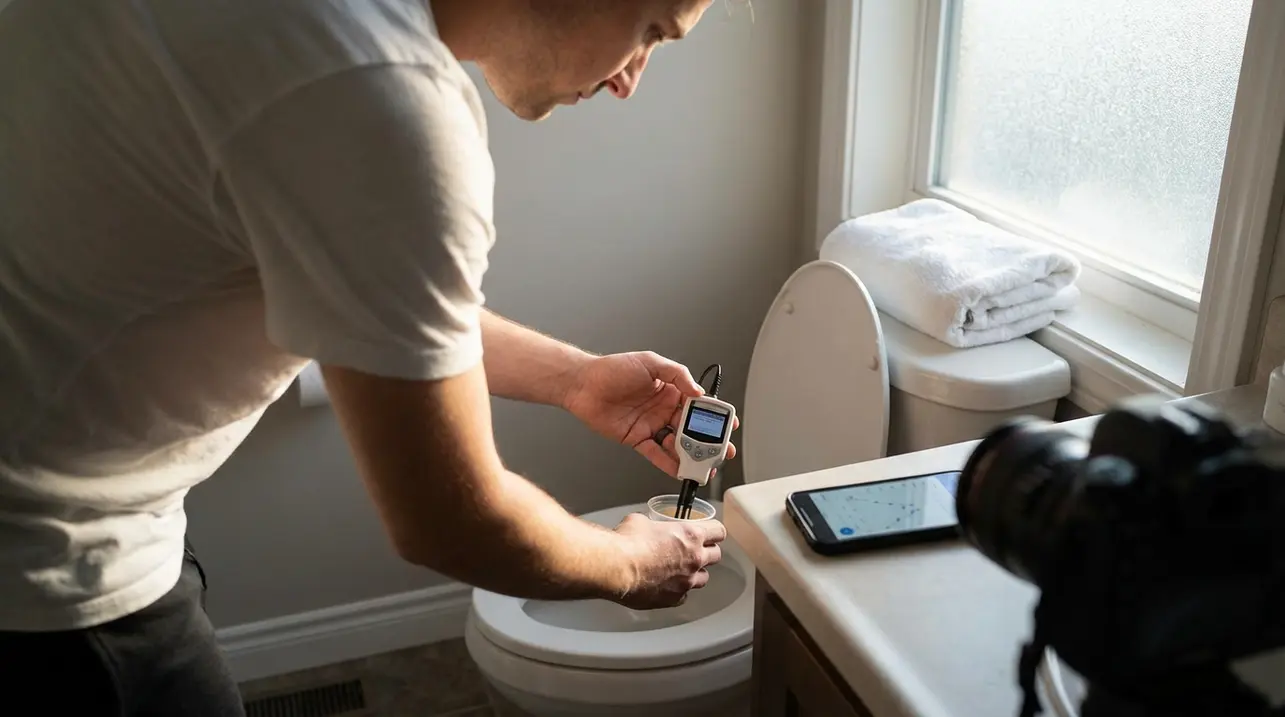
The frontier of personal health monitoring is advancing into territory once considered the exclusive domain of clinical labs: the humble bathroom. The newest wave of health tech isn't just counting steps or monitoring heart rate; it's deploying sophisticated sensor arrays to analyze your urine in real-time, checking for markers of proper hydration, ketone levels indicative of metabolic states like ketosis, and even early warning signs for conditions like kidney stones.This shift represents a profound convergence of biotechnology, consumer electronics, and a growing cultural obsession with quantified self-optimization, moving diagnostics from the doctor's office into the most private of spaces. The underlying science hinges on biosensors capable of detecting specific analytes—electrolytes, organic compounds, and proteins—transforming a routine biological function into a continuous stream of actionable data.For decades, urinalysis has been a cornerstone of clinical medicine, a snapshot of renal function, metabolic health, and systemic disease. Now, companies are miniaturizing this capability, embedding it into smart toilet seats, handheld scanners, or even disposable strips paired with smartphone cameras, promising a future where your morning routine includes a diagnostic report alongside the weather forecast.Proponents argue this democratizes health data, empowering individuals to catch dehydration before a headache sets in, fine-tune a ketogenic diet with precision, or identify a predisposition for uric acid stones long before a painful episode occurs. However, this brave new world of at-home uroscopy is not without its significant ethical and practical quandaries.The accuracy of consumer-grade sensors compared to controlled laboratory equipment remains a critical question; a false positive for ketones could unnecessarily alarm a diabetic, while a false negative for a concerning protein might provide dangerous reassurance. Data privacy enters an entirely new dimension—who owns the intimate biochemical profile generated daily, and how might insurers or employers be tempted by such granular, predictive health information? Furthermore, there's a risk of medicalizing everyday life to an exhausting degree, fostering anxiety over natural fluctuations in bodily chemistry and potentially overwhelming healthcare systems with a flood of user-generated, often uncontextualized, data points.The historical precedent here is the evolution of the home pregnancy test or glucose monitor, which shifted power and knowledge to the patient. Yet, urine contains a far richer and more complex biochemical signature, touching on kidney health, liver function, nutritional status, and even drug metabolism.Experts in nephrology and urology caution that these devices are best viewed as wellness tools rather than diagnostic instruments, emphasizing that trends are more meaningful than single data points and that any concerning reading must be validated through proper clinical pathways. The potential consequences are twofold: on one hand, we could see a revolution in preventive care, with personalized hydration alerts for athletes or remote monitoring for elderly patients prone to urinary tract infections.
#health tracking
#urine analysis
#hydration sensors
#ketone levels
#kidney stones
#wearable technology
#medical devices
#lead focus news