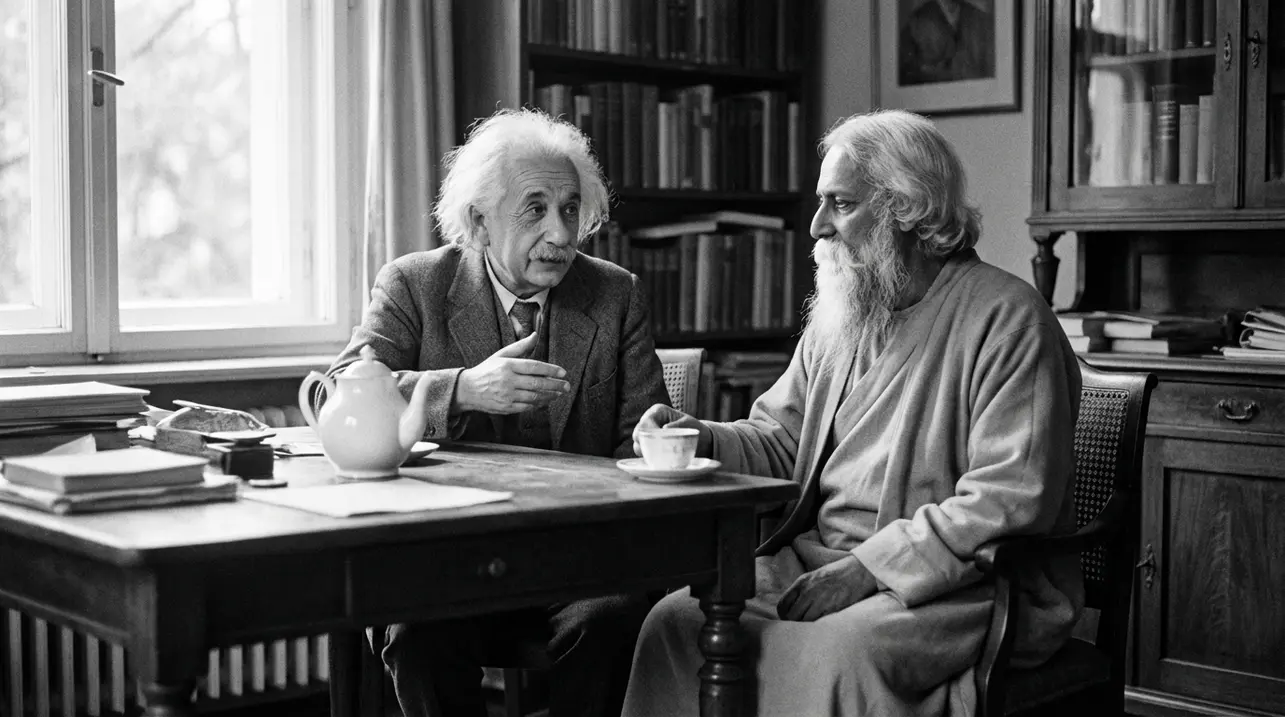
The sheer, staggering scale of our cosmic luck is something that often escapes us in the daily grind, but evolutionary biologist Richard Dawkins has a way of framing it that hits like a meteorite. In a recent reflection, he pointed out that 'the potential people who could have been here in my place but who will in fact never see the light of day outnumber the sand grains of Arabia.' Think about that for a second. It’s not just a poetic turn of phrase; it’s a mathematical and biological reality that underscores the profound randomness of existence.Every one of us is the winner of a lottery so improbable it makes the odds of picking a single, specific grain of sand from every desert on Earth look like a sure bet. This idea, rooted in the chaotic dance of sperm and egg, the survival of ancestors through plagues and predators, and the sheer unbroken chain of chance over billions of years, reframes death not as a tragedy but as a statistical inevitability that makes our brief, conscious window all the more precious.It’s a cosmic perspective that shifts the focus from the ending to the astonishing fact of the beginning. In the grand, indifferent universe described by science, our existence is a fleeting, brilliant anomaly—a spark against an infinite backdrop of what might have been.Dawkins, ever the provocateur, uses this to challenge our solipsism, reminding us that we are not the center of a narrative but a fantastically lucky data point in an equation of near-infinite variables. The 'luckiness of death,' then, is that it defines the boundaries of our unique, borrowed time, making every moment of awareness a victory against an ocean of silent alternatives.
#Richard Dawkins
#evolution
#philosophy of life
#mortality
#existentialism
#population genetics
#featured
Stay Informed. Act Smarter.
Get weekly highlights, major headlines, and expert insights — then put your knowledge to work in our live prediction markets.