MarketsNewsStatsAPI
  • Market
  • Wallet
  • News
  1. News
  2. /
  3. science
  4. /
  5. Brain-like learning found in bacterial nanopores
post-main
Scienceneuroscience

Brain-like learning found in bacterial nanopores

KE
Kevin White
3 weeks ago7 min read5 comments
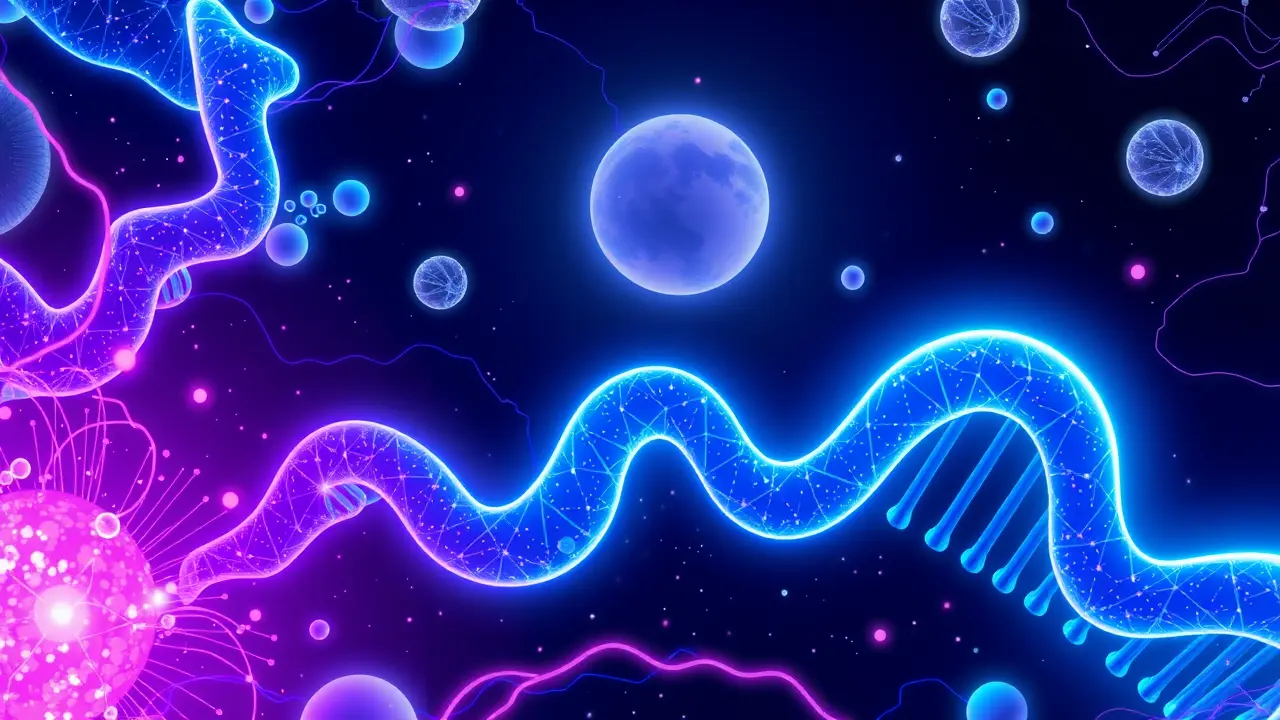
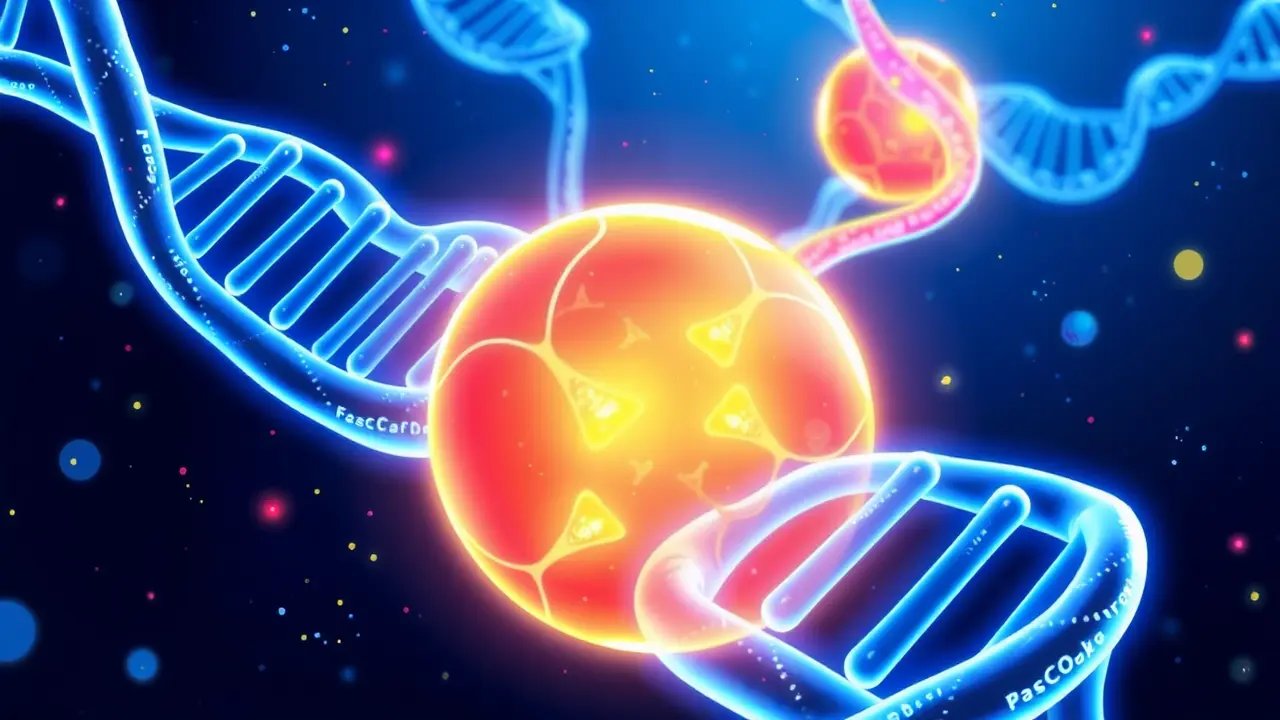
In a stunning convergence of biology and computational science, researchers at Switzerland's École Polytechnique Fédérale de Lausanne (EPFL) have cracked one of nanotechnology's persistent puzzles—the erratic behavior of biological nanopores—while simultaneously engineering versions that exhibit primitive learning capabilities reminiscent of neural processes. These nanopores, essentially molecular-scale channels found in bacterial cell membranes like that of aerolysin from Aeromonas hydrophila, have long been utilized in DNA sequencing and molecular sensing, yet their occasional unpredictability has hampered more sophisticated applications.The EPFL team's breakthrough came from meticulously mapping how two critical phenomena—rectification (the diode-like control of ion flow) and gating (the opening and closing of the pore)—arise not from random fluctuations but from precise electrostatic interactions between the pore's internal charged residues and passing ions. By systematically engineering these charge distributions, the scientists didn't just solve a basic science problem; they constructed nanopores whose conductivity can be modulated by previous ionic activity, creating a form of ionic memory.This 'learning' mechanism, where the pore's future behavior depends on its past ionic exposure, mirrors the synaptic plasticity fundamental to neural networks in the brain, where connections strengthen or weaken based on experience. The implications are profound, potentially paving the way for ion-based processors that operate with the energy efficiency and parallel processing capabilities of biological systems, a stark contrast to the power-hungry silicon chips of today.This work sits at the vanguard of neuromorphic computing, a field desperately seeking alternatives to the von Neumann architecture, and suggests a future where hybrid bio-electronic systems could perform complex, adaptive computations. Imagine diagnostic sensors that learn to identify specific disease biomarkers with increasing accuracy or environmental monitors that adapt to changing pollutant levels.The research, while foundational, connects deeply with ongoing efforts in synthetic biology to create cellular logic gates and even primitive neural networks within single cells, pioneered by labs at MIT and Stanford. However, significant hurdles remain, including scaling these nanopores into dense, reliable arrays and achieving the long-term stability required for practical devices.As Dr. Aleksandra Radenovic, a lead researcher in EPFL's Laboratory of Nanoscale Biology, noted in a related commentary, 'We are moving from simply observing biological structures to actively reprogramming them for human-defined tasks. ' This isn't merely an incremental step in nanoscale engineering; it's a conceptual leap toward blurring the line between biological intelligence and human-made computation, potentially heralding a new era of bio-inspired adaptive systems that learn and evolve.
#lead focus news
#bacterial nanopores
#brain-like learning
#bio-inspired computing
#ion-based processors
#aerolysin
#EPFL research

Stay Informed. Act Smarter.

Get weekly highlights, major headlines, and expert insights — then put your knowledge to work in our live prediction markets.

Related News
Microbial Metabolites in Blood Emerge as a Potent New Frontier in Anti-Aging Science
3 days ago

Microbial Metabolites in Blood Emerge as a Potent New Frontier in Anti-Aging Science

Unlock Your Potential: The Science-Backed Warm-Up That Ignites Speed and Power
4 days ago

Unlock Your Potential: The Science-Backed Warm-Up That Ignites Speed and Power

Best Side-Sleeper Mattress 2025: Picked by a Sleep Science Coach
5 days ago3 comments

Best Side-Sleeper Mattress 2025: Picked by a Sleep Science Coach

Maca Root for Libido: Science or Placebo in a Powder?
6 days ago

Maca Root for Libido: Science or Placebo in a Powder?

Maca Root: A Deep Dive into the Science and Psychology of Libido Enhancement
6 days ago

Maca Root: A Deep Dive into the Science and Psychology of Libido Enhancement

The Science of Holiday Harmony: A Diplomatic Guide to Navigating Tense Family Dinners
7 days ago1 comments

The Science of Holiday Harmony: A Diplomatic Guide to Navigating Tense Family Dinners

Fog: The Earthbound Cloud Bridging Science and the Human Spirit
7 days ago1 comments

Fog: The Earthbound Cloud Bridging Science and the Human Spirit

Mushroom foragers collect 160 species for food, medicine, art, and science.
1 week ago3 comments

Mushroom foragers collect 160 species for food, medicine, art, and science.

Rocket Lab chief discusses Neutron delays and NASA science.
1 week ago3 comments

Rocket Lab chief discusses Neutron delays and NASA science.

New obesity discovery rewrites decades of fat metabolism science
1 week ago2 comments

New obesity discovery rewrites decades of fat metabolism science

Tom Price: Where Material Science Meets Sculptural Art
1 week ago1 comments

Tom Price: Where Material Science Meets Sculptural Art

A Computer Science Professor Invented the Emoticon After a Joke Went Wrong
2 weeks ago7 comments

A Computer Science Professor Invented the Emoticon After a Joke Went Wrong

Eyes in the Sky: How Drones Are Revolutionizing Marine Mammal Science
2 weeks ago11 comments

Eyes in the Sky: How Drones Are Revolutionizing Marine Mammal Science

China Constructs Nuclear-Resistant Floating Science Island.
2 weeks ago6 comments

China Constructs Nuclear-Resistant Floating Science Island.

Rocket Lab Electron installed in CA Science Center space gallery.
2 weeks ago2 comments

Rocket Lab Electron installed in CA Science Center space gallery.

Comments

Loading comments...

© 2025 Outpoll Service LTD. All rights reserved.
Terms of ServicePrivacy PolicyCookie PolicyHelp Center
Follow us:
Science