

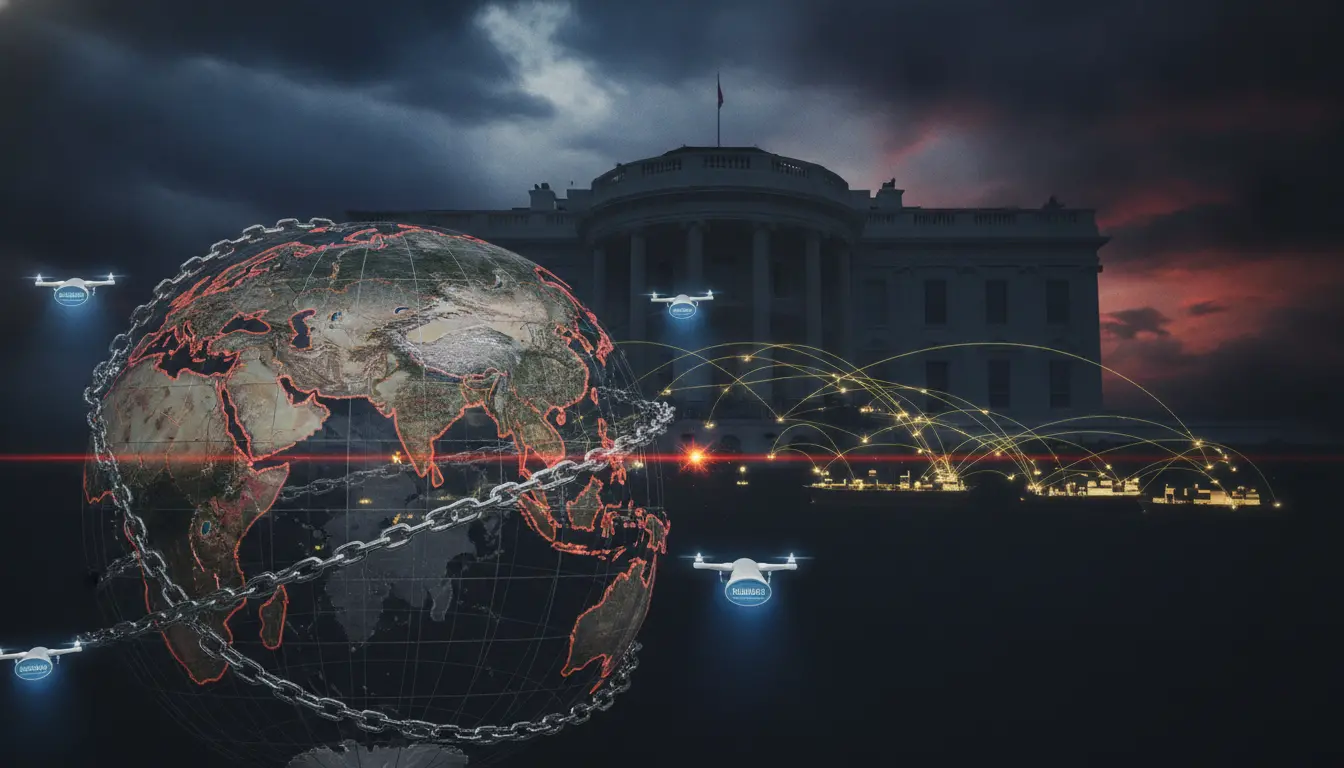
White House Intensifies Global Scrutiny Over Alleged China Tariff Evasion Network
The White House has issued a significant accusation, alleging that over 40 countries are actively assisting China in evading US tariffs. This sweeping claim signals a serious escalation in Washington's efforts to enforce its trade policies, placing numerous nations under intense scrutiny and potentially setting the stage for retaliatory measures. The accusation underscores the persistent tensions in US-China economic relations and highlights the complex, often opaque, mechanisms employed to circumvent existing trade barriers, with profound implications for global supply chains and diplomatic ties.
This development is rooted in a prolonged period of trade friction between the United States and China, initiated with the imposition of substantial tariffs on a wide range of Chinese goods during the Trump administration. While President Biden's administration has largely maintained these tariffs, citing unfair trade practices and national security concerns, the latest allegations suggest a systemic, rather than isolated, effort to undermine their effectiveness. The primary concern revolves around transshipment schemes, where Chinese goods are rerouted through third countries, often undergoing minor processing, to falsely claim a new country of origin, thereby sidestepping US import duties. Such practices not only erode the intended impact of the tariffs but also create an unfair competitive advantage for those engaging in the evasion, disadvantaging compliant businesses and domestic industries.
For the over 40 accused nations, the White House’s public statement represents a precarious situation. While specific details about the alleged complicity of each country remain largely undisclosed, the very accusation places them at risk of increased scrutiny, investigations, and potentially severe economic repercussions. The US has a long history of employing secondary sanctions and other enforcement tools against entities or nations found to be assisting sanctioned parties or facilitating trade evasion. These could range from targeted tariffs on goods originating from the intermediary countries to more comprehensive financial restrictions, impacting their access to the US market and the global financial system. The severity of any potential action would likely depend on the depth and intentionality of the alleged involvement.
The mechanics of tariff evasion often involve intricate networks of manufacturers, logistics providers, and customs brokers operating across multiple jurisdictions. These schemes capitalize on differences in tariff rates, rules of origin, and enforcement capabilities between countries. By mislabeling products, altering shipping routes, or performing minimal value-added processes in a third country, goods originally subject to high US tariffs can enter the market with a lower duty rate or no tariff at all. This not only deprives the US Treasury of revenue but also disrupts market dynamics, making it harder for US businesses to compete against goods that have unfairly bypassed import costs.
The political and economic stakes are substantial. For the Biden administration, addressing tariff evasion is crucial for demonstrating its commitment to fair trade, protecting American industries, and maintaining economic leverage against China. Failure to act could be perceived as weakness, undermining the efficacy of its broader economic strategy. For the accused countries, navigating these allegations will require careful diplomatic engagement with Washington, potentially involving increased transparency in their trade practices and stricter enforcement against illicit activities within their borders. Many of these nations are vital trading partners or geopolitical allies of the US, making the situation a delicate balancing act for American diplomats.
Looking ahead, the White House's accusation serves as a clear warning shot. It signals an intensified focus on trade enforcement and a willingness to expand the scope of its actions beyond direct trade partners. The coming months are likely to see a flurry of diplomatic activity and potentially targeted investigations as the US seeks to verify its claims and determine appropriate responses. The outcome could reshape global trade routes, force a re-evaluation of supply chain vulnerabilities, and test the resilience of international economic cooperation, ultimately influencing the future trajectory of US-China relations and the broader architecture of global commerce.
Stay Informed. Act Smarter.
Get weekly highlights, major headlines, and expert insights — then put your knowledge to work in our live prediction markets.
Related News

US Considers Imposing Fresh Tariffs on Chinese Goods Amid Persistent Trade Frictions
US-China Economic Standoff Intensifies Amidst Calls for New Tariffs by 2026
Analysts Warn of Sweeping Global Tariff Expansion Under Potential Future Trump Administration

Twenty-Five States Launch Legal Battle Against Trump-Era Global Tariffs

US and China Navigate Complex Trade Impasse as Pressure Mounts for New Comprehensive Agreement by 2026

Washington Considers Imposing New Trade Tariffs on Spain Amid Diplomatic Rifts
Trump's Threat of 100% Tariffs on Europe Stokes Fears of a New Transatlantic Trade War
Former President Trump's Tariff Threat on European Digital Services Looms Ahead of US Election
Trump Vows 100% Tariffs on Europe Over Digital Taxes, Threatening New Trade War
Trump's Tariffs Threat Rekindles US-EU Digital Tax Tensions