

- News
- Politics
- Supreme Court Ruling Intensifies Federal Gun Control Debate Post-California Law Rejection
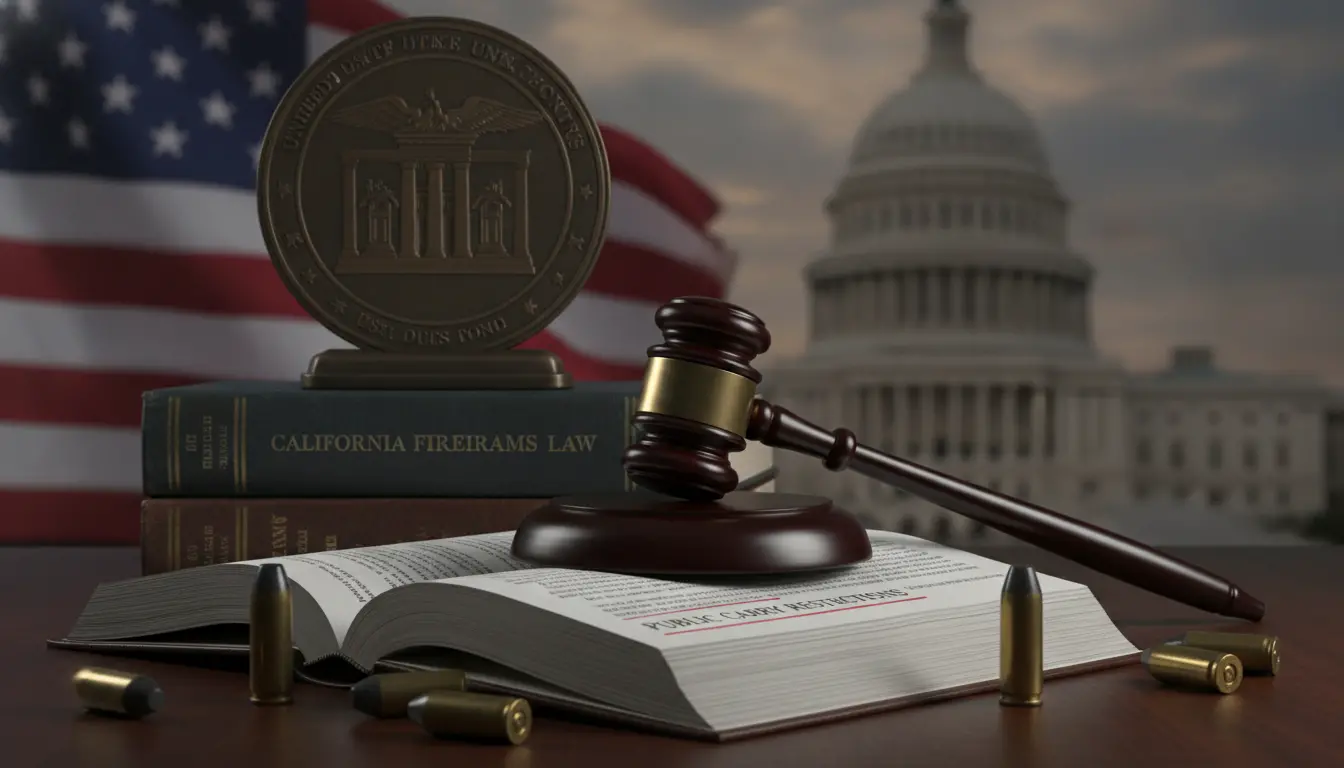
Supreme Court Ruling Intensifies Federal Gun Control Debate Post-California Law Rejection
A recent landmark decision by the U.S. Supreme Court, which dismantled a California law restricting firearms in certain public venues, has irrevocably reshaped the national dialogue on gun control. This ruling, significantly broadening the interpretation of Second Amendment protections, has immediately intensified calls for a robust federal legislative response, setting the stage for a prolonged and contentious battle in Washington.
The high court's decision specifically targeted a California statute that had prohibited individuals from carrying firearms, even openly or with a permit, into various public establishments, including many retail stores. By striking down these longstanding restrictions, the Court effectively extended the scope of gun ownership rights beyond the home, compelling states to reassess their regulatory frameworks. This move, building upon previous Second Amendment jurisprudence established in cases like District of Columbia v. Heller and New York State Rifle & Pistol Association Inc. v. Bruen, creates a new legal landscape where state-level restrictions on carrying firearms in public spaces will face heightened judicial scrutiny. The ruling’s immediate practical effect is to embolden gun rights advocates while simultaneously galvanizing proponents of stricter gun safety measures who now see federal action as a critical imperative.
The political environment in Washington remains deeply polarized on the issue of firearms. President Joe Biden has long been a vocal advocate for comprehensive gun control, including universal background checks, bans on assault weapons, and red flag laws. Following the Supreme Court's pronouncement, the administration reiterated its commitment to pursuing all available avenues to curb gun violence. However, legislative efforts in Congress face immense hurdles. While Democrats in both chambers are largely aligned with the President's agenda, any significant federal legislation would require overcoming a formidable Republican opposition, particularly in the Senate where the filibuster often prevents bills from advancing without substantial bipartisan support. Previous attempts, such as the Bipartisan Safer Communities Act of 2022, demonstrated that while some consensus can be forged on narrower measures like enhanced background checks for young buyers and investments in mental health, broader reforms remain elusive.
Key stakeholders are already recalibrating their strategies in response to the Court's ruling. Gun rights organizations, including the National Rifle Association (NRA) and Gun Owners of America, have hailed the decision as a momentous victory for individual liberty and the Second Amendment, promising to fiercely resist any federal legislation they deem an infringement on these newly affirmed rights. Conversely, gun control advocacy groups, such as Everytown for Gun Safety and Moms Demand Action, have redoubled their lobbying efforts, emphasizing the urgent need for federal intervention to address what they perceive as an escalating public safety crisis exacerbated by the Supreme Court’s expansion of gun carry rights. This fundamental ideological chasm makes the prospect of a legislative breakthrough exceptionally challenging.
The path forward for federal gun control legislation is fraught with obstacles. Any new bill would need to navigate not only the political chasm but also the increasingly complex constitutional landscape. Drafting legislation that can withstand rigorous judicial review, given the Supreme Court's expansive view of Second Amendment protections, will require careful legal craftsmanship. Furthermore, the upcoming election cycles will inevitably inject an additional layer of political maneuvering, with both parties keen to energize their bases on an issue that deeply divides the electorate. The volatility of public opinion, often swayed by tragic events, could also play a role in shifting political momentum, but sustained bipartisan commitment remains the most significant missing ingredient.
Ultimately, the stakes in this renewed federal debate are profoundly high. At its core, the nation grapples with the delicate balance between individual constitutional rights and the collective imperative for public safety. Regardless of whether new federal legislation emerges from this intensified push, the Supreme Court's latest pronouncement ensures that the legal and political battles over firearms will continue to shape American society for years to come, further entrenching one of the country's most contentious and deeply personal debates.
Stay Informed. Act Smarter.
Get weekly highlights, major headlines, and expert insights — then put your knowledge to work in our live prediction markets.
Related News

US Congress Intensifies Efforts to Forge Comprehensive Federal AI Regulation

US Deepens AI Export Scrutiny, Sparking Fears of a New Tech Cold War

Gold Surges Past $2,500 as Central Banks and Geopolitical Fears Fuel Record Rally

Tesla's Dominant US EV Market Share Faces Erosion Amid Stiffening Competition

Venezuela Grapples with Escalating Humanitarian Crisis Following Devastating Earthquakes, International Aid Remains Uncertain

Scrutiny Intensifies Over Elon Musk's Extensive CEO Responsibilities at Tesla, SpaceX, and X

Major AI Companies Intensify Race to Unveil Next-Generation Flagship Language Models

AI Titans Accelerate Development of Next-Generation Flagship LLMs for Public Release

Global AI Leaders Vie to Unveil Next-Generation Large Language Models

G7 Intensifies Push for Global AI Rules, But Path to Unified Framework Remains Complex