Politicscorruption & scandalsGovernment Transparency
China's Fake Name Scandal Raises Government Credibility Concerns
OL4 hours ago7 min read1 comments
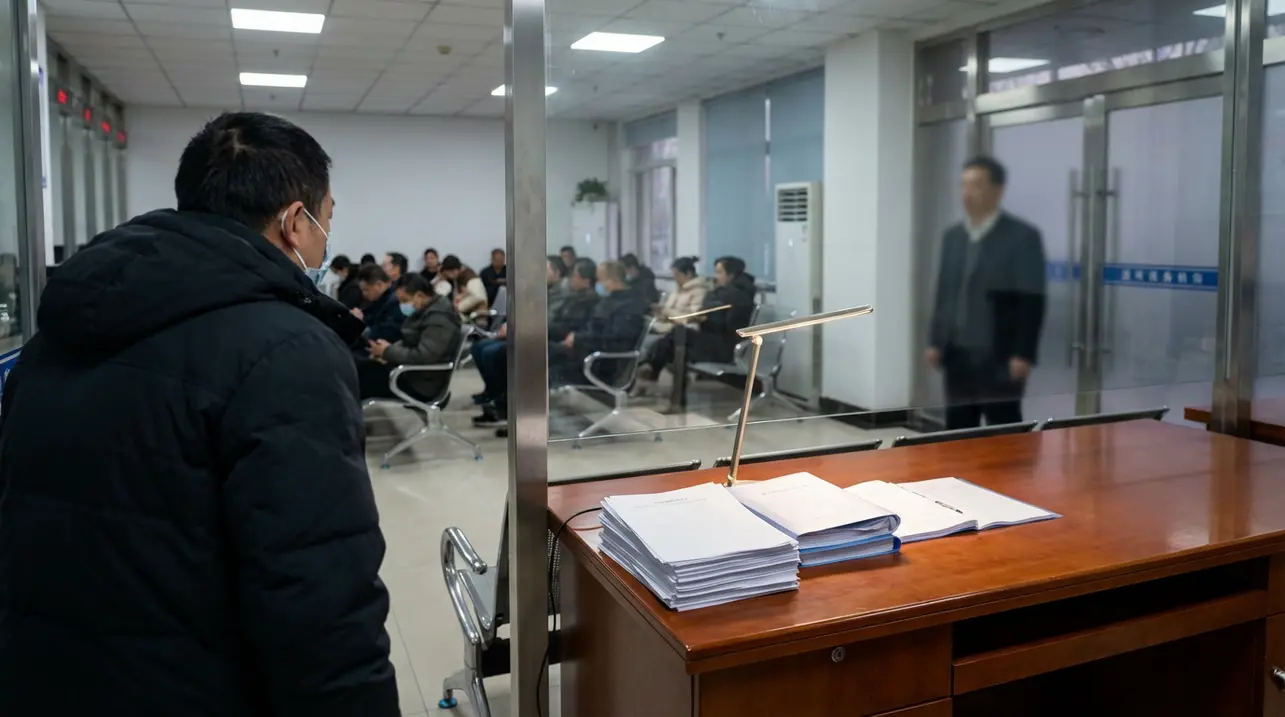
The discovery of fake names in official Chinese tender documents is more than a bureaucratic blunder; it's a critical failure in the integrity architecture of a state that predicates its legitimacy on competence and control. The incident, which surfaced on December 3rd when netizens identified a judging panel whose five members' names matched the top five entries in Baidu's '10,000 Popular Chinese Names' list, is not an isolated risk but a systemic vulnerability.Such a lapse functions as a direct conduit for corruption, creating shadow spaces where funds can be misallocated and accountability evaporates. For a government that has invested heavily in digital governance and social credit systems to monitor its citizenry, this episode represents a profound irony—a gaping hole in the very system designed to enforce transparency.The immediate risk scenario is clear: phantom committees approve phantom projects, siphoning public resources into opaque channels. This erodes public trust not incrementally, but in a sudden, jarring manner that state media itself has warned could 'harm government credibility.' Historically, the Chinese Communist Party has weathered credibility crises by swiftly enacting punitive anti-corruption campaigns, a playbook likely to be activated here with targeted disciplinary actions. However, the deeper analytical insight lies in the operational pressure that likely spawned this fraud.Local officials, facing immense top-down targets for project completion and economic output, may resort to fabricating oversight processes to meet deadlines, a symptom of a system where performative compliance often trumps genuine governance. Expert commentary from political risk analysts would highlight this as a classic case of 'goal displacement,' where the metric of success (a completed tender process) becomes detached from its purpose (fair and expert review).The consequences extend beyond China's borders, affecting foreign firms engaged in partnerships or bids, who must now recalibrate their due diligence to account for the possibility of entirely fabricated counterparties. This scandal also provides ammunition for international critics who juxtapose China's narrative of technological superiority in governance with its very analog failures in basic verification.Looking forward, the regime's response will be a key indicator of its risk tolerance. A limited, localized crackdown suggests an attempt to contain the narrative, while a broad audit of all public institution documents would signal a recognition of systemic peril but could unleash a wave of destabilizing revelations. In the calculus of political risk, this is a low-probability, high-impact event—a single, easily discovered forgery that, by exposing the potential for countless others, threatens to undermine a foundational pillar of state authority.
#government credibility
#fake names
#corruption
#public institutions
#tender document
#China
#editorial picks news