Betting scandals broke sports. Could prediction markets do the same to politics?
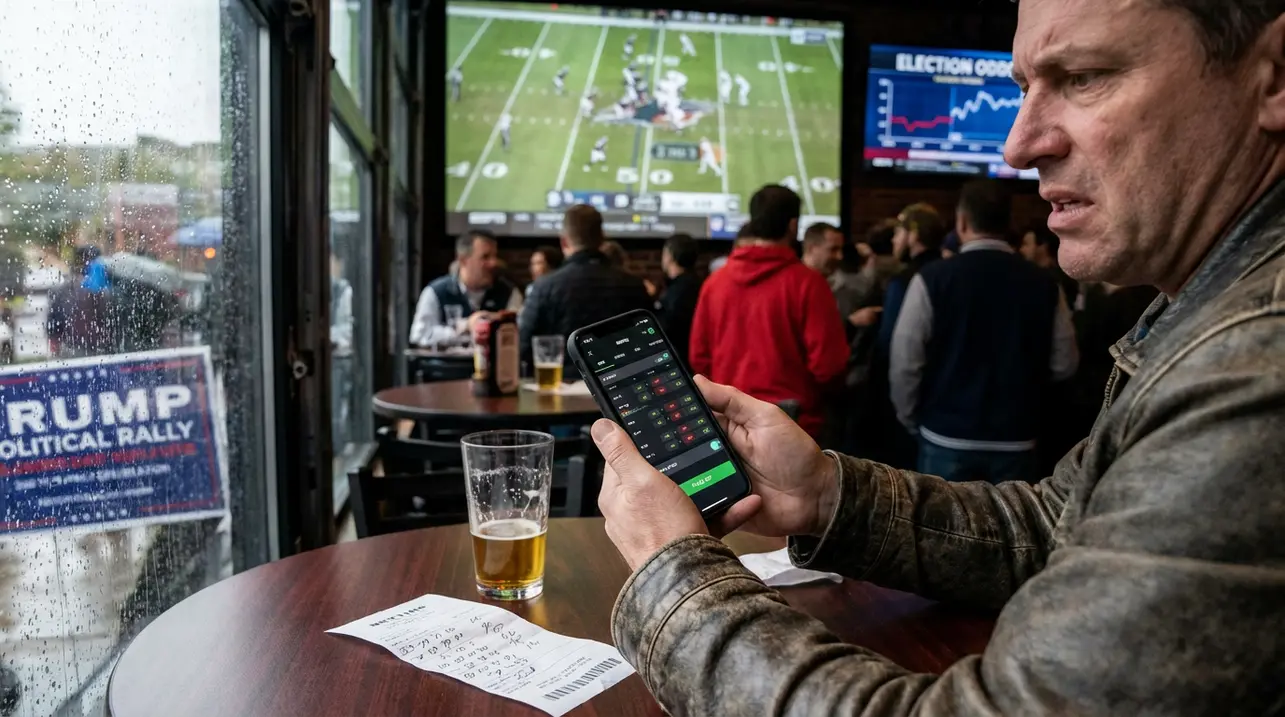
The recent explosive growth of prediction markets, with platforms like Kalshi and Polymarket processing nearly $10 billion in wagers last month alone, presents a profound and unsettling political dilemma. These markets, which allow users to bet on everything from Grammy winners to geopolitical outcomes, are rapidly moving from the fringe of financial speculation into the mainstream of political engagement.The ethical reckoning they invite is not merely theoretical; it echoes the corrosive scandals that have plagued professional sports, where the integrity of competition has been repeatedly compromised by gambling interests. The central question, therefore, is whether the political arena, already suffering from a severe deficit of public trust, can withstand the same pressures that have broken the bond of faith between fans and their favorite games.The involvement of figures like Donald Trump Jr. as an adviser to these platforms only heightens the stakes, suggesting a future where political insiders could leverage non-public information for personal gain in a legally ambiguous space, creating unprecedented opportunities for corruption.Historically, societies have drawn clear lines between acceptable forms of wagering and the sacred mechanics of democratic governance. Betting on a horse race or a football match is seen as a leisure activity with contained consequences, but staking money on electoral outcomes or policy decisions fundamentally alters the citizen's relationship to the state.It transforms the voter from a participant in a collective civic endeavor into a mere speculator, a pundit whose primary interest is in the accuracy of their forecast rather than the health of the republic. This shift represents a dangerous abstraction of politics, reducing complex, life-altering decisions—on matters like deportation quotas or military engagements—to simple financial instruments.The darkest scenarios are not hyperbolic. The foundational concept of 'assassination markets,' where individuals could profit from predicting acts of violence, was a chilling thought experiment in the early days of prediction market theory.While modern platforms explicitly prohibit such trades, the underlying incentive structure remains: a massive financial payoff for correctly predicting a catastrophic event can, in a twisted mind, manifest as an incentive to cause that event. Even without such extreme malevolence, the mere prevalence of political betting could systematically erode faith in electoral legitimacy.A voter who has lost a significant sum on a candidate's defeat is not merely disappointed; they are financially humiliated and alienated, potentially more susceptible to narratives of a 'rigged' system. This dynamic could further destabilize an already fragile political culture, where trust in institutions is perilously low.
#prediction markets
#political betting
#ethics
#corruption
#election integrity
#Trump administration
#featured
Stay Informed. Act Smarter.
Get weekly highlights, major headlines, and expert insights — then put your knowledge to work in our live prediction markets.
we're seeing the same shift in europe, where these markets are starting to pop up and it's just a bit unsettling tbh. in asia, this model has already evolved further and the ethical lines are totally blurred. feels like we're sleepwalking into a global problem here
Proponents argue that prediction markets are exceptionally efficient aggregators of dispersed information, often outperforming polls and pundits. There is a cold logic to this view, and one could posit a hypothetical upside where financial engagement sparks greater interest in political mechanics.
Yet, as history shows with sports, gambling is rarely a gateway to deeper appreciation; it more often becomes a parasitic meta-layer, distorting the primary activity. The conversation becomes less about the game itself and more about the odds, the spreads, and the prop bets.
Applying this lens to politics portends a future where every policy announcement, every diplomatic maneuver, is instantly parsed for its betting implications, further divorcing public discourse from substance. The looming specter of the Trump administration, with its documented familial penchant for blurring ethical boundaries and monetizing political access, casts a long shadow over this emerging industry.
In an environment where insider trading in securities is illegal, prediction markets on political events exist in a grey zone. The potential for those with advance knowledge of executive actions—on tariffs, pardons, or regulatory shifts—to place lucrative bets presents a clear and present danger to the notion of a level playing field, both in markets and in democracy itself.
The parallel with sports betting scandals is instructive but ultimately insufficient. When a referee or player fixes a game, it damages a pastime.
When the integrity of an election is perceived to be compromised by financial speculation, it strikes at the heart of the social contract. The boom in prediction markets may be a financial and technological inevitability, but its collision with politics demands a rigorous public debate and, likely, a regulatory framework far more robust than anything currently contemplated. To ignore this is to risk allowing a novel form of corruption to become institutionalized, with consequences far more severe than a tarnished trophy or a voided bet.