Politicsgovernments & cabinetsLeadership Transitions
The Role of Catholic Politics in Venezuela's Opposition Movement
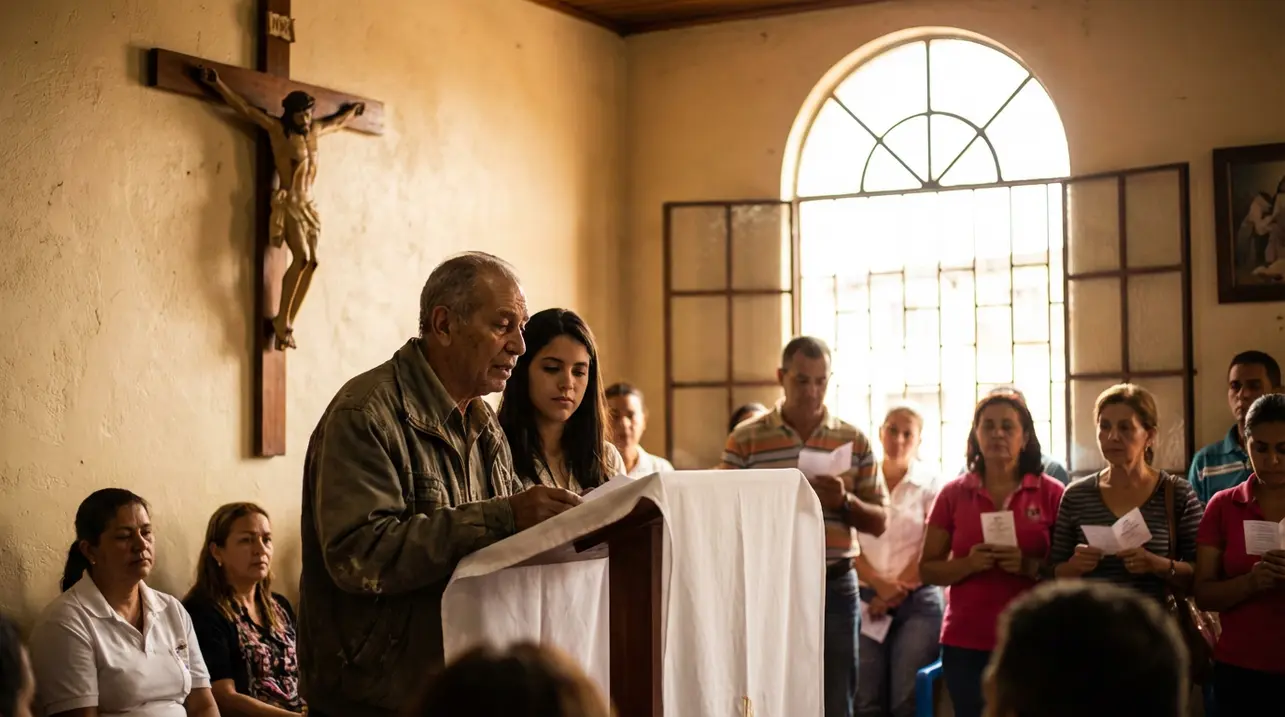
To grasp the political dynamics of contemporary Venezuela, one must first look beyond the immediate headlines of economic collapse and authoritarian rule and delve into a deeper, more formative ideological current: the tradition of Christian Democracy. While this movement may seem a historical footnote to many observers in the United States, its legacy is the bedrock upon which a significant portion of Latin America's modern political right was constructed.The failure to recognize this Catholic political heritage leads to a fundamental misunderstanding of the opposition's character and its internal tensions. Christian Democracy emerged in post-war Europe as a centrist force, championing human dignity, social justice, and a moderate path between laissez-faire capitalism and state socialism, all grounded in Catholic social teaching.This ideology found fertile ground in Latin America during the mid-20th century, particularly in countries like Venezuela, where parties such as COPEI (Social Christian Party of Venezuela) became dominant political players, governing for decades and shaping the nation's institutions. The movement provided a legitimate, organized alternative to both Marxist insurgents and traditional military strongmen, embedding Catholic values of subsidiarity and solidarity into the political framework.However, the rise of Hugo Chávez and his Bolivarian Revolution in the late 1990s represented a seismic rupture. Chavismo, with its blend of populist socialism, militaristic nationalism, and a distinct form of charismatic leadership, systematically dismantled the old party system, including the Christian Democratic establishment, which it painted as corrupt and elitist.In the ensuing two decades of crisis, the Venezuelan opposition has been a fractious coalition, but within it, the intellectual and moral underpinnings of Christian Democracy have never fully dissipated. They resurface in the language of human rights used by activists, in the social doctrine invoked by elements of the Catholic Church—a rare institution retaining some moral authority—and in the platform of certain political factions advocating for a renewed social contract.This is not merely about religious belief; it is about a political philosophy that emphasizes community, ethical governance, and the common good, which stands in stark contrast to the polarizing, personality-driven models of both Chavismo and some more reactionary opposition elements. Understanding this lineage is crucial for analyzing the opposition's future. Can it forge a coherent vision that reconciles this Christian Democratic heritage with the urgent, practical demands of a population suffering from hyperinflation and mass exodus? Or will it succumb to more simplistic, authoritarian alternatives in its desperation to regain power? The shadow of this Catholic political tradition, therefore, is not a relic but a living force, quietly shaping the debate over what comes after the Maduro regime and what kind of society Venezuela might one day rebuild.
#featured
#Venezuela
#María Corina Machado
#Catholic politics
#Christian Democracy
#Latin American right
#US politics