


US Regulators Intensify Oversight as Major Bank Stability Concerns Rise
Persistent anxieties continue to ripple through the U.S. banking sector, prompting renewed scrutiny from regulators and economists over the stability of the nation's largest financial institutions. While the immediate tremors of 2023’s regional bank failures have subsided, a complex web of economic pressures and evolving market dynamics ensures that the resilience of the financial system remains a paramount concern. The discussion is not merely academic; it centers on the systemic risks that could emerge should one of the country's most prominent banks face insurmountable challenges, potentially necessitating significant government intervention to avert broader economic fallout.
The specter of a major bank requiring direct government assistance beyond standard deposit insurance casts a long shadow, drawing parallels to past financial crises. The turmoil of 2023, marked by the collapses of Silicon Valley Bank, Signature Bank, and First Republic Bank, exposed vulnerabilities that had festered beneath the surface of what appeared to be a robust financial system. Rapid interest rate hikes by the Federal Reserve rapidly devalued long-term bond portfolios held by many banks, creating massive unrealized losses. Simultaneously, a concentration of uninsured deposits at some institutions led to swift, digital bank runs when confidence wavered, highlighting the speed with which modern crises can unfold. Though these were regional players, the incidents served as a stark reminder of how quickly contagion can spread and the critical importance of robust oversight.
Today, new and persistent challenges continue to test the fortitude of even the largest U.S. banks. Elevated interest rates, while beneficial for net interest margins in some respects, continue to stress certain balance sheet items and increase borrowing costs across the economy. A particularly acute area of concern is commercial real estate (CRE), where many banks, including some of the largest, hold significant exposure. The post-pandemic shift to remote work, coupled with rising interest rates and tighter lending standards, has depressed property values and increased default risks for many CRE loans. Should these pressures intensify, it could lead to substantial loan losses, eroding capital buffers and impacting profitability across the sector.
The regulatory landscape has evolved significantly since the 2008 financial crisis, with measures like the Dodd-Frank Act aiming to fortify the system through enhanced capital requirements, stress tests, and improved resolution mechanisms. Agencies such as the Federal Reserve, the Federal Deposit Insurance Corporation (FDIC), and the Treasury Department are constantly monitoring economic indicators and bank health. However, a 'major' bank failure—typically referring to one of the top ten by assets, which are often designated as Systemically Important Financial Institutions (SIFIs)—would represent a challenge far exceeding the scope of typical FDIC insurance payouts. Such a scenario would likely trigger a broader response, potentially involving liquidity injections, asset guarantees, or even direct recapitalization from the government to prevent a domino effect across the financial system and the broader economy.
The stakes are undeniably high. A failure of a top-tier U.S. bank could trigger a credit crunch, as lending tightens and financial markets seize up, significantly impacting businesses and consumers alike. The erosion of public confidence in the banking system could lead to widespread withdrawals, further destabilizing institutions. On a global scale, it could spark international financial market volatility, with repercussions extending far beyond American borders. Consequently, policymakers are engaged in an ongoing delicate balancing act: promoting a competitive banking environment while implementing stringent safeguards to prevent crises and manage potential systemic risks without stifling economic growth or creating moral hazard.
While regulators maintain that the U.S. banking system is significantly more resilient than it was prior to 2008, the dynamic nature of financial markets and emerging economic headwinds ensure that vigilance remains paramount. The continuous assessment of risk exposures, particularly in areas like commercial real estate and the management of interest rate sensitivity, coupled with robust stress testing, forms the bedrock of efforts to preempt future instability. The debate over the adequacy of current safeguards and the potential need for further regulatory adjustments will undoubtedly persist, underscoring the enduring challenge of ensuring the long-term health and stability of the nation's financial backbone.
Stay Informed. Act Smarter.
Get weekly highlights, major headlines, and expert insights — then put your knowledge to work in our live prediction markets.
Related News
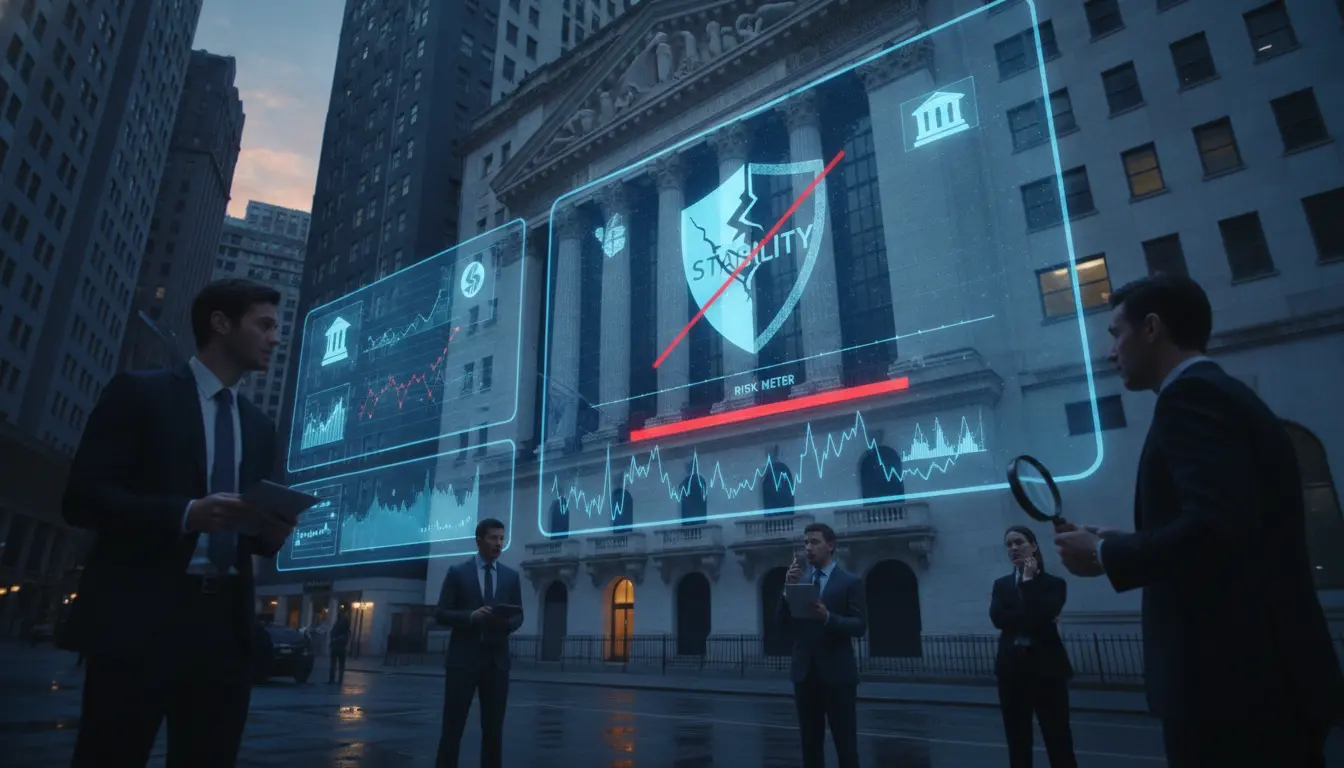
US Banking Sector Under Close Scrutiny Amid Persistent Stability Concerns

Economists Intensify Debate on US Recession Risk Through 2026 Amid Fed's Inflation Fight

US Economy Navigates Heightened Recession Risks Amidst Shifting Monetary Policy and Global Headwinds

Economists Intensify Debate on US Recession Timeline Amid Evolving Economic Landscape

Outpoll Weekly Recap: Finance (August 3 – 9, 2026)

Outpoll Weekly Recap: Finance (August 17 – 23, 2026)

Outpoll Weekly Recap: Finance (August 24 – 30, 2026)

Outlook for US 10-Year Treasury Yield Above 5% Signals Deepening Economic Worries
US Congressional Measure Seeks to Block Federal Reserve From Issuing Digital Currency
Supreme Court Examines Presidential Authority Over Federal Reserve Governor Removals