


August US Jobs Report to Shape Federal Reserve's Monetary Policy Outlook
The United States is on the precipice of a pivotal economic data release with the impending August Non-Farm Payrolls (NFP) report from the Bureau of Labor Statistics. This eagerly awaited statistic is not merely a gauge of job creation; it serves as a critical barometer for the overall health of the American labor market, wielding substantial influence over the Federal Reserve's monetary policy decisions, particularly its ongoing battle against inflation and its trajectory for interest rates. Analysts and policymakers alike will scrutinize every detail, as the report could either affirm the Fed's current 'higher for longer' stance or signal a potential shift in its strategy.
Non-Farm Payrolls represent the number of new jobs added to the US economy in the non-agricultural sectors, offering a comprehensive snapshot of employment trends. Its significance stems from the Federal Reserve's dual mandate: fostering maximum employment and maintaining price stability. A robust labor market, characterized by strong job growth and rising wages, typically fuels consumer spending and can contribute to inflationary pressures, making the Fed’s job of taming price increases more challenging. Conversely, a significant slowdown in job creation could signal an impending economic downturn, prompting the central bank to re-evaluate its tightening cycle to support growth. The NFP data, alongside other key labor metrics, provides the essential empirical foundation upon which the Federal Open Market Committee (FOMC) builds its policy framework.
For months, the US labor market has demonstrated remarkable resilience, consistently defying predictions of a sharper slowdown despite a series of aggressive interest rate hikes by the Federal Reserve aimed at cooling demand. Unemployment has remained near historic lows, and job openings, while moderating, have stayed elevated. However, recent indicators have begun to suggest a gradual softening. Wage growth, a crucial component of inflation, has shown some signs of deceleration, and certain sectors have reported modest declines in hiring activity. This delicate balance creates a complex environment for the Fed, which seeks to engineer a 'soft landing' — cooling the economy enough to curb inflation without triggering a recession and a significant rise in joblessness.
Economists are largely anticipating a continued moderation in job gains for August, with consensus estimates often hovering around the 150,000 to 180,000 mark. Such a figure, while still indicative of a growing economy, would represent a slowdown from the more robust numbers seen earlier in the year. A result significantly above these expectations could reignite concerns about persistent inflationary pressures, potentially strengthening the case for the Fed to implement further interest rate hikes. Conversely, a much weaker jobs report, perhaps falling below 100,000 new positions, might signal a more rapid deceleration in economic activity than anticipated. While this could ease pressure on the Fed to raise rates, it would simultaneously heighten fears of a more pronounced economic contraction.
The implications of the August NFP report extend far beyond the Federal Reserve's meeting rooms, directly impacting global financial markets. Bond yields, particularly for US Treasuries, are highly sensitive to NFP figures, as are equity markets, which react to shifts in interest rate expectations and economic outlook. The US dollar’s valuation against major currencies will also be closely watched, reflecting investor sentiment toward the American economy. Beyond the headline number, investors and economists will meticulously dissect the accompanying data points, including the unemployment rate, average hourly earnings (a key measure of wage inflation), and the labor force participation rate. These granular details offer a more complete picture of underlying labor market dynamics, providing crucial insights into the economy's momentum and its future trajectory. The August NFP report is thus more than just a data point; it's a critical inflection point that could dictate the immediate course of US monetary policy and global economic sentiment.
Stay Informed. Act Smarter.
Get weekly highlights, major headlines, and expert insights — then put your knowledge to work in our live prediction markets.
Related News
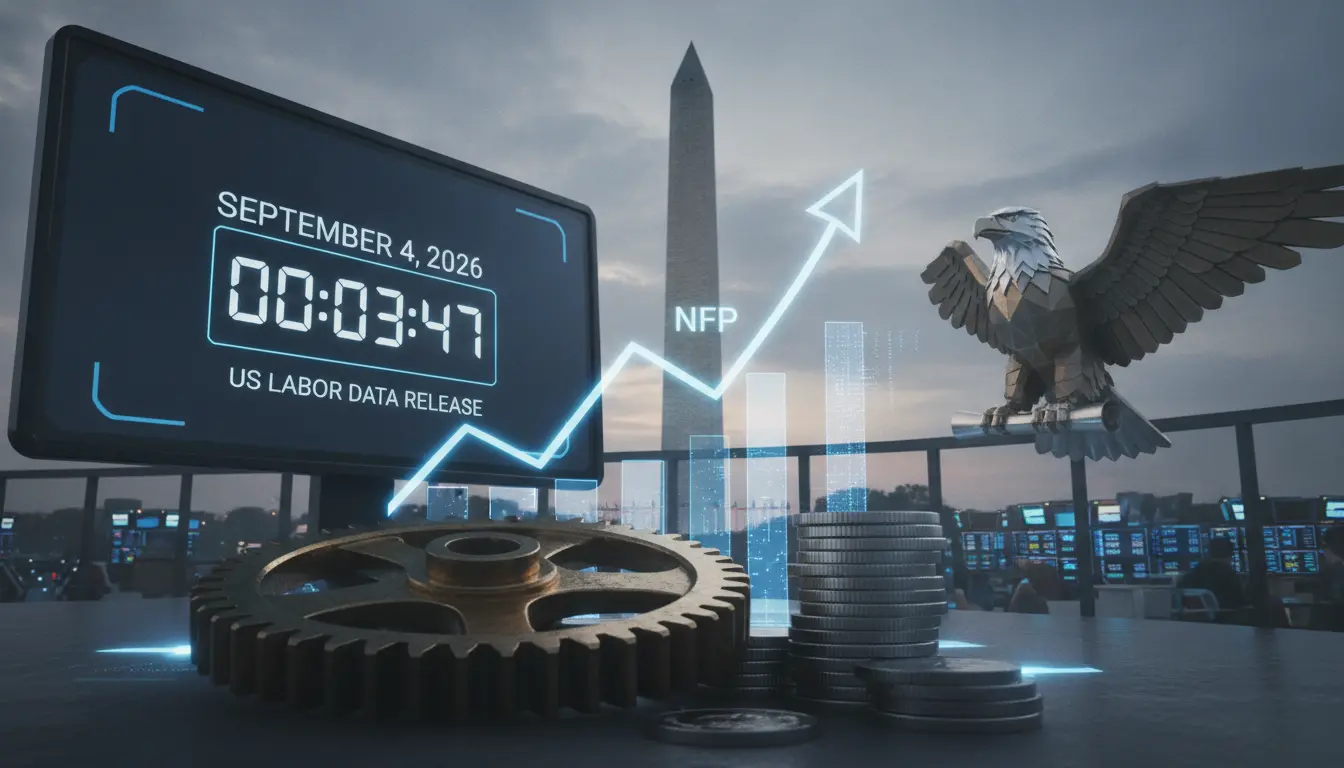
US Economy Braces for August 2026 Jobs Report, Critical for Fed Outlook

U.S. Retail Sales Data Expected to Offer Critical Insights into Consumer Economic Resilience

Washington Alleges Global Complicity in China Tariff Evasion, Signaling Intensified Trade Tensions

Trump Campaign Floats 20% Strait of Hormuz Toll, Signaling Tougher Iran Stance

Trump Proposes 'Hormuz Toll,' Threatening to Overhaul Decades of US Maritime Security Doctrine

Olivia Rodrigo Readies for Monumental 'Unraveled Tour' Debut Next Year

Miami Readies for Bruno Mars' 'The Romantic Tour,' Fueling Talk of Surprise Guest Artists

Anticipation Builds for Billie Eilish's Fourth Album, New Music Expected by 2026

End of an Era: Celebrated Swift Telescope to Fall to Earth as NASA Abandons Servicing Plan

Air Force One, gifted to Trump from Qatar, arrives at Joint Base Andrews