5 things we learned from the Ohio State football loss to Indiana
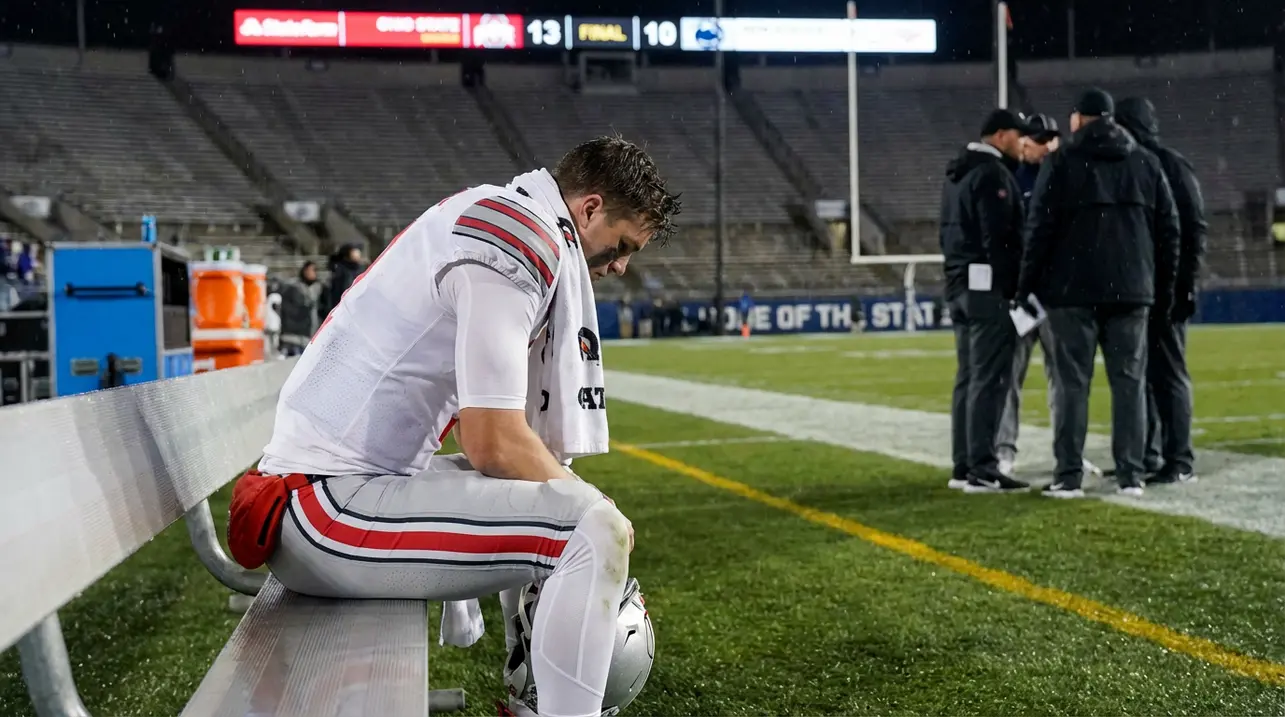
The Ohio State Buckeyes’ 13–10 loss to the Indiana Hoosiers in Indianapolis on Saturday night wasn’t just an upset; it was a masterclass in how a season’s championship aspirations can unravel in the cold, hard light of fundamental breakdowns. This wasn't a game lost on a single, spectacular play, but rather a death by a thousand cuts—a slow bleed of uncharacteristic mistakes, questionable decisions, and individual matchups that swung decisively against the scarlet and gray.For a program built on offensive precision and defensive dominance, the performance felt jarringly out of rhythm, a symphony of errors that Indiana, to their immense credit, orchestrated into a victory. The immediate post-mortem reveals five critical lessons, each a flashing red light that must be addressed before the College Football Playoff gauntlet begins.First, and perhaps most alarming, was the complete and utter collapse of the offensive line’s protective fortress. For years, the Buckeyes' front five has been a bastion of reliability, but against Indiana’s creative stunts and relentless pressure, they were simply beaten.Quarterback Julian Sayin was sacked five times, a staggering number that speaks to a failure in communication and execution. While Sayin showed remarkable poise to still deliver 144 yards through the air to Jeremiah Smith, he was visibly rattled at key moments, a direct result of the pocket collapsing around him.This isn’t just a line issue; it’s a systemic one that impacts play-calling, quarterback confidence, and the entire offensive tempo. In the analytics-driven world of modern football, allowing that many pressures is a near-guaranteed path to a loss, a statistical reality that played out in brutal fashion.You can’t scheme around a leaky line in January; it gets exposed by elite defenses, and Ohio State’s performance was a dire warning that must be heeded. Second, the game was decided on fourth down, where Ohio State’s execution was nothing short of catastrophic.The decision-making tree here is worth dissecting like a coach’s film session. Deep in Indiana territory, facing a fourth and one, the call for a Julian Sayin quarterback sneak was a gamble that backfired spectacularly.Sayin, for all his arm talent, lacks the prototypical size of a short-yardage battering ram, and his attempt was overturned on review, a soft surge that cost the Buckeyes crucial points. In that scenario, the analytics likely favored going for it, but the personnel did not—a critical misalignment.The compounding error came on the very next drive. Perhaps spooked by the previous failure, the staff opted for a 27-yard Jayden Fielding field goal, which he missed.
#Ohio State Buckeyes
#Indiana Hoosiers
#college football
#upset
#offensive line
#Jeremiah Smith
#featured
Stay Informed. Act Smarter.
Get weekly highlights, major headlines, and expert insights — then put your knowledge to work in our live prediction markets.
The whiplash from aggressive to conservative, and the failure in both instances, points to a lack of a coherent short-yardage identity. Where was Lincoln Kienholz? A player of his size and skill set exists precisely for these brutal, trench-warfare moments.
If Ohio State is serious about a title run, they must develop a specialized package for these high-leverage snaps; treating every down with the same quarterback is a luxury they can no longer afford. Third, amidst the gloom, the brilliance of wide receiver Jeremiah Smith shone like a beacon.
His eight catches for 144 yards were a testament to individual excellence, a one-man offensive show where he repeatedly torched his former high school teammate, Indiana corner D’Angelo Ponds. Smith’s route-running, body control, and contested-catch ability confirmed his status as arguably the best player in the country, a Julio Jones-level talent who can dominate regardless of circumstance.
However, his stellar performance inadvertently highlights the fourth major lesson: the alarming lack of secondary contributors. In the first half, only Carnell Tate joined Smith in the reception column.
While the tight ends and backs saw more action after halftime, an offense of Ohio State’s caliber cannot be so predictably funneled through two players. Transfer tight end Max Klare was a non-factor with just two catches.
Defenses in the playoff will bracket Smith and Tate, daring others to beat them. Coordinator Ryan Day and his staff must urgently diversify the attack, finding ways to integrate Klare and the running backs into the passing game not as afterthoughts, but as designed, consistent threats.
The fifth and final lesson came on the other side of the ball, where the secondary, save for Davison Igbinosun, endured a nightmare evening. Freshman phenom Devin Sanchez was beaten on a quick out, veteran Lorenzo Styles Jr.
surrendered a deep ball, and Jermaine Matthews was victimized multiple times, including on the back-breaking deep shot from Indiana's Mendoza to Charlie Becker that essentially sealed the game. These are talented players who will have better days, but the frequency of these breakdowns in critical moments was a deciding factor.
In the playoff, against receivers of a higher caliber, such lapses are fatal. The film review this week will be painful but necessary, a clinic in technique and communication that must be corrected.
Historically, Ohio State has used regular-season stumbles like this as a catalyst; last year’s loss to Michigan forged a hardened, focused team that ran the table to a national championship. This defeat to Indiana must serve the same purpose—a stark, undeniable alarm bell.
The path to back-to-back titles is still there, but it now requires an honest, brutal assessment of these five flaws. The margin for error is gone. The work, as they say, starts now.