Otherweather & natural eventsExtreme Weather
Paris Snowfall Halts Transport Amid European Winter Freeze
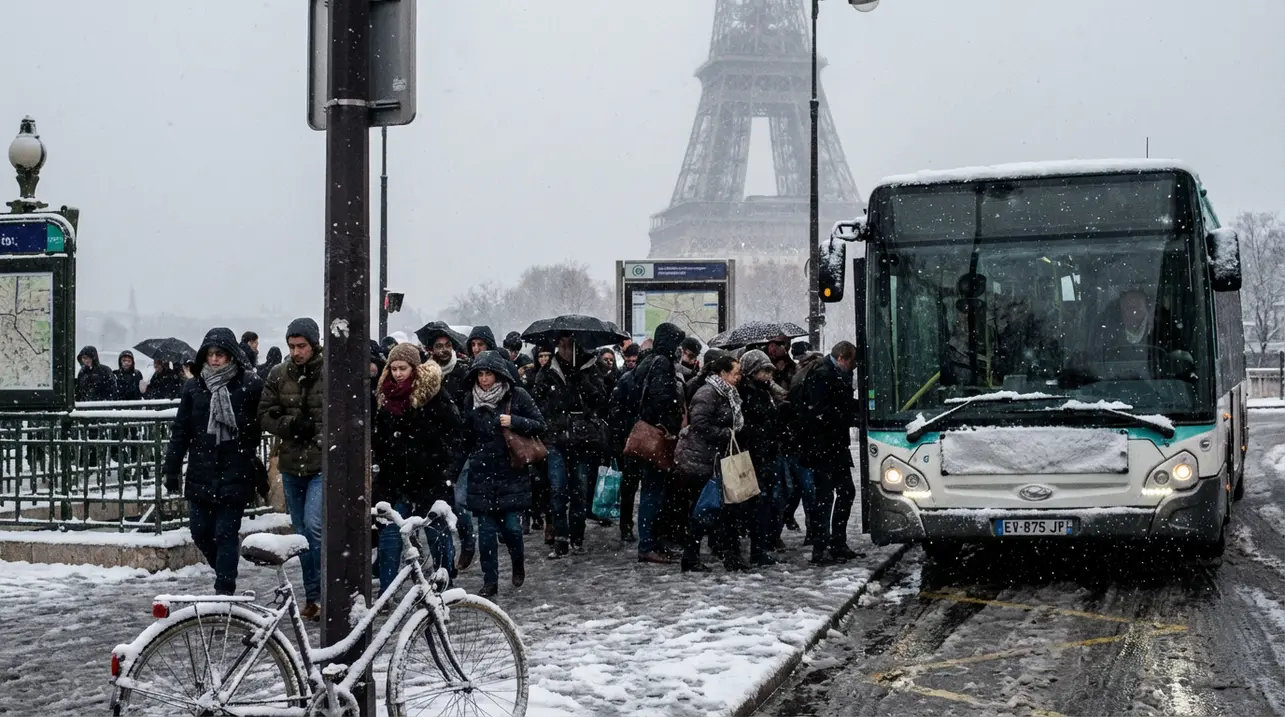
A brutal winter freeze has seized northwestern Europe, bringing transport systems in major capitals to a grinding halt. In Paris, a sudden and heavy snowfall on Monday morning transformed the City of Light into a scene of picturesque chaos, with the Eiffel Tower dusted in white as commuters below faced a logistical nightmare.The disruption was immediate and severe: flights were cancelled at Charles de Gaulle and Orly airports, the SNCF rail network announced widespread delays and cancellations on key regional lines, and the Parisian bus network struggled on icy, untreated roads. This was not an isolated event.Across the Channel, Britain’s transport arteries seized up under the same icy grip, with Heathrow and Gatwick airports reporting significant cancellations and major motorways like the M25 and M1 experiencing dangerous conditions and closures. In the Netherlands, Schiphol Airport—a critical European hub—was forced to cancel dozens of flights, while Dutch railways warned of severe disruptions, stranding travelers during the morning rush.This coordinated breakdown across three nations highlights a recurring vulnerability in European infrastructure when confronted with extreme, though not unprecedented, winter weather. The immediate cause is a sharp dip of the polar vortex, funneling frigid air from Scandinavia directly into the heart of western Europe, colliding with moisture-laden systems from the Atlantic to produce the heavy snow and black ice that crippled mobility.Meteorologists point to a pattern of increasing volatility in winter weather, potentially linked to broader climatic shifts, including the weakening of the jet stream—a phenomenon some studies connect to Arctic warming. The economic impact is being tallied in real-time: thousands of stranded passengers, disrupted supply chains for perishable goods, and a tangible hit to daily commerce as workers are unable to reach offices and shops.Historically, Europe has seen worse—the winter of 1963, for instance, brought a freeze lasting months—but the concentration of this week’s disruption in densely populated, highly connected urban hubs amplifies its effect. Experts warn that while these events are forecastable, the preparedness and resilience of transport networks vary significantly.France’s response, deploying salt gritters but facing criticism for slow suburban route clearance, contrasts with the Netherlands’ more aggressive pre-treatment strategies, yet both were overwhelmed. The situation exposes a critical tension between efficient, just-in-time modern transport systems and the increasing frequency of disruptive weather events.Looking ahead, the freeze is expected to persist through mid-week, with temperatures in Paris and London struggling to rise above freezing, promising further travel misery and testing the emergency protocols of national and municipal authorities. The broader consequence is a stark reminder that even in an age of advanced technology, nature retains the power to halt the engines of continental commerce and daily life with a single, icy blast.
#featured
#Paris
#snow
#winter weather
#transport disruption
#Europe
#flight cancellations
#train delays