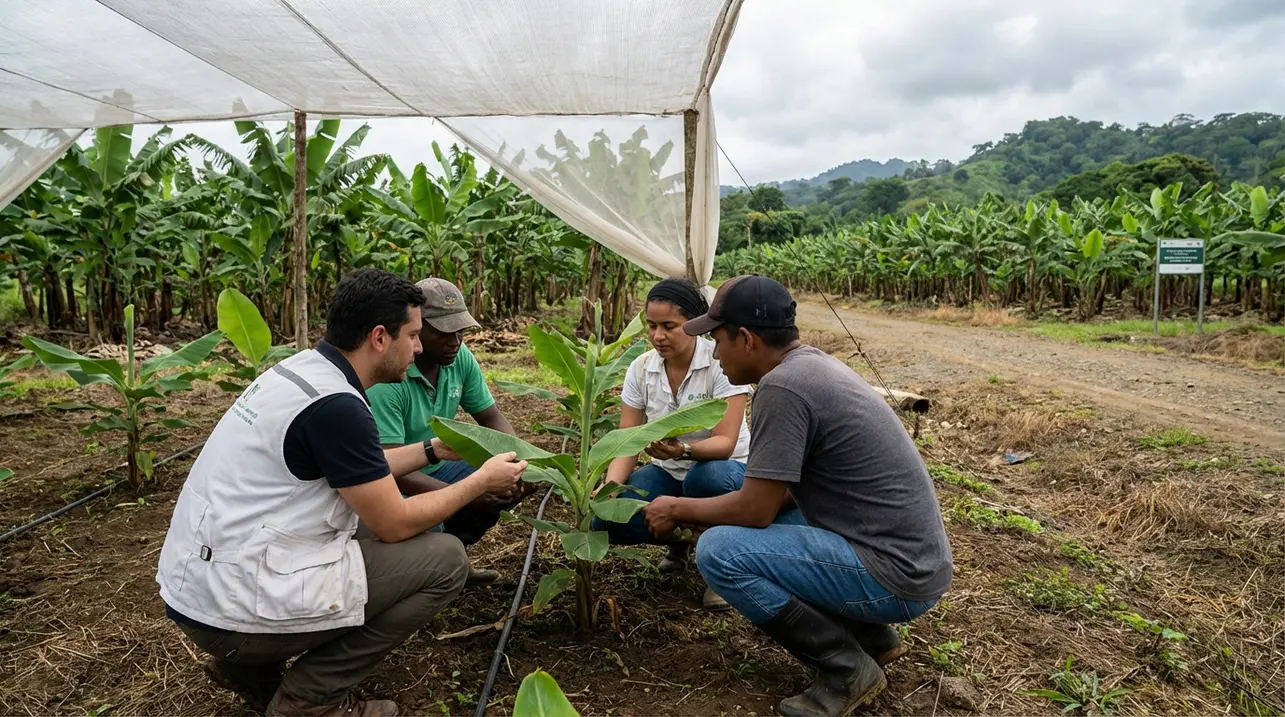
The biotech arena just witnessed a major power play, with Tropic Biosciences landing a formidable $105 million Series C injection to turbocharge its gene-edited banana program. This isn't just another funding round; it's a strategic bet on CRISPR's ability to rescue a global staple from the brink.The primary target is the devastating Panama TR4 fungus, a soil-borne pathogen that's been marching across continents, threatening to wipe out the Cavendish bananas that dominate supermarket shelves. Tropic's approach uses precise gene editing to tweak the plant's own DNA for resilience, a method proponents argue is distinct from older, more controversial GMO techniques.The fresh capital will fuel critical scaling: expanding field trials from controlled environments to real-world plantations, navigating the labyrinthine and varied regulatory landscapes from the Americas to Asia, and building the production muscle to get these modified shoots to farmers. Success here would be a watershed moment, proving that next-gen biotech can deliver climate-resilient, disease-proof crops without the heavy pesticide reliance that defines much of modern agriculture.Yet, the venture sails into familiar headwinds of public skepticism. Debates around mandatory labeling, long-term ecological impact, and corporate control of the food supply are reigniting, setting the stage for a high-stakes battle over public acceptance. If Tropic can clear these hurdles, it won't just secure the future of your morning smoothie ingredient; it will establish a crucial precedent for deploying gene editing to fortify other vital crops against an increasingly volatile climate, balancing cutting-edge innovation with the sober responsibilities of environmental stewardship and food security.
#Gene Editing
#CRISPR
#Agriculture
#Biotechnology
#Funding
#Food Security
Stay Informed. Act Smarter.
Get weekly highlights, major headlines, and expert insights — then put your knowledge to work in our live prediction markets.