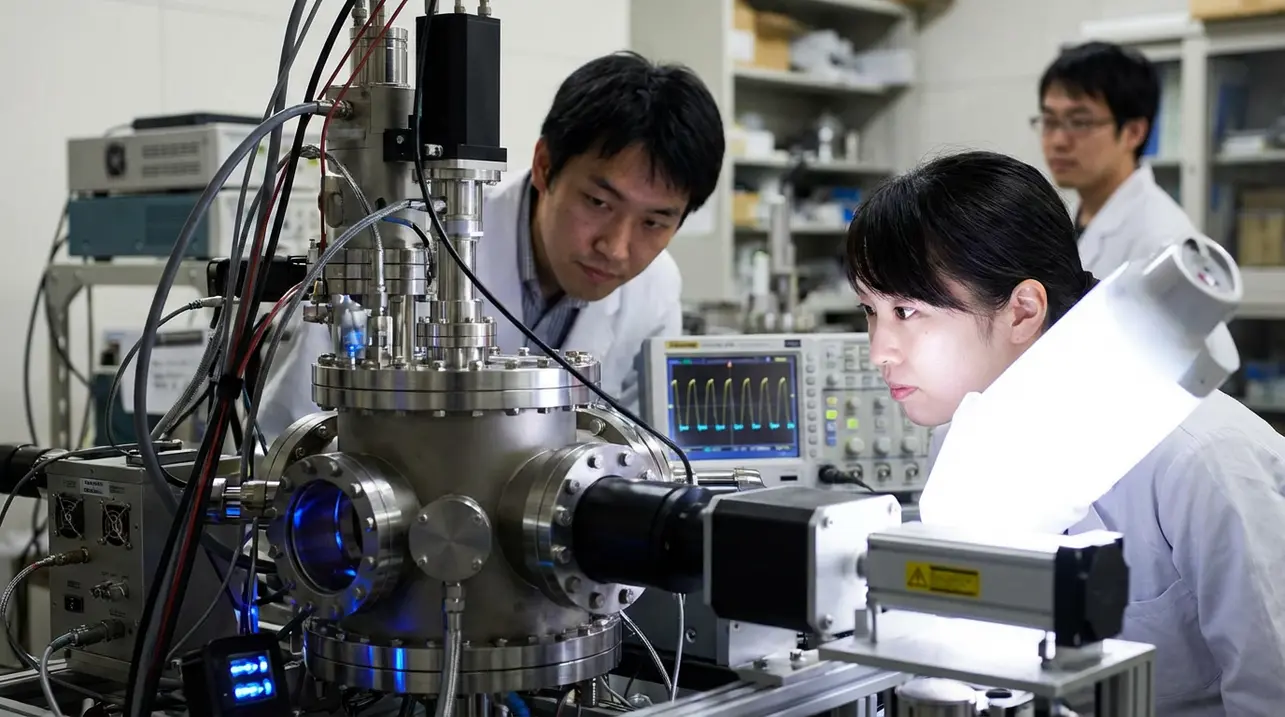
SciencephysicsMaterials Science
This strange magnetism could power tomorrow’s AI
DA
11 hours ago7 min read
The confirmation by scientists in Japan that ultra-thin films of ruthenium dioxide belong to the newly recognized class of altermagnets is more than just an incremental materials science discovery; it represents a fundamental shift in the hardware landscape that could directly power the next generation of artificial intelligence. For those of us following the breakneck pace of AI development, the primary bottleneck has long been identified not in algorithms, but in the physical substrate that runs them.Current computing architectures, built on conventional semiconductors and memory technologies, are straining under the colossal energy demands and data transfer speeds required for large-scale AI models. This is where altermagnets step in, offering a tantalizing solution by merging two previously exclusive magnetic properties: the robust, non-volatile stability of antiferromagnets and the electrically detectable spin polarization of ferromagnets.In essence, they provide a stable 'memory' state that doesn't get wiped out by stray magnetic fields, while still allowing for the fast, low-power electrical read and write operations essential for processing. Imagine the memory cells in the servers training GPT-5 or Gemini Ultra being not only denser and faster but orders of magnitude more energy-efficient.The implications are profound, potentially enabling AI training and inference at scales currently deemed economically and thermally prohibitive, moving us closer to more capable and accessible systems without a corresponding explosion in power consumption. The work on ruthenium dioxide films is particularly significant because it demonstrates that these exotic magnetic states can be engineered in practical, thin-film formats compatible with existing semiconductor fabrication processes, a critical step from laboratory curiosity to commercial chip foundry.Historically, the journey from the discovery of giant magnetoresistance (GMR)—which revolutionized hard drive storage—to its ubiquitous application took decades, but the current AI-driven demand for novel computing paradigms is drastically accelerating such timelines. Experts in spintronics and neuromorphic computing are already theorizing about altermagnet-based synaptic components for brain-inspired chips, where their unique spin properties could more naturally mimic neuronal firing and plasticity.However, significant challenges remain in scaling production, achieving room-temperature operation across all candidate materials, and perfectly integrating these magnetic layers with silicon. The Japanese team's breakthrough is thus a pivotal proof-of-concept, a clear signal that the search for post-CMOS hardware has a powerful new contender.As an AI researcher, this feels akin to the early days of exploring transformer architectures before they scaled: the theoretical promise is immense, and the first practical validations are now arriving. The path from a lab in Japan to the data centers powering tomorrow's AI will be complex, but altermagnets have just solidified their position as a core technology in that inevitable evolution, promising a future where the intelligence of our software is finally matched by the elegant, magnetic intelligence of its underlying hardware.
#altermagnets
#ruthenium dioxide
#memory technology
#AI hardware
#research breakthrough
#featured
Related News
3 days ago
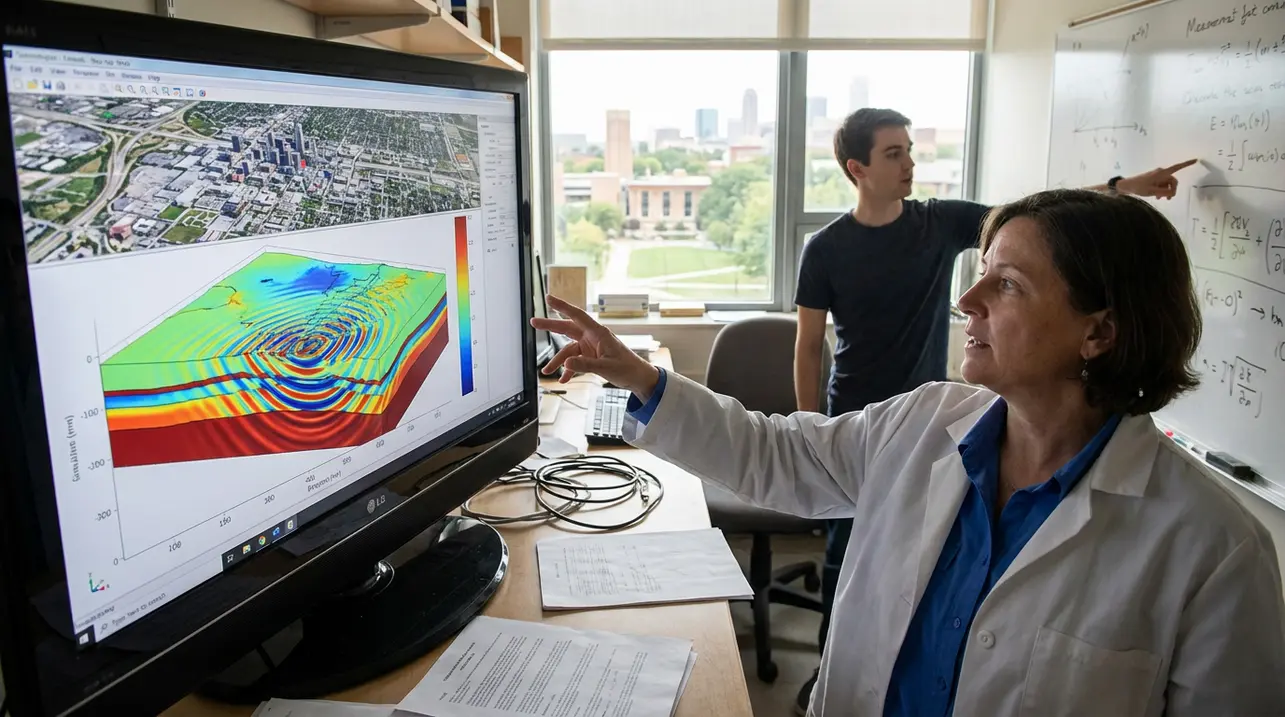
This simple math trick could transform earthquake science

3 days ago
Understanding the Science Behind 'Your Body Keeps Score'
3 days ago
Outpoll Weekly Recap: Science (December 29, 2025 – January 4, 2026)
3 days ago
Outpoll Weekly Recap: Science (December 22 – 28, 2025)
3 days ago
Outpoll Weekly Recap: Science (December 15 – 21, 2025)
4 days ago
Outpoll Weekly Recap: Science (December 8 – 14, 2025)
4 days ago
Outpoll Weekly Recap: Science (December 1 – 7, 2025)
4 days ago
Outpoll Weekly Recap: Science (November 24 – 30, 2025)
4 days ago
Outpoll Weekly Recap: Science (November 17 – 23, 2025)
4 days ago
Outpoll Weekly Recap: Science (November 10 – 16, 2025)


Comments
Loading comments...
© 2025 Outpoll Service LTD. All rights reserved.