SciencemedicinePublic Health
The Air We Breathe: How Science Protects Us in Hospitals and Airplanes
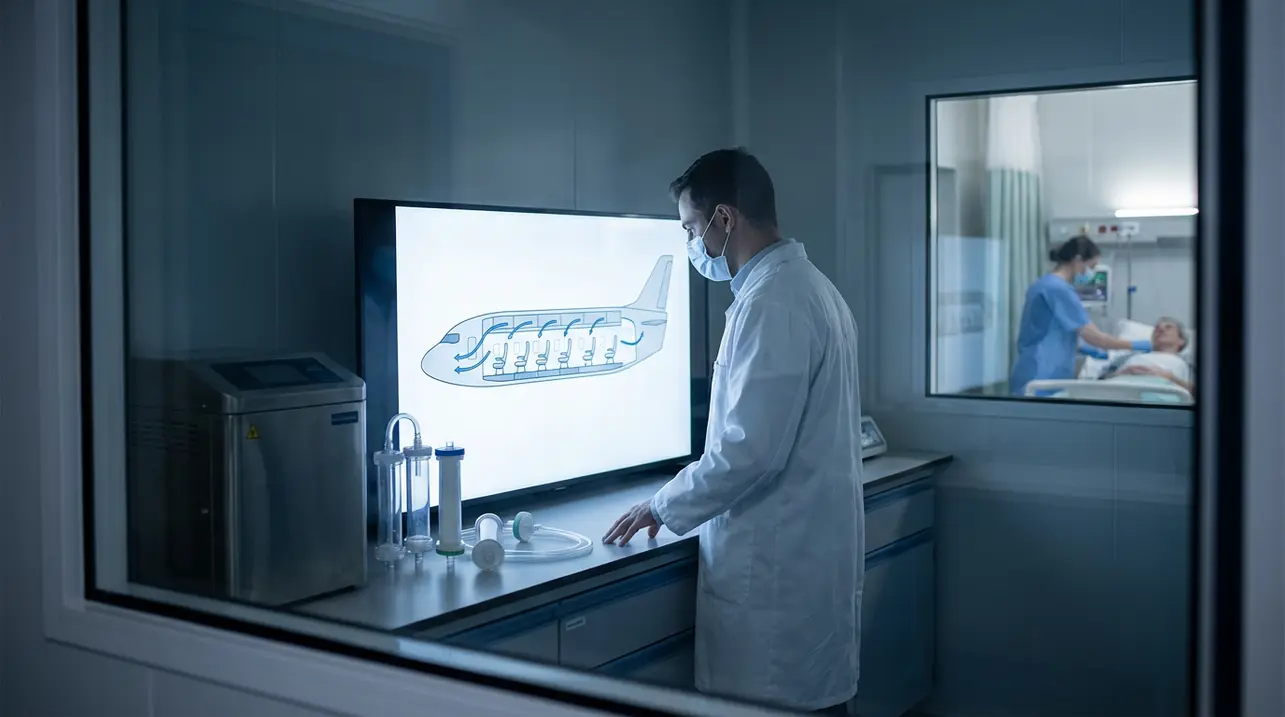
Common fears paint hospital air as a germ-filled hazard and airplane cabins as flying petri dishes. However, scientific data on environmental engineering reveals a more reassuring and nuanced reality.In modern hospitals, sophisticated air management systems are the first line of defense. Critical areas like operating rooms utilize High-Efficiency Particulate Air (HEPA) filtration and achieve over twelve complete air changes per hour.This creates a controlled, laminar airflow that sweeps contaminants away from vulnerable patients and sterile sites. The strategy extends beyond filtration to include negative pressure rooms for isolating infectious individuals and ultraviolet germicidal irradiation (UVGI) to clean air ducts.These protocols make hospitals some of the most rigorously controlled air environments. Research consistently shows that the primary transmission risks are high-touch surfaces and close-range droplets, not the filtered ambient air.The narrative in airplane cabins is equally compelling. Cabin air is not simply stale and recycled.Modern aircraft use a 50/50 blend of fresh, compressed air from the engines and HEPA-filtered recirculated air. The entire cabin air volume is completely refreshed every two to three minutes—a rate faster than most offices or hospitals.Airflow is designed vertically, entering from overhead vents and being extracted at floor level, which minimizes the lateral spread of particles between rows. This engineering creates a protective column of air around each passenger.While sitting near a contagious person remains a risk, studies—including a 2020 analysis in the *Journal of Travel Medicine*—have found remarkably low in-flight transmission rates, especially when masks are used. The common feeling of 'stale' air is largely due to extremely low humidity at cruising altitude, which can dry nasal passages, rather than high pathogen levels.The future of air safety lies in intelligent surveillance. Emerging biotechnologies aim to move beyond passive filtration to active threat detection.This includes biosensors embedded in ventilation systems that use CRISPR-based tools or nanoparticle traps to provide real-time, genomic identification of airborne pathogens—effectively creating an immune system for built environments. In summary, while instinct may signal danger in shared spaces, the science of airflow and filtration tells a different story.Hospitals and airplanes are among the most deliberately managed airspaces we encounter. The remaining risks are primarily from direct contact and close proximity, not from a cloud of illness circulating in the air. Understanding this distinction is crucial for accurate risk assessment and directing public health efforts toward the real pathways of transmission.
#air quality
#airplanes
#hospitals
#health
#science
#featured
Stay Informed. Act Smarter.
Get weekly highlights, major headlines, and expert insights — then put your knowledge to work in our live prediction markets.