
ScienceneuroscienceBrain-Computer Interfaces
Glowing neurons let scientists watch the brain work in real time
KE
22 hours ago7 min read
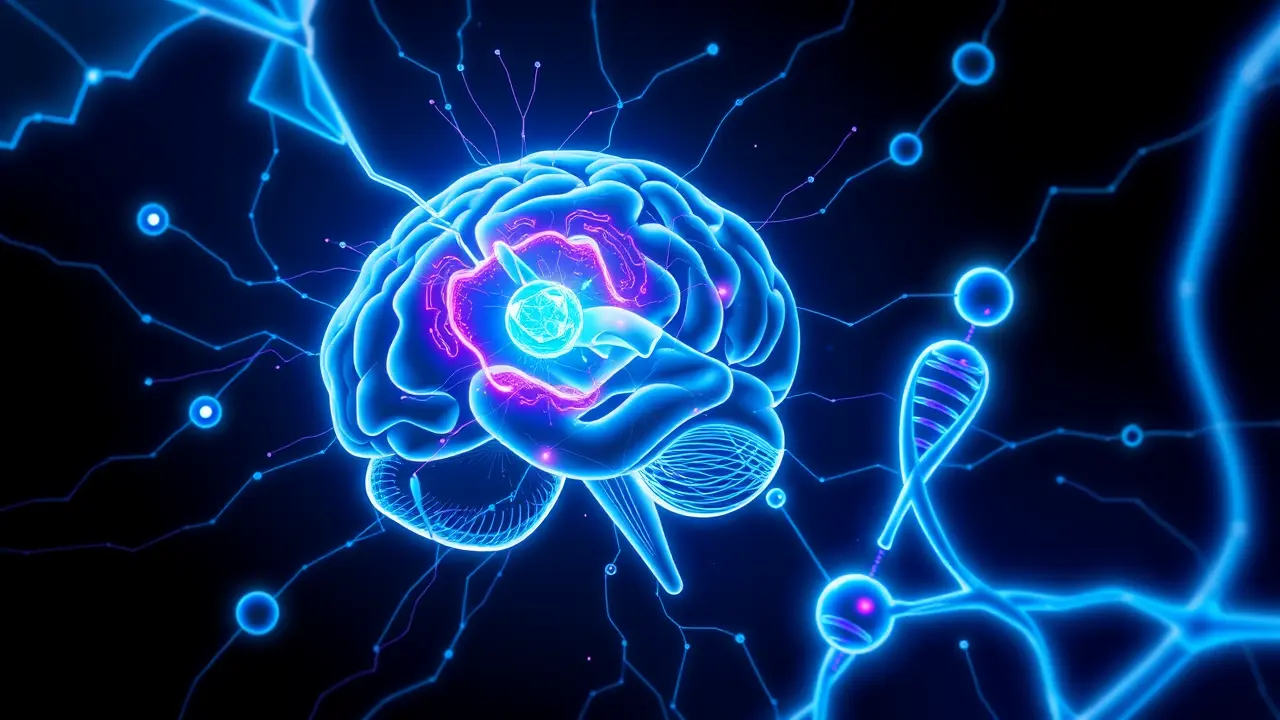
Forget everything you thought you knew about peering into the brain's labyrinth. The old guard of neuroscience, reliant on the harsh glare of external lasers to make neurons fluoresce, has just been handed its walking papers.A quiet revolution is unfolding in labs, one where brain cells are being taught to glow from within. This isn't just an incremental tweak; it's a paradigm shift, a move from invasive interrogation to passive, elegant observation.The new tool, a bioluminescent reporter, essentially gives neurons their own built-in light source, allowing scientists to watch the intricate electrical ballet of individual cells firing—not for fleeting minutes, but for hours on end, without the signal fading into the background noise or the cellular damage caused by powerful lasers. Imagine trying to understand a complex, fast-paced conversation by constantly shining a blinding spotlight on the speakers, versus simply sitting in a room where each person is softly, naturally illuminated.The difference in clarity, depth, and duration is that profound. This breakthrough sits at the thrilling convergence of synthetic biology and neuroscience, a field I’ve long been obsessed with.It builds on the foundational work of green fluorescent protein (GFP), derived from jellyfish, which earned its Nobel Prize and transformed biology by letting us tag and see proteins. But GFP and its successors are like glow-in-the-dark stickers; they need an external light (a laser) to charge them up.This new system borrows from the deep sea, utilizing luciferase enzymes—the same proteins that make fireflies flicker and certain fungi emit an eerie glow. By genetically engineering neurons to produce both luciferase and its fuel molecule, the cells generate their own gentle, continuous bioluminescence that brightens dramatically with each electrical spike.The implications are staggering. For the first time, researchers can map neural circuits over extended periods, watching how memories might physically form and stabilize, or how neurodegenerative diseases like Alzheimer’s progressively silence networks.It opens a window into the marathon, not the sprint, of brain function. We’re moving from snapshots to feature-length films of the mind at work.Experts in the field, like Dr. Elena Vazquez, whose team has been pioneering similar approaches, note that this method drastically reduces phototoxicity.'We’ve always been fighting a battle between seeing enough and not cooking the very tissue we’re trying to study,' she explained in a recent preprint discussion. 'This bioluminescent approach is like turning off the scorching studio lights and letting the actors perform under the soft glow of candlelight—you see the true performance, unaltered by your observation.
#neuroscience
#bioluminescence
#brain activity
#neural imaging
#research tools
#lead focus news
Related News
4 days ago
This simple math trick could transform earthquake science

4 days ago
Understanding the Science Behind 'Your Body Keeps Score'

4 days ago
Outpoll Weekly Recap: Science (December 29, 2025 – January 4, 2026)
4 days ago
Outpoll Weekly Recap: Science (December 22 – 28, 2025)

4 days ago
Outpoll Weekly Recap: Science (December 15 – 21, 2025)

4 days ago
Outpoll Weekly Recap: Science (December 8 – 14, 2025)
4 days ago
Outpoll Weekly Recap: Science (December 1 – 7, 2025)

4 days ago
Outpoll Weekly Recap: Science (November 24 – 30, 2025)

4 days ago
Outpoll Weekly Recap: Science (November 17 – 23, 2025)

4 days ago
Outpoll Weekly Recap: Science (November 10 – 16, 2025)



Comments
Loading comments...
© 2025 Outpoll Service LTD. All rights reserved.