SciencearchaeologyExcavations and Discoveries
Alexander the Great's Failed Destruction of Persepolis
RO
11 hours ago7 min read
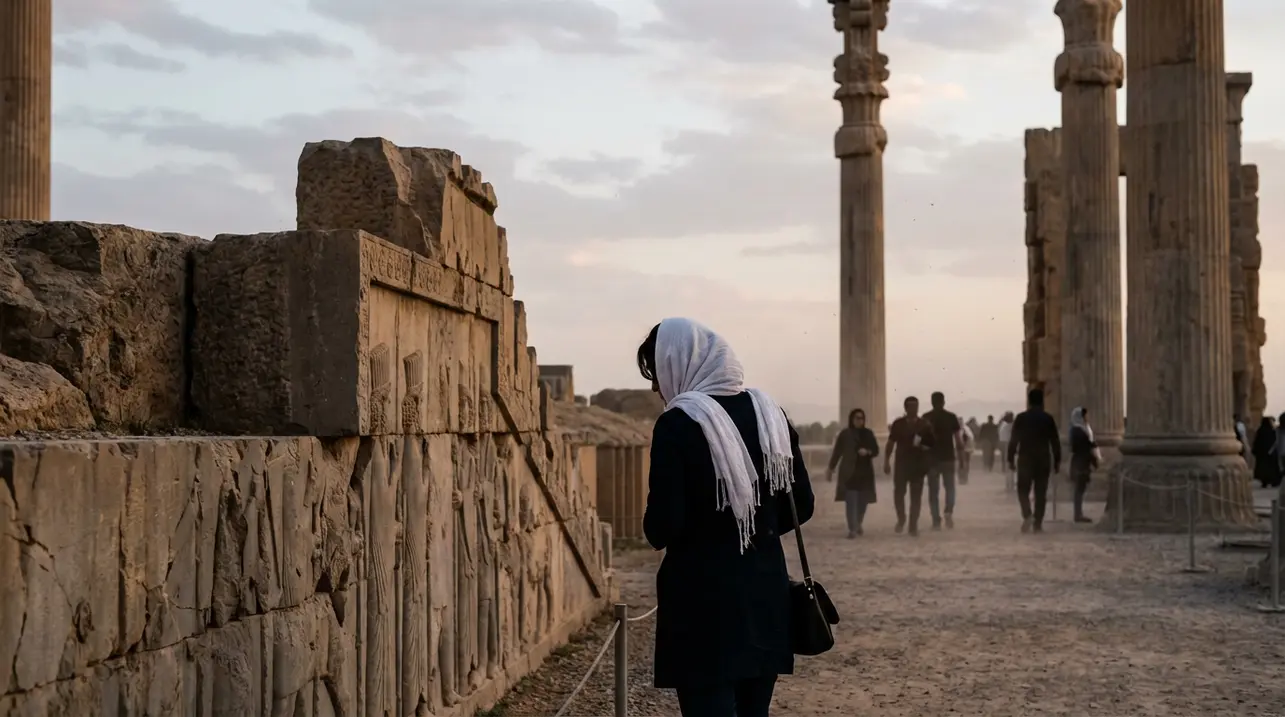
The burning of Persepolis in 330 BCE stands as one of the most debated and symbolically charged acts of Alexander the Great’s relentless campaign. While ancient sources, from Plutarch to Diodorus Siculus, offer conflicting motives—ranging from a calculated political statement to a drunken whim orchestrated by the courtesan Thaïs—the consensus among modern historians suggests a deliberate, if complex, strategy.Alexander, having just defeated Darius III at the Battle of Gaugamela, faced the monumental task of legitimizing his rule over the vast Achaemenid Empire. The destruction of the Persian ceremonial capital, the very seat of Xerxes who had torched Athens a century and a half prior, served as a powerful act of retributive justice for Greek audiences and a stark warning to any remaining Persian loyalists.Yet, the act was not the wholesale erasure it is often portrayed as. Archaeological evidence reveals that the fire, likely set in the palace of Xerxes, was contained; significant structures, including the Apadana and the Treasury, survived, with the latter later repurposed by Alexander himself.This nuanced reality underscores a critical facet of Alexander’s leadership: a masterful blend of brutal spectacle and pragmatic statecraft. He understood the propaganda value of the flames, yet he also recognized Persepolis’s strategic and symbolic worth as a repository of imperial wealth and a potential administrative center.The subsequent reported regret attributed to Alexander, as noted by historians like Arrian, speaks less to a simple moral awakening and more to the evolving challenges of governance. As he sought to integrate Persian nobility into his administration and adopt elements of Achaemenid court protocol, the ghost of Persepolis became an inconvenient emblem of excessive Hellenic vengeance.The event, therefore, is less a tale of failed destruction and more a pivotal chapter in Alexander’s transformation from a conquering Macedonian king to an aspiring ruler of a fused Greco-Persian world order. It prefigured his later policies of fusion and his struggles to reconcile the expectations of his Macedonian army with the necessities of ruling a multicultural empire. In this light, Persepolis serves as a permanent monument not to annihilation, but to the profound and often contradictory burdens of empire-building, where the fires of conquest must eventually give way to the harder task of building something lasting from the ashes.
#Persepolis
#Alexander the Great
#ancient history
#archaeology
#destruction
#featured
Related News

3 days ago
This simple math trick could transform earthquake science

3 days ago
Understanding the Science Behind 'Your Body Keeps Score'

4 days ago
Outpoll Weekly Recap: Science (December 29, 2025 – January 4, 2026)

4 days ago
Outpoll Weekly Recap: Science (December 22 – 28, 2025)

4 days ago
Outpoll Weekly Recap: Science (December 15 – 21, 2025)

4 days ago
Outpoll Weekly Recap: Science (December 8 – 14, 2025)

4 days ago
Outpoll Weekly Recap: Science (December 1 – 7, 2025)

4 days ago
Outpoll Weekly Recap: Science (November 24 – 30, 2025)

4 days ago
Outpoll Weekly Recap: Science (November 17 – 23, 2025)

4 days ago
Outpoll Weekly Recap: Science (November 10 – 16, 2025)





Comments
Loading comments...
© 2025 Outpoll Service LTD. All rights reserved.