

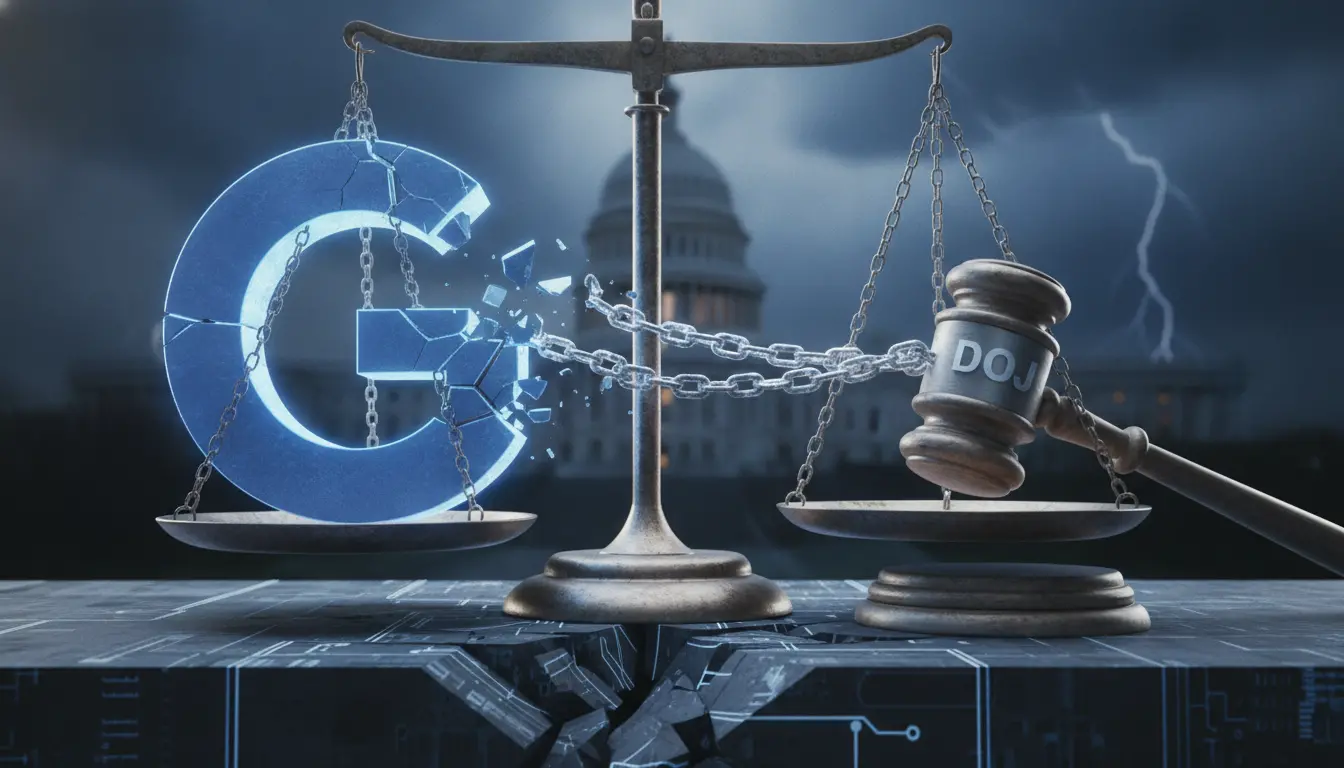
US Department of Justice Seeks Google Search Breakup Following Antitrust Ruling
The United States Department of Justice (DOJ) is intensifying its efforts to rein in Google's immense power, pushing for a radical restructuring that could see the tech giant's dominant search business broken up. This aggressive stance comes in the remedies phase of a landmark antitrust lawsuit, where a federal court recently found Google liable for monopolistic practices in the online search market. The proposed breakup marks a significant escalation in the government's campaign to dismantle the market strongholds of major technology corporations.
The genesis of this legal battle traces back to October 2020, when the DOJ, alongside a coalition of state attorneys general, filed a comprehensive antitrust complaint against Google. The core of the accusation centered on Google's alleged illegal maintenance of monopoly power in the general search services and search advertising markets. Prosecutors argued that Google leveraged its vast resources and intricate web of contracts, including exclusive agreements with device manufacturers and web browsers, to stifle competition and cement its overwhelming market share, thereby harming consumers, advertisers, and innovation within the digital economy. After years of litigation, a federal judge sided with the government, ruling that Google had indeed engaged in anticompetitive behavior.
With the liability phase concluded, the focus has now shifted to determining the appropriate remedies to restore competition. The DOJ's proposals are far-reaching, with the most severe being a structural separation of Google's search business. This could involve compelling Google to divest key components of its advertising technology stack or even creating new, independent entities from its existing search operations. Proponents of such a measure argue that only a structural breakup can effectively address the entrenched network effects and data advantages that Google has amassed over decades, preventing it from simply re-establishing its dominance through new contractual arrangements or acquisitions. The goal is to fundamentally alter the market structure to allow genuine competition to flourish.
Google, predictably, vehemently opposes a breakup, arguing that such a move would be punitive, detrimental to innovation, and ultimately harm consumers who benefit from its integrated services. The company is expected to advocate for less drastic, behavioral remedies, such as stricter rules around data sharing, interoperability requirements, or prohibitions on certain exclusionary contracts. These remedies would aim to modify Google's conduct rather than fundamentally alter its corporate structure. However, the government and many antitrust experts view behavioral remedies with skepticism, citing a history of such measures proving insufficient to curb the power of dominant platforms.
The stakes in this case are enormous, not just for Google, but for the entire technology industry and the future of antitrust enforcement. A successful breakup of Google Search would represent the most significant antitrust action against a major American corporation since the breakup of AT&T in 1984. It would send a powerful signal to other tech giants that their market power is not unassailable and could usher in a new era of aggressive regulatory oversight. Conversely, if the DOJ's efforts fall short, it could embolden tech companies and temper future antitrust challenges.
The legal process for implementing remedies is expected to be lengthy and arduous. The district court judge will weigh both sides' arguments before issuing a final judgment, a decision that will almost certainly face appeals stretching into the coming years. Even if a breakup is ordered, its implementation would be a monumental undertaking, requiring careful disentanglement of complex technical infrastructure and business operations. The outcome remains uncertain, but the very pursuit of such a drastic remedy underscores a profound shift in the government's approach to regulating the digital economy, moving beyond fines and behavioral changes towards a willingness to reshape the very architecture of tech power.
This high-stakes legal battle will undoubtedly reshape the landscape of online search and advertising, with far-reaching implications for how technology companies operate and how consumers access information. The global tech industry, regulators worldwide, and market observers are keenly watching as this pivotal moment in antitrust history unfolds. The ultimate decision will not only define Google's future but also set a critical precedent for managing the power of digital monopolies in the 21st century.
Stay Informed. Act Smarter.
Get weekly highlights, major headlines, and expert insights — then put your knowledge to work in our live prediction markets.
Related News

US DOJ Intensifies Antitrust Push for Google Search Divestiture

US Justice Department Pushes for Chrome Browser Divestiture in Landmark Google Antitrust Case

Google Faces Uphill Battle as EU’s Landmark Antitrust Fine Heads to Appeal
Meta Mounts Defense Against FTC's Landmark Antitrust Lawsuit Seeking to Unwind Instagram, WhatsApp Acquisitions
Appeals Court Considers Reinstating FTC's Landmark Antitrust Suit Against Meta

Apple Revises App Store Commission Policy Amid Heightened Antitrust Scrutiny and Epic Games Litigation
Apple Asks Supreme Court to Weigh In on Epic Games Ruling, Escalating App Store Antitrust Battle

Johnson & Johnson Tables $6.48 Billion Settlement Offer to Resolve Talc Cancer Lawsuits

Federal Judge Rules Pentagon Blacklist of Anthropic Unlawful, Paving Way for Permanent Injunction

Tech Giants Grapple with EU AI Act's 2026 Transparency Deadline, Raising Service Suspension Fears