


Justice Department Files Landmark Antitrust Lawsuit Targeting Apple's iPhone Dominance
The U.S. Department of Justice has launched a sweeping antitrust lawsuit against Apple, accusing the tech giant of illegally monopolizing the smartphone market. The complaint, filed in a New Jersey federal court, alleges that Apple has systematically used its control over the iPhone's hardware and software to stifle competition, penalize rivals, and ultimately harm consumers and developers. This legal action marks a significant escalation in the ongoing regulatory pressure against major tech companies, signaling a determined effort by the Biden administration to reshape the digital economy.
At the heart of the government's case is Apple’s deeply integrated “walled garden” ecosystem, which encompasses everything from its App Store policies to its messaging service, iMessage, and proprietary hardware. For years, Apple has maintained that its tightly controlled environment ensures security, privacy, and an unparalleled user experience. However, the DOJ contends that these practices are not merely about quality but are deliberate strategies to lock users into its devices and prevent competitors from gaining a foothold. The lawsuit details how Apple allegedly extracts higher prices from consumers and developers alike, creating a less innovative and more restrictive market.
Among the specific allegations, the DOJ claims Apple has obstructed the development of “super apps” that could offer a more consolidated mobile experience, suppressed cloud streaming services that might reduce reliance on hardware upgrades, and made it difficult for users to switch away from iPhones without losing functionality, such as the widely criticized green bubble phenomenon when Android users communicate with iMessage users. Furthermore, the suit targets Apple’s restrictions on third-party digital wallets and smartwatches, asserting that the company uses its dominant position to unfairly favor its own products and services over those of rivals. Assistant Attorney General Jonathan Kanter emphasized that Apple’s conduct is not merely exclusionary but designed to entrench its monopoly power, making it harder for competitors to innovate and for consumers to choose alternatives.
Apple has vociferously denied the allegations, asserting that the lawsuit is “wrong on the facts and law” and that its innovations have created competitive markets, not stifled them. The company is expected to mount a robust defense, arguing that its stringent controls are necessary for the security and privacy of its users, and that its business model encourages, rather than deters, innovation. Apple maintains that it operates in a fiercely competitive global market and that the remedies sought by the DOJ could undermine the very principles that have made the iPhone a beloved and successful product worldwide, potentially setting a dangerous precedent for future technological development.
This lawsuit builds on a growing global trend of increased scrutiny towards big tech. Apple has already faced numerous antitrust challenges in Europe and other regions, resulting in fines and mandates for changes to its App Store policies. The U.S. case, however, represents a more existential threat to Apple’s core business model in its home market. The potential ramifications are substantial: if the DOJ prevails, Apple could be forced to implement significant changes to its ecosystem, including altering App Store rules, opening up access to its hardware and software interfaces, or even a forced restructuring of certain business lines. Such remedies would undoubtedly reshape the landscape of the smartphone industry, potentially impacting billions of consumers and thousands of developers globally.
The legal battle is anticipated to be a protracted and complex affair, likely spanning several years due to the intricate technical and economic arguments involved, as well as the high stakes for all parties. Even if a judicial order requiring structural or operational changes were to be issued, the implementation of such remedies within a timeframe like the next two years would present significant challenges given the depth of integration within Apple's ecosystem. The outcome of this landmark case will not only determine the future of Apple's smartphone dominance but also set critical precedents for how antitrust laws are applied to digital platforms in an increasingly interconnected world, influencing regulatory approaches to big technology for decades to come.
Ultimately, the case forces a reckoning with how much control a single company should exert over a foundational piece of modern technology. Regulators are grappling with the balance between fostering innovation and preventing monopolistic practices that could stifle future progress. The resolution of this dispute will have profound implications for competition, consumer choice, and the very nature of digital markets, extending far beyond the immediate confines of Apple’s iconic smartphone.
Stay Informed. Act Smarter.
Get weekly highlights, major headlines, and expert insights — then put your knowledge to work in our live prediction markets.
Related News
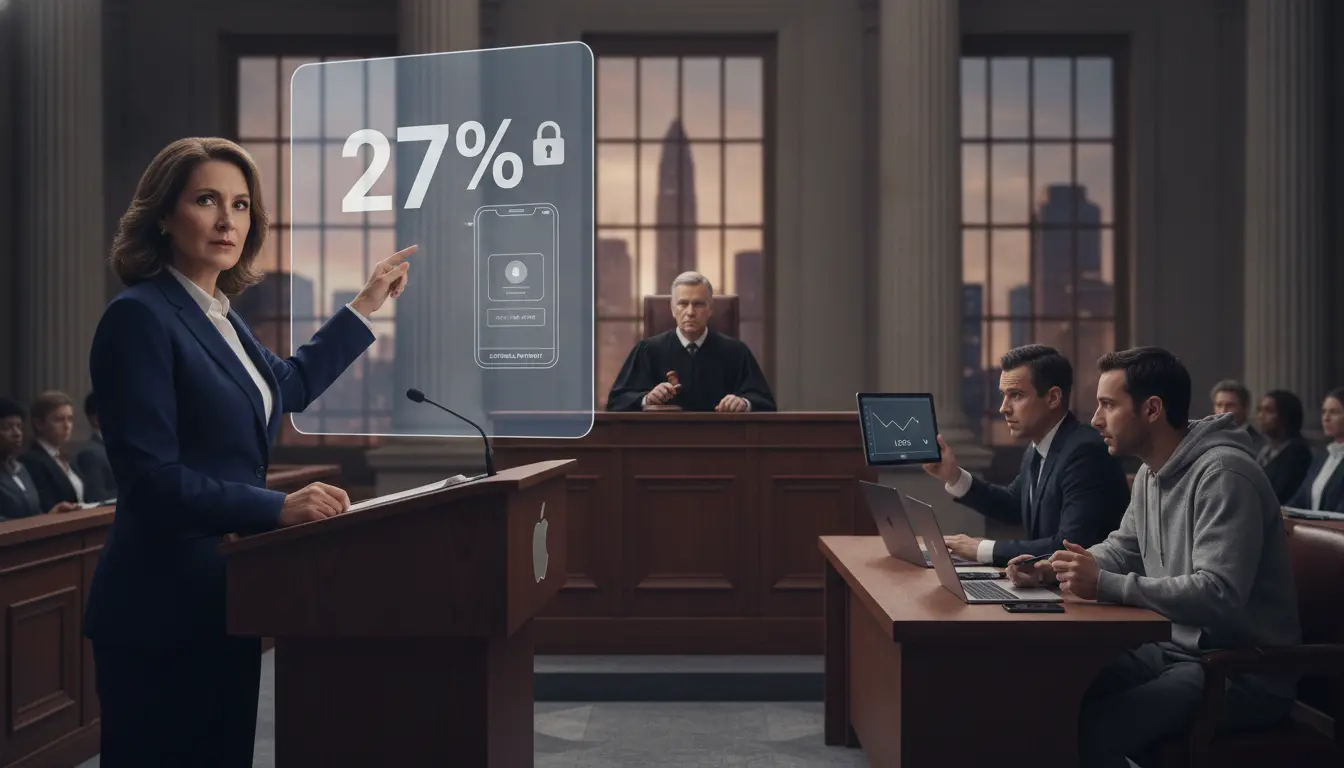
Apple Defends 27% Commission on External App Store Payments Under Judicial Scrutiny
Apple Sues OpenAI Over Alleged Trade Secret Theft by Former Employees
Apple Prepares Potential Trade Secret Lawsuit Against OpenAI Amid AI Industry Scrutiny

Intel surges 9% after Trump says company will partner with Apple on U.S. chip design

Meta Accelerates AI Ambitions with New 'Watermelon' Model for Advanced Text Generation and Reasoning

Meta Poised to Unveil Next-Generation Consumer Quest Headset at Connect 2026

Meta Prepares for Potential Quest Headset Unveil at Connect 2026 Conference

Landmark EU AI Act Data-Access Provisions to Take Effect in September 2026

Tesla's Aggressive AI and Robotaxi Capital Expenditures Stoke Free Cash Flow Concerns for Q2 2026

Meta's Reality Labs Forecasted for Sustained Q2 2026 Operating Losses Amid Metaverse Strategy Reevaluation