

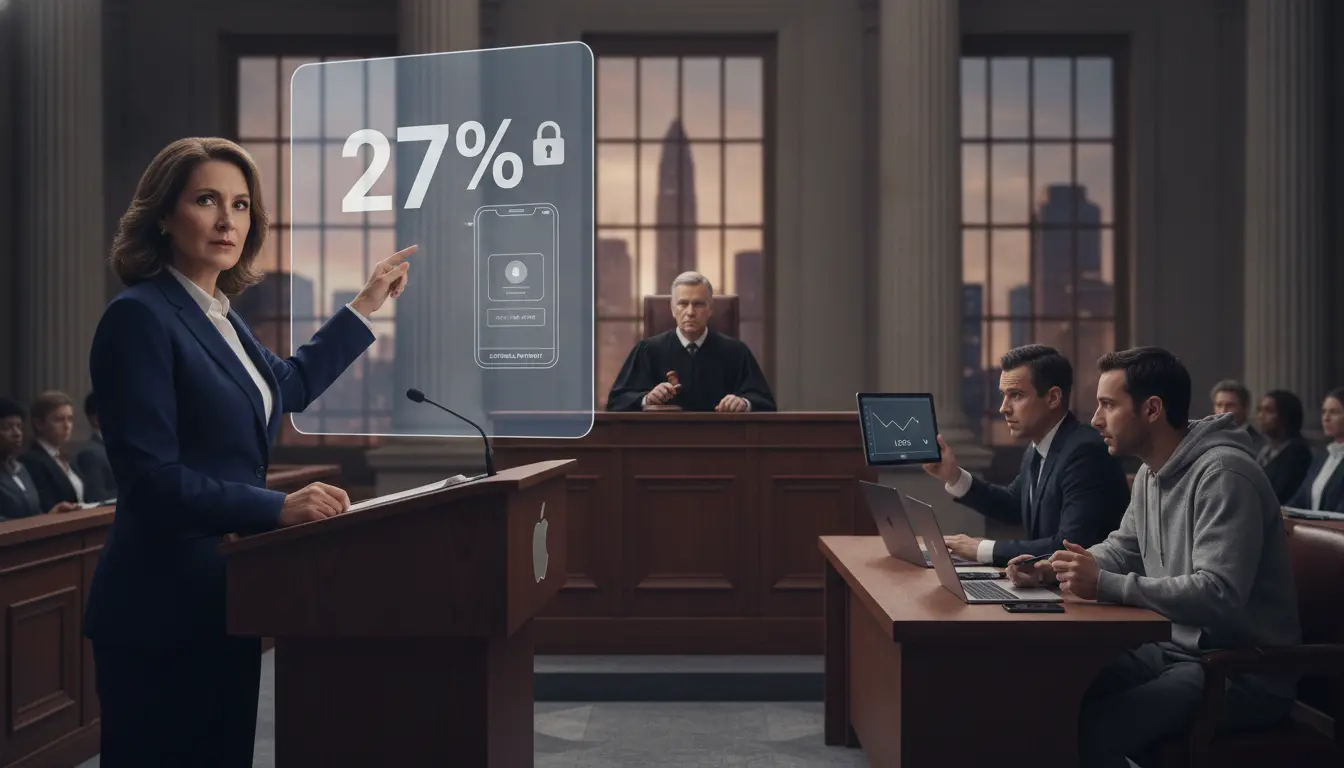
Apple Defends 27% Commission on External App Store Payments Under Judicial Scrutiny
In a tense courtroom showdown that could redefine the economics of the mobile app ecosystem, Apple is defending its newly proposed fee structure for developers who use external payment links, a move mandated by the courts in its long-running antitrust battle with Epic Games. The tech giant has proposed a 27% commission on purchases made through these outside links, a figure that critics immediately lambasted as a thinly veiled attempt to maintain its lucrative control over the App Store. The proposal is now under the microscope of U.S. District Judge Yvonne Gonzalez Rogers, the same judge who has presided over the case since its inception, and her pointed skepticism during recent hearings suggests Apple faces a significant challenge in convincing the court of its compliance.
The confrontation is the latest chapter in a legal saga that began in August 2020 when Epic Games, the creator of the blockbuster game Fortnite, intentionally violated Apple’s App Store rules by introducing its own direct payment system to bypass Apple's standard 30% commission. Apple promptly removed Fortnite from its store, triggering a high-profile lawsuit from Epic that accused Apple of operating an illegal monopoly. The core of the dispute centers on Apple's requirement that all in-app purchases use its proprietary payment system, from which it collects a substantial commission, a policy developers have long argued stifles competition and inflates prices for consumers.
Following a lengthy trial in 2021, Judge Gonzalez Rogers delivered a mixed verdict. While she largely sided with Apple on most antitrust claims, she handed Epic a crucial victory by issuing an injunction based on California's Unfair Competition Law. This injunction ordered Apple to cease its prohibition on developers including "buttons, external links, or other calls to action that direct customers to purchasing mechanisms" outside the App Store. Apple fought the injunction all the way to the Supreme Court, which declined to hear the appeal in January, finally forcing the company to comply. This led to the creation of the new policy, which allows external links but comes with significant strings attached.
Apple's solution—a 27% commission for large developers and a 12% fee for those in its Small Business Program—was framed by the company as a necessary measure to compensate for its intellectual property, including its APIs, development tools, and the secure ecosystem it provides. Apple argues that even if a transaction occurs off-platform, the developer still benefits from the vast App Store infrastructure used to acquire and engage the user. However, Epic and a chorus of other developers, including Spotify and Match Group, have decried the new fee as “malicious compliance.” They contend that a mere 3% discount from the standard commission is not a genuine choice and is deliberately designed to make alternative payment systems financially unviable, thus subverting the spirit and letter of the court's order.
During a recent hearing, Judge Gonzalez Rogers subjected Apple’s lawyers to a sharp line of questioning, expressing serious doubts about the new system. She questioned how the 27% figure was calculated and whether it truly offered a competitive alternative for developers. "It doesn't seem to be aimed at creating competition or providing consumers with a choice," the judge remarked, signaling her potential dissatisfaction. She noted that Apple’s primary justification for its fees—recovering R&D costs—was questionable, given that those costs are largely recuperated through the sale of its high-margin hardware like the iPhone.
The stakes are extraordinarily high, not just for the two litigants but for the entire digital economy. If Judge Gonzalez Rogers finds that Apple’s proposal fails to comply with her injunction, she could hold the company in contempt of court, potentially leading to substantial fines and a new, more prescriptive order on how it must handle external payments. The outcome is also being closely watched by regulators worldwide. In the European Union, the new Digital Markets Act (DMA) imposes even stricter rules on tech giants designated as “gatekeepers,” forcing them to allow alternative app stores and payment systems. How Apple navigates its legal obligations in the U.S. will likely inform its strategy in Europe and other jurisdictions, setting a critical precedent for the future of digital marketplaces.
Stay Informed. Act Smarter.
Get weekly highlights, major headlines, and expert insights — then put your knowledge to work in our live prediction markets.
Related News

Justice Department Files Landmark Antitrust Lawsuit Targeting Apple's iPhone Dominance

Apple Prepares Potential Trade Secret Lawsuit Against OpenAI Amid AI Industry Scrutiny

Apple Sues OpenAI Over Alleged Trade Secret Theft by Former Employees

Landmark EU AI Act Data-Access Provisions to Take Effect in September 2026

Meta Prepares for Potential Quest Headset Unveil at Connect 2026 Conference

Meta's Reality Labs Forecasted for Sustained Q2 2026 Operating Losses Amid Metaverse Strategy Reevaluation

Intel surges 9% after Trump says company will partner with Apple on U.S. chip design

Meta Poised to Unveil Next-Generation Consumer Quest Headset at Connect 2026

Meta Poised for Significant Llama AI Model Update in Late 2026

Meta Accelerates AI Ambitions with New 'Watermelon' Model for Advanced Text Generation and Reasoning