Politicsconflict & defense
Failed Coup in Benin Highlights Challenges to Democracy in West Africa
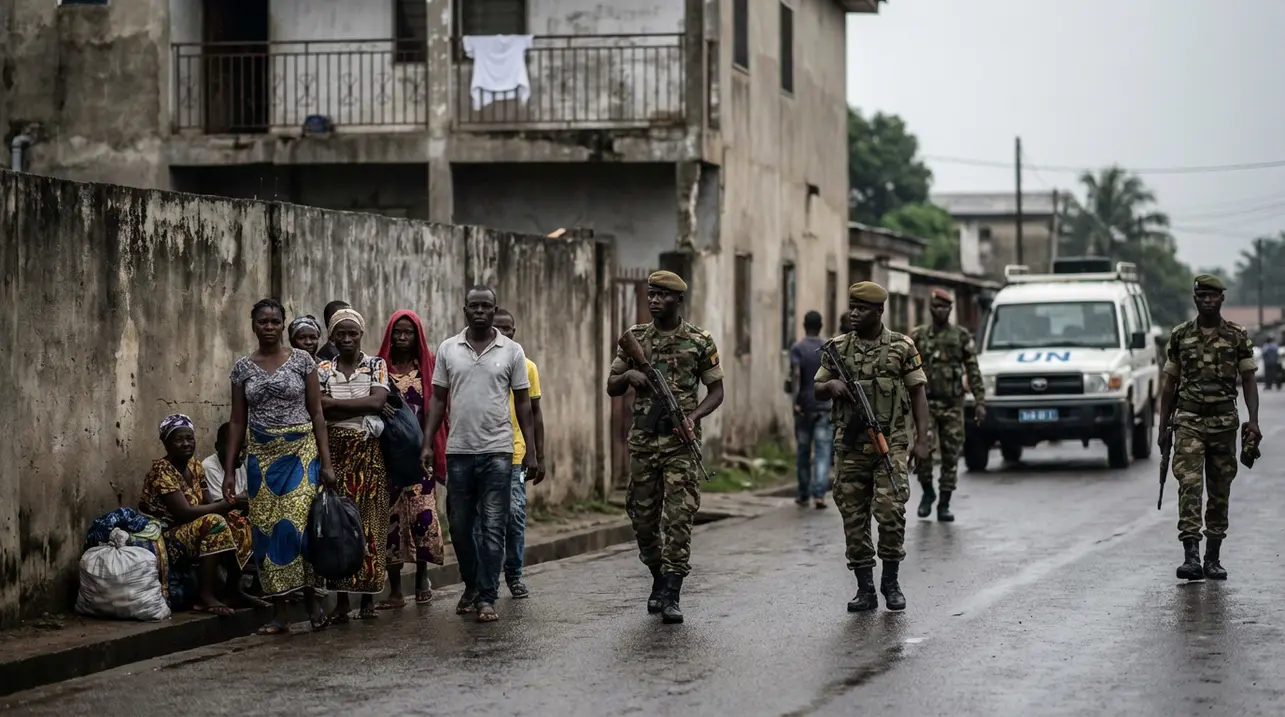
The recent, albeit failed, coup attempt in Benin is not an isolated tremor but a sharp aftershock in a region where the political ground has been shifting violently. This incident, following a spate of successful military takeovers in Mali, Burkina Faso, Guinea, and Niger, signals a profound crisis of legitimacy for the democratic model as it has been practiced and, often, performatively adopted across West Africa.To view these events as mere power grabs is to miss the deeper tectonic movement; we are witnessing the exhaustion of a political paradigm. The Western-style democratic framework, frequently imposed or hastily embraced in the post-colonial era, is running out of steam not because the ideals of representation and accountability are rejected, but because the institutions built to uphold them have too often become hollow shells.They are vessels for elite capture, corruption, and the perpetuation of poverty, failing to deliver tangible security or economic dignity to swelling youth populations. In Benin, once hailed as a ‘model democracy’, the gradual authoritarian slide under President Patrice Talon—marked by the exclusion of opposition parties from elections and the stifling of dissent—created the very conditions of disillusionment that coup plotters, however unsuccessful, seek to exploit.This pattern is eerily familiar to students of history. The current wave echoes the post-independence era of the 1960s and 70s, when a first generation of hopeful democracies succumbed to military rule, promising order and national sovereignty.Today’s juntas wield similar rhetoric, condemning neocolonial influence and incompetent civilian governance while aligning with new strategic partners like Russia. The international response, primarily from the Economic Community of West African States (ECOWAS) and Western powers, has been a mixture of sanctions and condemnation, a strategy that appears increasingly impotent and disconnected from on-the-ground realities.As analyst Paul Melly of Chatham House notes, ‘The social contract in many of these states has broken down. You cannot sanction a population back into believing in a system they feel has abandoned them.’ Consequently, the continent is not abandoning political organization but is likely heading toward more varied, and perhaps more hybrid, forms. We may see the rise of systems that blend traditional authority structures with electoral components, or regimes that maintain a democratic façade while exercising authoritarian control—a model already visible from Rwanda to Ethiopia.The future of West African stability hinges not on dogmatically defending a failing status quo, but on fostering genuinely inclusive governance that addresses the root causes of state weakness: economic inequality, lack of opportunity, and the brutal threat of jihadist insurgencies that civilian governments have repeatedly failed to quell. The failed coup in Benin is a warning shot; it is a symptom of a wider malaise that demands a fundamental rethink, not just of tactics, but of the very structure of political life in the region.
#West Africa
#Benin
#coup attempt
#democracy
#political instability
#African politics
#featured