Politicsprotests & movements
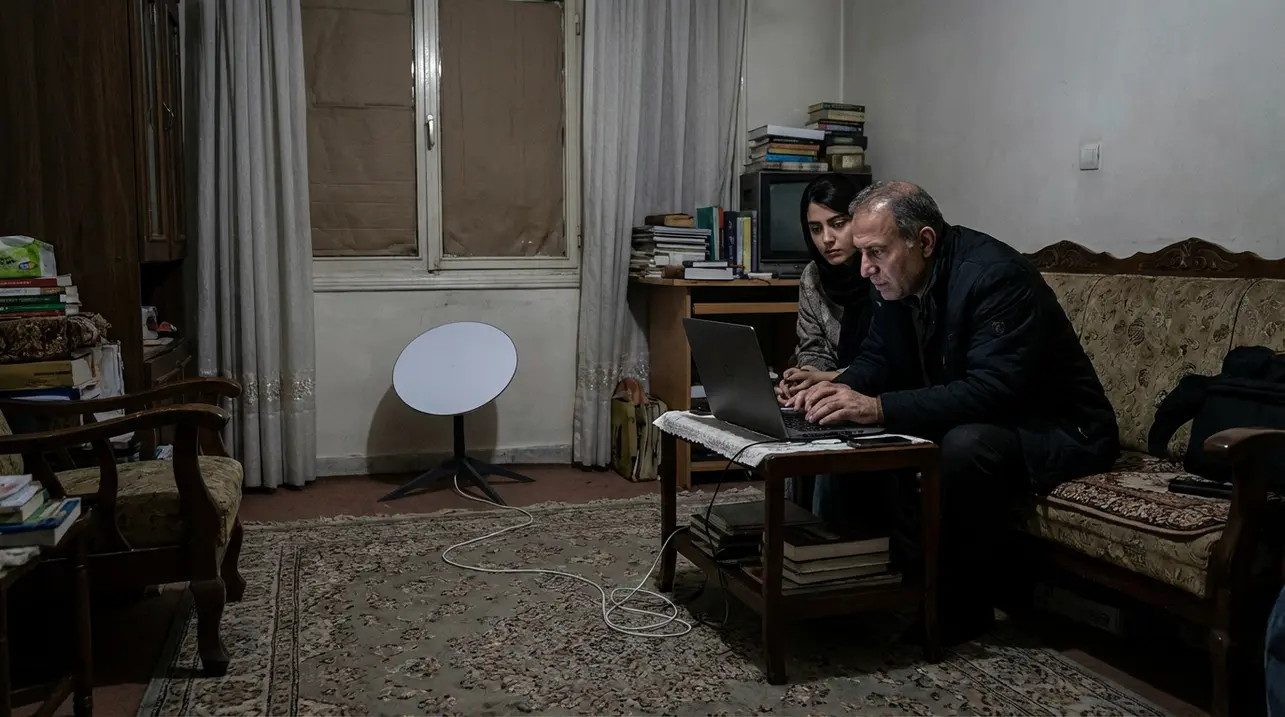
50,000 Starlink terminals keep Iranians connected amid internet shutdown
The digital blackout imposed by the Iranian government on January 8th has plunged a nation of over 90 million into an information vacuum, making the true scale of the ongoing crisis agonizingly difficult to ascertain. Since late December, protests ignited by dire economic collapse—the rial is the world’s least valuable currency, inflation sits near 40%—have evolved into a broader uprising demanding an end to Supreme Leader Ali Khamenei’s rule.The crackdown has been brutal; estimates of the dead range from 2,600 to a staggering 20,000, with more than 18,000 arrests reported. While the regime eased some restrictions this week, allowing limited international calls, the fear of surveillance is pervasive, and domestic text services remain down, with internet access restricted to state-approved sites.In this suffocating darkness, a clandestine network of approximately 50,000 Starlink terminals has become a vital, flickering lifeline. Elon Musk’s SpaceX has made the service free for Iranian users, a critical move given the government’s criminalization of satellite internet use last year, which carries severe penalties, including the death penalty for ties to Israel.Despite active signal-jamming operations and hunts for users, Iranians persist, their desperation for connection outweighing the substantial risk. New terminal updates have thwarted some jamming efforts, and developers have created tools to share a single connection, weaving a fragile web of communication.As Steve Feldstein of the Carnegie Endowment notes, while Starlink represents a single point of failure, no other tool provides such scalable, affordable access. This struggle underscores a profound modern truth: satellites are now a frontline human rights issue.From the civil war in Sudan, where bloodshed is visible from orbit, to the conflict in Ukraine, satellite imagery pierces propaganda and documents atrocities during total information blackouts. The world currently has about 15,000 satellites in low Earth orbit, over two-thirds belonging to Starlink’s megaconstellation—a number projected to explode to over 560,000 by 2040.This rapid commercialization brings its own peril: the risk of catastrophic collisions and a cascade known as Kessler syndrome, which could render low Earth orbit unusable, severing these crucial links. The United Nations considers internet access a human right, yet 2.6 billion people remain unconnected. The irony is stark.The very technology offering a glimpse of truth in Iran and elsewhere is imperiled by the traffic of its own success. If the orbits above us become a junkyard, we don’t just risk losing broadband for remote villages; we risk blinding ourselves to humanitarian crises, leaving the world in the dark just when it needs to see the light most desperately. The 50,000 hidden terminals in Iran are more than gadgets; they are quiet acts of defiance, proving that in the 21st century, the battle for truth is fought not just on the streets, but in the silent, data-streaming space between Earth and the stars.
#Starlink
#Iran
#internet blackout
#protests
#satellite internet
#censorship
#weeks picks news