AIresearch & breakthroughsNew Model Architectures
China Advances AI Innovation with New Research Framework
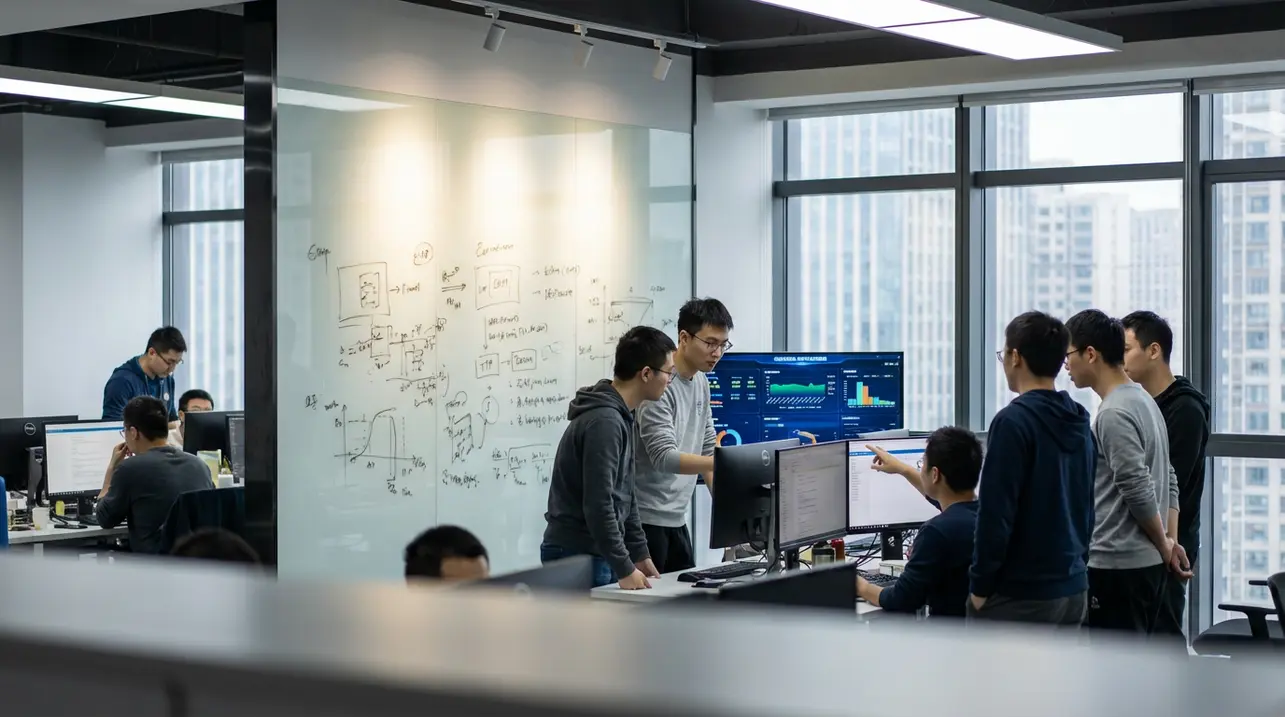
On the final day of 2025, a significant tremor rippled through the global AI research community, not from Silicon Valley but from Beijing. DeepSeek, a formidable player in China's rapidly advancing artificial intelligence ecosystem, published a pivotal technical paper.Its subject: a novel general framework for training AI systems at scale, centered on the concept of 'manifold-constrained hyper-connections. ' The inclusion of founder and CEO Liang Wenfeng among the paper's nineteen co-authors was a deliberate signal, underscoring the strategic importance of this work.The timing, during the quiet lull of the Western Christmas holiday season, was equally telling—a subtle but unmistakable declaration that the pace of foundational AI innovation is no longer set by a single hemisphere. This paper is far more than an incremental update; it represents a coherent, theoretical push to address some of the most persistent and costly challenges in modern large language model development, namely efficiency, stability, and the elusive path toward more robust reasoning.The core idea, as I parse the dense mathematics, appears to be about imposing a more structured, geometrically informed architecture on the vast, often chaotic web of connections within a neural network. Think of it as moving from a sprawling, energy-inefficient metropolis to a planned city with optimized transit corridors—the goal is to achieve higher performance with less computational brute force.This direction resonates deeply with ongoing global debates about the sustainability of the current 'scale is all you need' paradigm, championed by firms like OpenAI and Google, but increasingly questioned on economic and environmental grounds. DeepSeek's proposal suggests a promising alternative path for the evolution of foundational models, one that prioritizes intelligent design alongside raw scaling.To understand its full import, one must view it within the context of China's national AI strategy, which has methodically shifted from rapid adoption and implementation to a deep focus on pioneering core algorithmic breakthroughs. The government's substantial funding for basic research, coupled with directives for 'self-reliance' in critical technologies, has created a fertile, pressure-filled environment for labs like DeepSeek.They are not merely chasing SOTA benchmarks on existing tasks; they are incentivized to redefine the playing field. Experts I've consulted note that while Western labs often release incremental improvements cloaked in marketing fanfare, Chinese technical papers increasingly reveal a patience for fundamental, long-horizon research.This 'manifold-constrained' framework could, if validated, reduce the astronomical training costs that currently gatekeep advanced AI to a handful of well-funded corporations, potentially democratizing access to top-tier model development. However, the geopolitical dimension is inescapable.
#featured
#DeepSeek
#manifold-constrained hyper-connections
#AI research
#foundational models
#China AI innovation
#technical paper
#Liang Wenfeng